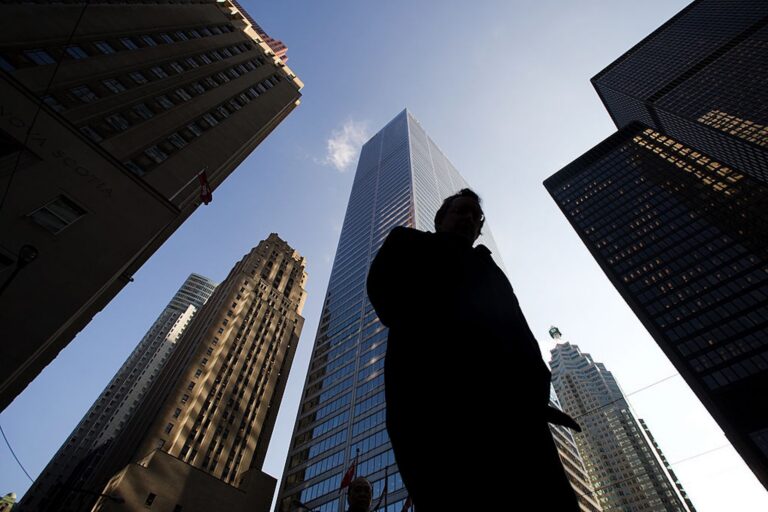
On Sunday, world leaders will gather in Sharm el-Sheikh, Egypt, for two weeks of negotiations and planning on how to make good on their pledges to keep global warming below 2 C. But Prime Minister Justin Trudeau will not be among them.
Skip to content


News
From Justin Trudeau’s absence to Europe’s energy crisis: Six issues that will define COP27
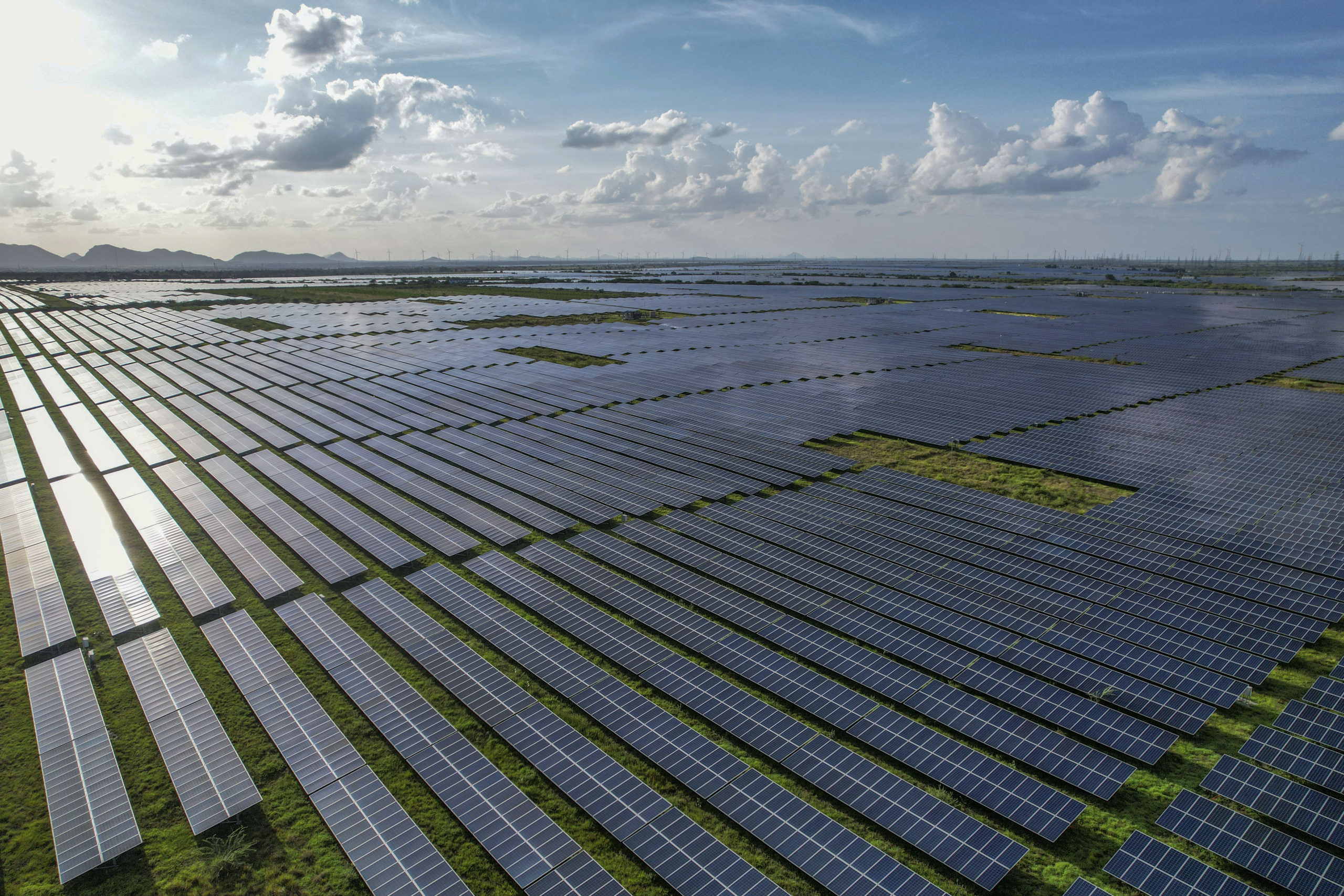
A solar power plant in southern India. Inequality between developed and developing nations in addressing climate change will be a theme of COP27 in Sharm el-Sheikh, Egypt. Photo: Rafiq Maqbool/AP
On Sunday, world leaders will gather in Sharm el-Sheikh, Egypt, for two weeks of negotiations and planning on how to make good on their pledges to keep global warming below 2 C. But Prime Minister Justin Trudeau will not be among them.
An official from the Prime Minister’s Office confirmed to The Logic on Wednesday night that Trudeau would not attend COP27, noting that Canada is preparing to host the UN convention on biodiversity in Montreal next month, which Trudeau is planning to attend.
They did not offer a reason for his absence in Egypt beyond that, but Trudeau is scheduled to attend a series of international conferences while COP27 is underway: the Association of Southeast Asian Nations summit in Phnom Penh; the G20 Summit in Bali, Indonesia; an Asia-Pacific Economic Cooperation meeting in Bangkok, and the Francophonie summit on the island of Djerba, in Tunisia.
Trudeau’s absence will be conspicuous at a conference where global leaders were expected to give substance to their commitments at past COP summits, detailing their implementation plans and showing their progress to date in reaching emissions-reduction goals.
Talking Points
- COP27 in Sharm el-Sheikh, Egypt, is being billed as the “implementation COP,” where leaders will be held accountable for decades of climate commitments
- Prime Minister Justin Trudeau will not attend, calling into question Canada’s climate leadership when pressure to follow through on pledges is at an all-time high
- Factors weighing on negotiations include Europe’s energy crisis, and power imbalances between developed and developing nations
Heads of state have used this international forum to grapple with the climate crisis since convening for the first United Nations conference of the parties (COP) on climate change in 1995. Yet global emissions and temperatures have continued to rise, while extreme weather disasters have become much more common.
Now, pressure is at an all-time high for this conference to finally trigger meaningful progress in keeping the global rise in temperature below that critical 2 C level, beyond which even greater catastrophe will occur.
Trudeau’s non-attendance counts among numerous issues and potential developments to watch over the next two weeks:
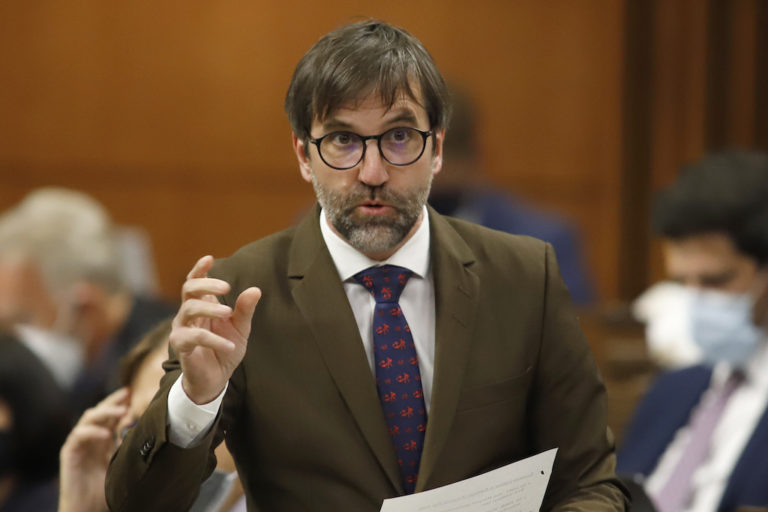
A symbolic absence: Environment Minister Steven Guilbeault will lead Canada’s delegation in Trudeau’s absence. Other delegates include Catherine Stewart, Canada’s ambassador for climate change, and Steven Kuhn, the country’s chief negotiator for climate change.
The Logic at COP27
COP27 in Sharm el-Sheikh, Egypt, is being billed as the “implementation COP,” where leaders will be held accountable for their climate commitments. But Russia’s invasion of Ukraine, an energy crisis, rising inflation and a global economic slowdown have transformed the world since nations last met in Glasgow at COP26.
The Logic’s Catherine McIntyre is reporting on the ground in Egypt, speaking to policymakers, climate experts, investors and business leaders to find out how the negotiations will affect Canada’s net-zero ambitions.
But that’s a considerably scaled-back federal presence compared to last year’s. At COP26 in Glasgow, Trudeau led a delegation that included Guilbeault as well as Deputy Prime Minister and Finance Minister Chrystia Freeland, Natural Resources Minister Jonathan Wilkinson and Minister of Transport Omar Algahbra.
“The participation of ministers across different portfolios demonstrates that climate action requires a whole-of-government approach,” the government stated following last year’s summit.
Canada’s prime minister stands out among G7 leaders in his decision not to attend. Heads of Germany, Italy, the U.S., France and the U.K. have all said they are going to COP27. Britain’s new prime minister, Rishi Sunak, had initially planned to skip the conference to deal with “domestic commitments,” but reversed course after widespread criticism from climate advocates, opposition party members and Britain’s COP26 president, Alok Sharma.
Trudeau’s absence could be a blow to Canada’s climate credibility, as climate advocates and developing countries are pressing Canada and other heavy-emitting nations for more ambitious climate action at COP27.
Related Articles
Putting words into action: The host country is branding COP27 the “Climate Implementation Summit.” In his welcome message to delegates, Egyptian president Abdel Fattah el-Sisi insisted that “Egypt will spare no effort to ensure that COP27 becomes the moment when the world moved from negotiation to implementation and where words were translated to actions.”
After nearly three decades of words translating to lacklustre results, it’s fair to be skeptical that this conference will be different. Still, countries will have to answer for what they have or have not done. In Glasgow last year, parties began the first “global stocktake”—assessing progress they’ve made on implementing the goals laid out in the Paris Agreement. The process continues through next year, and is considered a necessary accountability tool to compel countries to make good on their commitments. As national governments strain to put the best face on their efforts, you can expect to hear a lot over the next two weeks about what’s actually getting done.
Confronting inequality between developed and developing nations: Wealthy countries, including Canada, have made an outsized impact on global warming while also benefiting from industries that exacerbate climate change. Poorer, developing nations, meanwhile, have suffered the worst effects of the crisis and many have reaped few of the benefits.
Shifting that power imbalance, and obtaining reparations for it, is expected to be a priority for the bloc of developing nations at COP27.
High on the agenda is the promise from developed countries to raise US$100 billion annually to help developing nations mitigate and adapt to climate change. In addition to rounding up more commitments for the resilience fund, there’s pressure on developed countries to pay for climate-related losses and damages caused by disasters like fires, floods and droughts.
“The bargain between the Global North and the South is not working, and it needs to be fixed for the Global South to survive the oncoming train of climate change,” said Pakistan’s climate minister Sherry Rehman. The country is among those pressing for reparations at COP27 after floods in Pakistan this year killed at least 1,700 people and caused an estimated US$40 billion in damages.
Oil and gas producing countries like Canada have traditionally resisted these types of payments, out of fear they’d be exposed to a raft of liability claims, said Eddy Pérez, international climate diplomacy director at Climate Action Network Canada. But that is beginning to change. Denmark has made a small contribution to a loss and damage fund, and Canada’s environment department, led by Minister Steven Guilbeault, will reportedly push for the initiative at COP27, though the government hasn’t committed money to the fund.
“So many people have looked to Canada as an emerging progressive voice on this issue,” said Pérez. “The discussion is shifting towards one where a country like Canada and Minister Guilbeault have come forward and requested that this issue [be] treated as one where it’s not just about liability or compensation claims, but one based on solidarity.”
What form this financing takes is also under question. As of 2020, the most recent year for which figures are available, loans made up 71 per cent of climate financing compared to the 26 per cent that came from grants. Canada, meanwhile, has committed to issuing grants for 40 per cent of its climate financing for developing countries.
Ryan Riordan, director of research at Queen’s University’s Institute for Sustainable Finance, said while reparations should be paid through transfers and grants, there’s a case for financing mitigation and adaptation using equity and debt. Though piling on debts is always bad, he said, capital markets have the discipline to make sure financing is well-allocated. ”That’s one of the advantages of using debt structures, instead of just saying, ‘Here’s US$100 billion, tell us when it’s all gone,’” he said. “We want it to go to projects that are really going to mitigate or help adapt to future climate.”
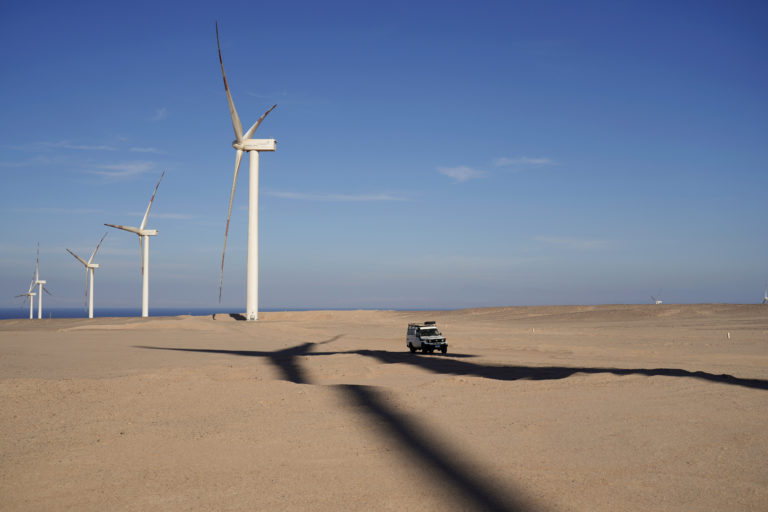
The host country’s contradictions: Egypt in many ways embodies the dilemmas that limit global progress on the climate crisis. Even though the country is vulnerable to the effects of global warming, it is substantially scaling up its fossil fuel industry, framing natural gas as “the perfect solution” to the energy transition.
The position is at odds with the COP presidency’s calls for “higher ambition on mitigation, adaptation and climate finance,” as well as recommendations from the International Energy Agency, a global industry association, which determined there should be no new oil and gas fields approved for development if global warming is to remain below 1.5 C.
Meanwhile, human rights groups have raised concerns that protesters who are typically fixtures outside COP conference centres—calling out world leaders for climate inaction and greenwashing—will be silenced in Sharm el-Sheikh. The government has denied access to non-governmental organizations critical of the regime, while protesters will be forced to demonstrate in a designated zone away from the conference venue. On Tuesday, Reuters reported that nearly 70 people have been arrested in the country following calls for anti-government protests in Cairo coinciding with COP27.
Navigating the U.S.-China stalemate: They are the world’s two biggest polluters, but China paused climate talks with the U.S. in August in retaliation for U.S. House Speaker Nancy Pelosi’s visit to Taiwan. The impasse comes just a year after a breakthrough agreement to work together to cut greenhouse gas emissions. Tensions between the two could complicate global negotiations on emissions reductions and other climate issues.
One sticking point in the bilateral talks is China’s status as a developing nation. The U.S. wants it to be reclassified as a developed country, repositioning it in the COP negotiations as a party that would conceivably have to pay into the US$100-billion mitigation and adaptation fund rather than receive from it.
U.S. special presidential envoy for climate John Kerry has urged China to return to the table. “We need to get China,” he recently told The Guardian. “The two largest emitters and two largest economies could greatly benefit the world by coming together and cooperating.”
China could still achieve a lot on its own at COP27. The country has been aggressively building up its renewable energy and cleantech sectors. It’s become the world’s largest solar panel manufacturer and is home to the largest electric-vehicle maker by sales, Shenzhen-based BYD. China is expected to court new investment partners and buyers for green technology at COP.
“They’re going to make a lot of money selling these solutions for climate,” said Toby Heaps, CEO of media and research organization Corporate Knights. “China wants to make sure that when this engine gets revved up, they’re in a pole position to win the race and be the world’s store for climate solutions.”
Europe’s energy crisis: Europe is expected to face intense scrutiny over its energy use and carbon emissions from activists, scientists and state leaders in Egypt. The European Union committed to end public financing for fossil fuel projects abroad, but that has been complicated by Russia cutting gas exports to the EU in response to the bloc’s support for Ukraine. The EU has signed new gas deals to cope with the dearth of supply and rising costs. For its part, Canada is increasing oil exports to Europe by 300,000 barrels a day.
Along with compromising its climate commitments, Europe’s energy crisis is spilling over to poorer countries that can’t pay the same rates for gas, raising concerns about equity.
The EU is hosting “energy day” at COP on Nov. 14, where it will likely confront these issues in a series of conferences at its pavilion.
“When it comes to the energy crisis, we need to talk about it as a fossil fuel crisis,” said Pérez, noting that Europe’s scramble for energy underscores the urgency to move away from emissions-intensive sources. “But it’s not going to be an easy discussion,” he said. “This is going to be one of the biggest debates at COP27.”



Loading...
Thanks for sharing!
You have shared 5 articles this month and reached the maximum amount of shares available.
CloseThis account has reached its share limit.
If you would like to purchase a sharing license please contact The Logic support at [email protected].
CloseGift the full article!
You have gifted 0 article(s) this month and have 5 remaining.
Recipients will be able to read the full text of the article after submitting their email address. They will not have access to other articles or subscriber benefits.
Photo: Rafiq Maqbool/AP
Most Popular This Week


In-depth, agenda-setting reporting
Great journalism delivered straight to your inbox.
News
ApplyBoard was the worst-performing Canadian startup in Fidelity’s portfolio in 2026
Briefing
Defence Investment Agency to be a Crown corporation so it can get deeper into Canada’s military industry
Mark Carney says he’ll work with Quebec separatist premier-to-be on housing, infrastructure, big projects
Mistral claims its new AI model closes the gap with leading Chinese developers
Best business newsletter in Canada
Get up to speed in minutes with insights and analysis on the most important stories of the day, every weekday.
Exclusive events
See the bigger picture with reporters and industry experts in subscriber-exclusive events.
Membership in The Logic Council
Membership provides access to our popular Slack channel, participation in subscriber surveys and invitations to exclusive events with our journalists and special guests.