MONTREAL — Amazon, by dint of selling many things cheaply and quickly, was long a threat to Clément, a Quebec City-based purveyor of children’s clothes and accessories.
Skip to content


Commentary: Quebec Ink
Forget Amazon. In Quebec, Temu is the new boogeyman
Amazon’s decision to shut down its sorting and fulfillment facilities in Quebec has done little to dent its growth—but the rapid rise of its Chinese rivals sure has
An employee packages items for Temu at a clothing factory in Guangzhou, China. The online retailer has had a major impact on shopping habits in Quebec and across Canada. Photo: Jade Gao/AFP via Getty Images
MONTREAL — Amazon, by dint of selling many things cheaply and quickly, was long a threat to Clément, a Quebec City-based purveyor of children’s clothes and accessories.
In order to avoid the fate of many brick-and-mortar outfits, Clément lowered prices and renegotiated contracts so that their suppliers didn’t offer Amazon the same products. Faced with Amazon’s vast logistics empire, it even started doing next-day delivery in most Quebec cities. Amazon “forced us to innovate,” Clément CEO Charles Pépin-Clément told me. The 34-store chain was able to carve out a piece of the online market as a result.
Then Temu happened. The Chinese online marketplace has gobbled up 25 per cent of Quebec’s online sales market, according to Académie de la transformation numérique, a Université Laval think tank, due in large part to the siren song of cheap goods: $60 sound bars, $12 cordless drills and $14 baby playsuits. Temu, Pépin-Clément said, “is like a Dollarama that respects no laws.”
Related Articles
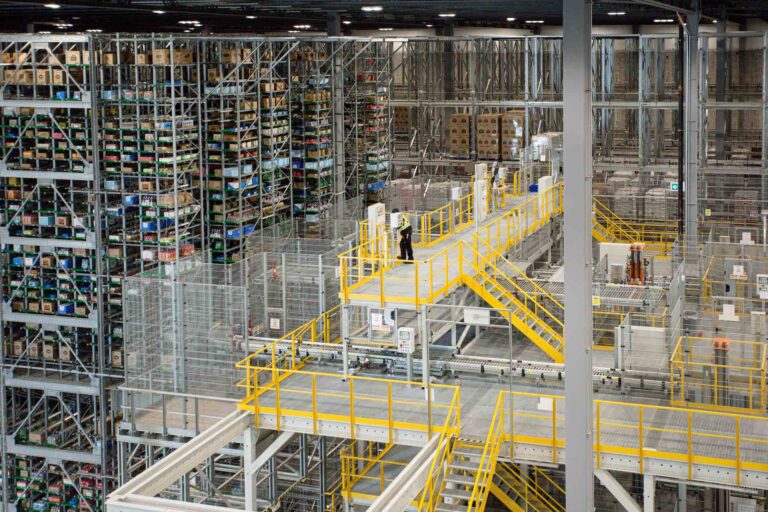
Amazon has long been a sign of the apocalypse for brick-and-mortar retailers, who claim the online giant undercuts them by way of intellectual property theft, nine-figure tax dodges, predatory pricing and an army of poorly paid, forever-replaceable workers. Nowhere is this alleged apocalypse more pronounced than in Quebec, where a protracted battle between Amazon and the province’s second-largest union federation ended when the company simply abandoned its seven sorting and fulfillment facilities in the province rather than face the prospect of an organized workforce.
The rise of Temu, along with local rival Shein, has Quebec retailers shifting targets. Much like Amazon, Temu has an everything-under-the-sun approach, with free delivery of a near-infinite product selection, generous return policies and flash deals that may have you seriously wondering why you don’t have a pair of $20 tactical trousers in your closet.
In Quebec, once home to Le Panier Bleu, a bizarre government-backed attempt to counter Amazon’s ubiquity barely five years ago, Temu and Shein are the new boogeymen—and their rise is “catastrophic,” as RCQ president Damien Silès told me. “Amazon is no longer eating into Quebec retail,” he said. “Every bit of lost market share in the province is thanks to Temu and Shein.”
The cause of this trepidation is Temu’s and Shein’s business model. They may look and act like Amazon, but they do so without much in the way of corporate guardrails. Say what you will about Amazon—and I’ve reported on them a lot—at least the company has to abide by the gravitational laws of business, like ensuring products sold on the platform are compliant with certification and standards. It’s nowhere near a perfect system, of course, but even Pépin-Clément admits Amazon has significantly ramped up standards enforcement over what it sells.
There is no such accountability on Temu, which ships goods straight from overseas warehouses to Canadian homes sans middleman, regulatory or otherwise. The result: that $14 baby’s playsuit on Temu? A look-alike is double the price on Amazon and seven times more expensive at Clément. The tradeoff: a barrage of often dangerous and illegal products.
The Logic didn’t receive a response from a named Temu spokesperson ahead of publication.
Nevertheless, Quebecers seem eager to chance it. Forty per cent of online shoppers in the province—30 per cent of all Quebec internet users—placed an order with Chinese online retailers like Temu and Shein in 2024, according to a report from Académie de la transformation numérique. Temu is now the second-most popular online shopping portal in the province, behind Amazon. It‘s much the same across Canada—and in France, where packages from Temu and the like represent 22 per cent of all postal traffic.
When I first wrote about Panier Bleu in 2022, government backers and academia were confident in its success because a made-in-Quebec online platform would appeal to a desire to shop local and support local businesses. We now know why Panier Bleu failed. Quebecers like cheap stuff as much as anyone. The cost of this cheap stuff is borne by retailers, 58 per cent of whom in Quebec have seen a decrease in sales since the arrival of Temu and Shein, according to the RCQ.
This market disruption, Amazon-esque in its scope, is here to stay. Late last year, Temu signed onto the Canadian Product Safety Pledge, Health Canada’s voluntary initiative to improve product safety. In February 2025, it invited Canadian businesses to sell on its platform. Much like Amazon, Temu rode in like a bandit. Much like Amazon, it’s becoming another new normal.
Martin Patriquin is The Logic’s Quebec correspondent. He joined in 2019 after 10 years as Quebec bureau chief for Maclean’s. A National Magazine Award and SABEW winner, he has written for The New York Times, The Guardian, The Walrus, Vice, BuzzFeed and The Globe and Mail, among others. He is also a panellist on CBC’s “Power & Politics.”



Loading...
Thanks for sharing!
You have shared 5 articles this month and reached the maximum amount of shares available.
CloseThis account has reached its share limit.
If you would like to purchase a sharing license please contact The Logic support at [email protected].
CloseGift the full article!
You have gifted 0 article(s) this month and have 5 remaining.
Recipients will be able to read the full text of the article after submitting their email address. They will not have access to other articles or subscriber benefits.
Photo: Jade Gao/AFP via Getty Images
Most Popular This Week




In-depth, agenda-setting reporting
Great journalism delivered straight to your inbox.
News
Cohere plans to acquire cyber startup Aisle and set up a new security division
Briefing
RBC pledges $70M to support young entrepreneurs
Banks should have kill switches, IDs for AI agents, says global finance watchdog
B.C. First Nations decry rushed consultations as Major Projects Office CEO promises to do better
Best business newsletter in Canada
Get up to speed in minutes with insights and analysis on the most important stories of the day, every weekday.
Exclusive events
See the bigger picture with reporters and industry experts in subscriber-exclusive events.
Membership in The Logic Council
Membership provides access to our popular Slack channel, participation in subscriber surveys and invitations to exclusive events with our journalists and special guests.






