Listen Now
0:00
OTTAWA — “THE NEED FOR BETTER SOFTWARE IS URGENT,” reads a big poster on the wall of the spartan office of software company Anvil, in the plain typography of a Second World War propaganda placard. “GOD SAVE THE KING.”
Except for the poster and meeting rooms named for battles like Passchendaele, Vimy Ridge and Kapyong, Anvil’s premises in Ottawa’s ByWard Market could be those of any young software company—open-concept, clusters of desks set up with the same type of monitor, people’s bikes leaning here and there. The whole place looks as though they just moved into it the week before.
Talking Points
- Canadian startups Anvil and Caseway are building homegrown intelligence software for the military, pitching Ottawa an alternative to U.S. data-mining giant Palantir
- Palantir is well-funded and heavily backed by the American government, but other NATO allies are starting to look for alternatives
The references to Canada’s military history are purposeful. The better software Anvil is trying to make is for the Canadian Armed Forces and security services, to make sense of masses of disconnected data and pick out intelligence that would otherwise be hidden in the noise.
If that sounds familiar—if it sounds like what U.S. data-mining giant Palantir does—you’re right. Anvil is one of several companies offering similar services to the Canadian government, through software made in Canada by Canadians.
In Palantir they are struggling against a well-funded, successful American company. Its huge head start makes it difficult to compete with.
“There’s one customer in Canada in defence,” says Anvil’s chief executive, Samuel Witherspoon. “You either win that customer or you lose everything. It is binary.”
Related Articles


Anvil has started from the bottom, trying to ease the mundane parts of intelligence analysis—which are most of the work, Witherspoon says.
In one of Anvil’s conference rooms, Dominic Chagnon, the firm’s director of “mission support,” shows off that functionality as Witherspoon looks on. In an Anvil application called Armoury, Chagnon uses his mouse to draw a box on a map of coastline in Canada’s Arctic archipelago and clicks a button. Icons pop up on the screen.
One shows a Chinese polar research ship out on the water. On a spit of land, another marker shows a North Warning System radar site. A third links to a news story on the CBC website about an Arctic operation.
Scattered here and there, other icons mark explosions.
“I’m pulling information from different sources, I’m applying some of the filtering tools to actually get to the common operating picture that I’m looking for,” Chagnon narrates. He can click on each icon to see more detail about the object or event it represents, reorganize the data into lists and webs, or move forward and back through time.
The explosions are, he emphasizes, made up for the demonstration: “There were no explosions in the Arctic.” The path of a foreign icebreaker is real, though, drawn from open source data about ship locations, and so are the other elements.
If things did tend to blow up around the times a specific ship passed by, that’s a pattern you’d want to detect.
Ever-growing collections of sensors are producing “digital exhaust” that nobody could process the old-fashioned way even if they wanted to, Chagnon says. Armoury collates disparate kinds of information so military users can grasp it all the same way, saving analysts from what he calls “swivel-chairing,” turning from one database to the next to look for commonalities.

Armoury also helps different people in the same organization work from the same set of facts, Witherspoon says, applying a different metaphor: “Imagine if an orchestra was playing off of 100 different versions of the same sheet of music, and each of them was subtly different but [it wasn’t] immediately detectable. It would sound like absolute shit,” he says. “The same concept, in our view of the world, applies to intelligence production.”
Anvil’s other major product, Forge, is for planning how to deploy sensing devices, such as camera-equipped drones, and then monitoring them. It’s a sort of military-oriented version of a Kanban board, a workflow organization tool that originated at Toyota (Trello, Airtable and Monday are civilian versions of the same thing.)
Anvil hopes someday to “displace and unseat” Palantir within Canada, says Witherspoon, though he readily acknowledges that’s a tall order. Anvil has one publicly disclosed contract with the Department of National Defence, for just under $3 million, and support from the National Research Council worth about the same.
Witherspoon himself trained in engineering and then law, and found an interest in national security while clerking at the Federal Court, which handles many elements of national security investigations, like warrants for Canadian Security Intelligence Service (CSIS) investigations. The company is largely bootstrapped, supported by the founders’ own money (Witherspoon credits his wife, a veterinarian, for financing their household early on) and professional-services contracts whose proceeds have been plowed back into the business.
Palantir’s publicly traded stock has had a rough 2026 but the company’s market capitalization is still over US$300 billion and it booked US$876 million in net income in its most recent quarter. The U.S. government has awarded Palantir billions of dollars’ worth of work with the military, immigration enforcement and even the departments of agriculture and energy.
Founded in 2003, Palantir is named for magical stones in J.R.R. Tolkien’s Lord of the Rings universe. Their holders could use them to make sorcerous Zoom calls—until the villain Sauron got one and used it to pervert the rest into tools of surveillance and coercion.
The name doesn’t help rebut criticism that Palantir provides technology that violates human rights and is helping the Trump administration build a surveillance state, accusations it vehemently rejects.
Also, Palantir’s co-founder and chair is Peter Thiel, a longtime critic of democracy who recently called the pope a Chinese agent for his cautionary encyclical on artificial intelligence; its chief executive is another co-founder, Alex Karp, who calls for the U.S. tech sector to serve American power and makes peculiar public appearances of his own.
Several NATO countries have ambivalent relationships with the company. It’s embedded in alliance systems but individual members, including Germany and France, have shied away from Palantir products. Under outgoing prime minister Keir Starmer, the U.K. has deepened ties with the firm; his almost-certain successor, Andy Burnham, is reportedly not a fan.
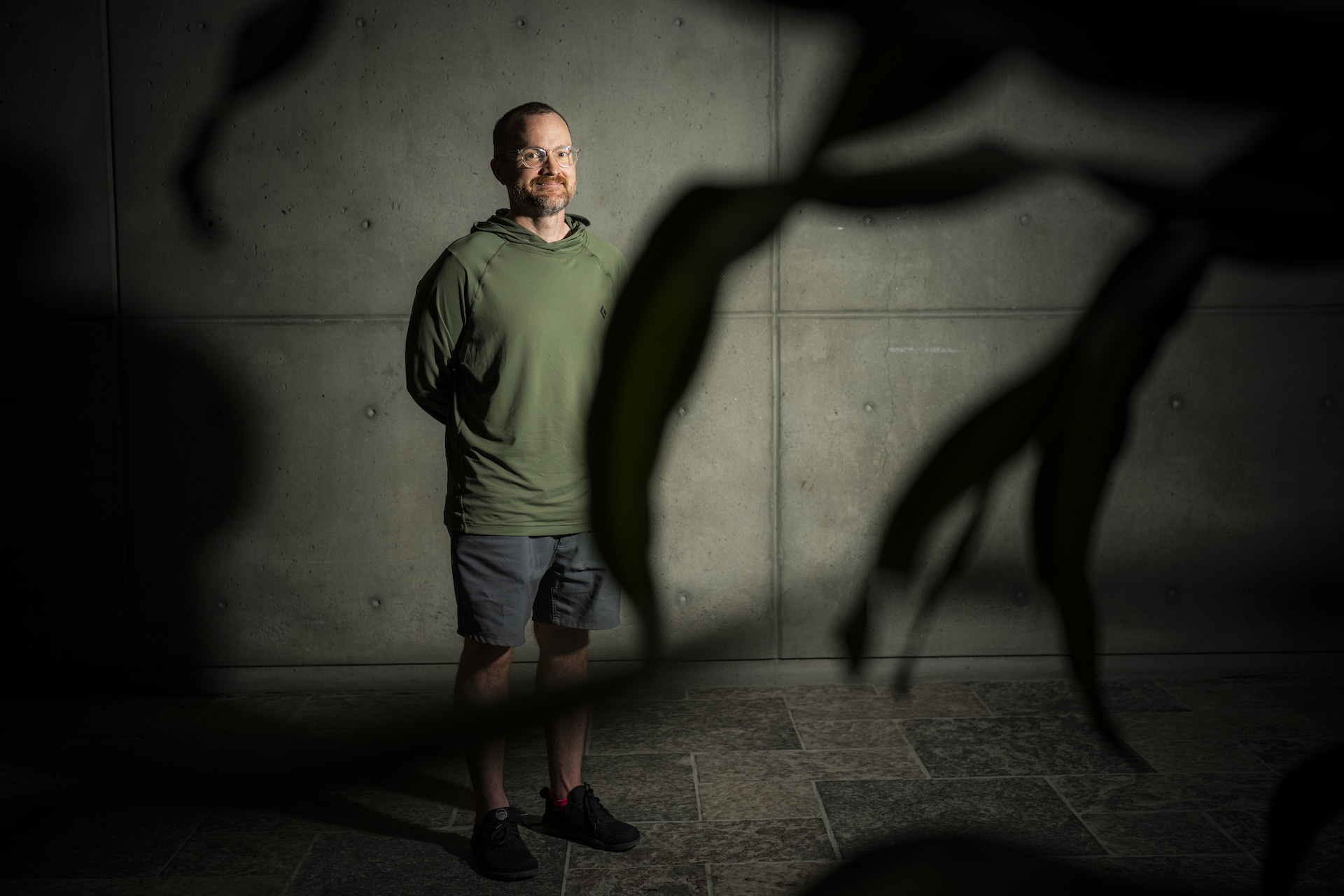
Canada’s Department of National Defence has an ongoing Palantir contract, too, though Stephen Fuhr, the secretary of state for defence procurement, recently mused about having Canadian suppliers take over.
Yet Palantir has resources that are practically impossible for a Canadian company to match. In defence, “the Americans do everything at a scale that is almost unfathomable for the average Canadian,” Witherspoon says.
“We’ve had to solve problems during very lean times at the Department of National Defence and Canadian Armed Forces, so our solutions necessarily look different.”
Another would-be Palantir competitor in Canada is Vancouver’s Caseway, founded by Canadian Forces veteran Alistair Vigier. Its name reflects its original focus on legal work, offering AI-based tools for research and document preparation, but it’s moved into defence.
Judges and generals have a lot in common besides a need for secrecy about their deliberations, Vigier says. “The decision profile is identical: serious, high-stakes calls made under time pressure on incomplete information.”
Caseway is smaller than Anvil, Vigier says, with 15 people to Anvil’s nearly 100, but he laments the difficulty of even getting into a Canadian procurement. For critical military systems, the government mustn’t buy from foreign suppliers, he says, even if finding Canadian sources for similar technology is hard.
“If our core systems are reliant on them, they could just turn them off at any time, and I think that’s just a massive national security issue,” says Vigier. “We can’t be fully reliant on foreign entities for any of our core security.”
Palantir didn’t reply to The Logic’s inquiry about those risks.