Listen Now
0:00
OTTAWA — The governing Liberals have secured enough seats to give them a majority in Parliament, clearing political obstacles from Prime Minister Mark Carney’s aggressive economic agenda.
The government swept three byelections in Toronto and Montreal on Monday, having drawn within one seat of a majority over the past few months, thanks to five MPs who crossed the floor from the Conservatives and NDP.
Related Articles


With no threat of a snap election before the next scheduled vote in 2029, they now have a fixed horizon for their mandate, and the power to do a lot more with it in Parliament. That carries implications for a range of players in the economy, from startups keen to test new technologies to investors waiting to see whether Carney has the political runway to follow through on his promises.
No more compromise: Carney’s rhetoric since his election has focused on making big moves quickly. But the government had to negotiate with opposition parties to get key pieces of legislation passed, including its massive bill to implement the federal budget.
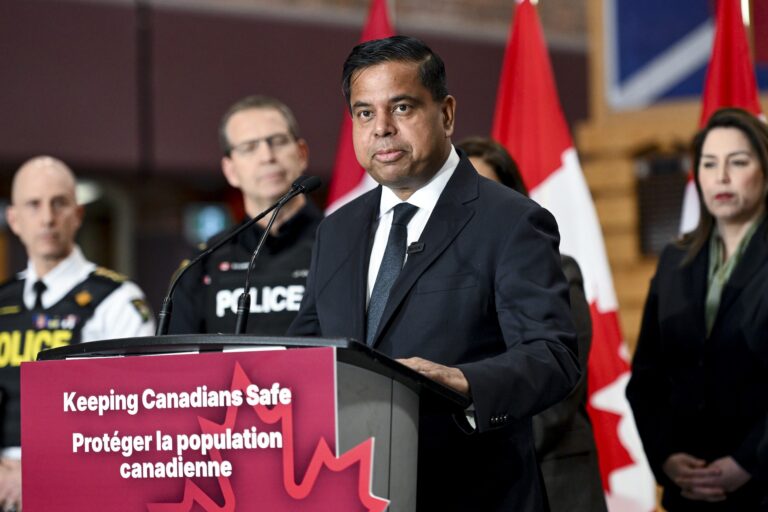
“We’ve had a variety of issues over the course of the parliament where things have taken longer than they necessarily should, where debates have been more performative than actually around substance,” Carney said at a press conference Tuesday morning.
On the budget, the Liberals worked with Conservatives, who insisted among other things that the government first add guardrails to regulatory “sandboxes,” a long-awaited experiment that lets ministers exempt companies in the greentech and financial sectors from certain non-criminal laws to test new regulatory regimes and encourage innovation.
The government also split its border security bill, meant to address U.S. President Donald Trump’s concerns about the illegal flow of drugs and migrants, and strip out contentious new rules giving authorities the power to get user information from online services. The border security measures passed, but the Liberals are taking another go at getting those “lawful access” rules on online services through the House. The Liberals’ numbers in Parliament will let it do so.
In short, a majority will let Carney walk the talk from last spring’s campaign, said Julie Simmons, associate political science professor at the University of Guelph. “The time that it takes to navigate whether or not you have the support of an additional party is not something that they need to take anymore,” she said.
Still to come: Other thorny bills, including one to create a new Crown corporation dedicated to homebuilding, will also likely have an easier ride through Parliament.
The government has yet to table its long-awaited internet regulation and privacy bills, which the previous Liberal government struggled to get past the opposition. Culture Minister Marc Miller told The Logic in January that he would consider incorporating some Conservative ideas into his upcoming online harms bill if it meant getting it passed. Those kinds of concessions may no longer be necessary.
It’s also good news for the government’s focus on major projects, said Simmons, since any legislative changes associated with those projects will undoubtedly get the green light.
Far-reaching implications: The benefits of a majority to Carney go beyond Parliament Hill, said Johnsen Romero, director of the Asia program at The Institute for Peace & Diplomacy. The stability it brings could lend itself to securing trade and investment deals with China and India as well, as the government aims to double non-U.S. exports over the next decade, he said.
Earlier this year, Carney set out to reboot diplomatic and trade ties with those two economic powerhouses, earning mixed reviews from the opposition. Conservatives have been particularly critical of Carney’s decision to lift the 100 per cent tariff on 49,000 Chinese-made EVs per year. From their majority position, the Liberals can proceed with that plan with less worry about the short-term political consequences.
No less important is the signal a majority sends to potential investors, assuring them that their financial outlays are safe from shifts in the political environment, Romero said. “The longevity of any commitments made would have sustained political backing behind them.”
As for upcoming talks on Canada’s trade pact with the U.S. and Mexico, Romero doubts any amount of political change in Canada will alter how Trump and his administration approach their review of the agreement.
The pushback will continue: The Conservatives forced the government to change the budget bill this spring, partly out of concern over the new powers it would have given government ministers. They don’t plan to let up, said Conservative MP Sandra Cobena, who spearheaded the party’s efforts on the regulatory sandbox rules.
“These are omnibus bills that the government is putting forward with some clauses that give the government huge powers, like a concentration of power,” she said.
The border security law, for instance, includes a provision that lets the immigration minister cancel visas en masse; the major projects law lets ministers exempt projects from certain laws and a bill focused on cybersecurity lets the government respond quickly to cyberattacks on critical infrastructure by cutting off telecoms service without judicial oversight.
The Conservatives pushed back on several such measures in committee, but Cobena acknowledged it’s unlikely they’d have the same success against a majority government.
Hold your horses: The opposition can still yank the government’s reins a little, as the partisan makeup of parliamentary committees still reflect the minority government elected last year.
That is, the Conservatives and the Bloc Québécois still have the numbers to suggest changes to or delay legislation at the committee level. The government could table a motion to change the rules to give the Liberals control of committees, according to the Speaker’s office.
The government hasn’t explicitly said it plans to go that route, but Carney did say that there will be less showboating and more substance in committees.
“I think, very clearly, Canadians want government to govern, to take action on immediate concerns,” Carney said.
Editor’s note: This story was updated with more accurate information on how the Liberals could gain control of parliamentary committees; details of the byelection results and comments from the prime minister have also been added.