Skip to content

News
AI sovereignty and talent wars won’t slow Google down, chief scientist says
The tech giant’s chief scientist says researchers continue to collaborate across borders and corporate divides even as AI models become the focus of geopolitical and commercial competition
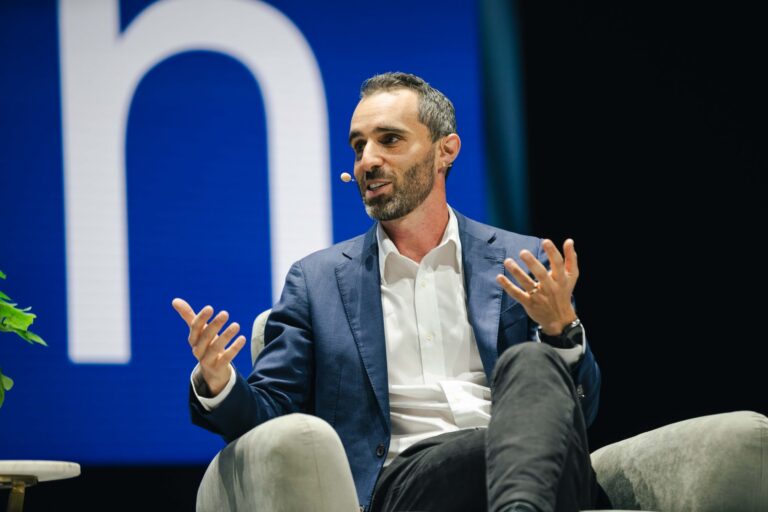
Dean said geopolitical pushes around AI are not impacting research collaboration. “The whole academic landscape is really without borders,” he said. Photo: Thomas Samson/AFP via Getty Images
SAN DIEGO — Google’s AI progress isn’t being slowed down by the push for digital sovereignty or the churn of top researchers between tech firms, according to chief scientist Jeff Dean.
“If you look collectively at the field, we are making pretty significant progress,” he told The Logic, citing improvement in the capabilities of Google’s Gemini models between generations and those from other developers.
Talking Points
- Google chief scientist Jeff Dean says AI’s advance isn’t being slowed by firms constantly poaching top researchers from one another, or by the push for digital sovereignty among countries worried about the dominance of the U.S. and China
- Major jumps in the capabilities of models like Google’s Gemini show the science is strong, according to Dean
AI firms are engaged in a fierce and expensive talent war. Meta in particular has committed hundreds of millions of dollars to hire the most accomplished researchers away from rivals like OpenAI, Google and Apple. In turn, those companies—and other model-makers like Microsoft, Anthropic, and Mistral—are poaching from each other while trying to retain their top scientists. Some star researchers have also left established AI developers to launch their own startups, sometimes dubbed “neolabs,” which have attracted significant investment.
“It’s clearly a very competitive dynamic for talent at the moment,” Dean said, in an interview at the Conference on Neural Information Processing Systems (NeurIPS) in San Diego. “There are fewer people with the set of skills that are needed for this kind of research and engineering than there are people who want those people to be working for their company.”
Related Articles


The turnover isn’t slowing the advancement of AI, according to Dean. In fact, he said, it might help more players in the field to keep up, because researchers carry knowledge about building the most powerful AI models to their new companies. While they’re not taking intellectual property with them, “they know something is possible or roughly how this approach is done,” Dean said.
Amidst the fierce corporate competition, Canada and other countries are trying to promote national AI champions and ensure development of sovereign AI models and infrastructure. Many are responding to concerns that the U.S. and China are battling for control of the technology.
Dean said those geopolitical pushes are not impacting research collaboration in AI. “The whole academic landscape is really without borders,” he said, adding that researchers around the world continue to publish papers detailing how they’re advancing the technology.
Prominent Canadian AI researchers Hugo Larochelle and Joelle Pineau each cited a desire to contribute to the country’s AI capabilities as a factor in their decisions to leave Google for Mila and Meta for Cohere, respectively.
Dean, who has been at Google for 26 years, said such moves don’t reflect a broader trend of departures from larger tech firms. Gemini, for example, is built by a team scattered across the Bay Area, London, and 10 other cities, said Dean, who co-leads technical work on the project. “We can hire amazing people in many different places and have them all work together to contribute to a significant AI model research effort.” Staff in Google’s Montreal office work on the system’s coding-related capabilities.
Several leading Canadian AI researchers have worked for Google over the years, including deep learning pioneer Geoffrey Hinton. On Wednesday, the firm announced it was donating $10 million to the University of Toronto for a new research chair in his honour.
Google’s hiring of Hinton is regularly cited by Canadian tech executives and policymakers as an example of brain drain, and of the country failing to initially capitalize on its position as the site of foundational breakthroughs in AI. Dean said Canada benefited from the move as well, citing the Toronto research lab Google set up around Hinton and its ongoing collaboration with U of T.
Google’s newest Gemini 3 model, launched last month, beat competitors on popular technical benchmarks, and reportedly prompted OpenAI to declare a “code red”—a full-circle moment for Google, which reportedly raised the same kind of alarm when ChatGPT debuted in November 2022. Those firms and others like Meta are pouring billions of dollars into compute infrastructure to train and run new models.
Even with so many big-name firms competing for talent and AI breakthroughs, Dean suggested new entrants could still come out ahead. “It is possible for a small set of people to come up with really interesting and unique ideas that might be way better than the current state-of-the-art models,” he said. “That’s why we do research.”



Loading...
Thanks for sharing!
You have shared 5 articles this month and reached the maximum amount of shares available.
CloseThis account has reached its share limit.
If you would like to purchase a sharing license please contact The Logic support at [email protected].
CloseGift the full article!
You have gifted 0 article(s) this month and have 5 remaining.
Recipients will be able to read the full text of the article after submitting their email address. They will not have access to other articles or subscriber benefits.
Photo: Thomas Samson/AFP via Getty Images
Most Popular This Week




In-depth, agenda-setting reporting
Great journalism delivered straight to your inbox.
News
Ottawa is softening its ban on stablecoin yield
Briefing
Rio Tinto gets nearly $165M in additional federal funds for Quebec aluminum
U.S. to lift tariffs on some Canadian products crucial to Maine: Collins
Carney warns of tech dependence after Starlink disruptions in Ukraine
Best business newsletter in Canada
Get up to speed in minutes with insights and analysis on the most important stories of the day, every weekday.
Exclusive events
See the bigger picture with reporters and industry experts in subscriber-exclusive events.
Membership in The Logic Council
Membership provides access to our popular Slack channel, participation in subscriber surveys and invitations to exclusive events with our journalists and special guests.






