
Listen Now
0:00
MONTREAL — German firm Schwarz Digits is considering adding compute capacity in Canada as it prepares to become a major backer of Cohere.
Established in September 2023 by the conglomerate behind the Lidl grocery chain, the division aims to become a true rival to the so-called hyperscalers, the cloud arms of U.S. tech giants. Schwarz Digits sells AI services, processing power and cybersecurity, and sovereignty is a major part of its pitch.
Talking Points
- Schwarz Digits is eyeing compute capacity in Canada as the German firm looks to build out its sovereign technology business and compete with the U.S. cloud giants. A division of the retail conglomerate behind Lidl, it already runs data centres in Germany and Austria.
- Schwarz is set to become a major backer of Cohere, leading the company’s next financing round once it completes its merger with German AI firm Aleph Alpha
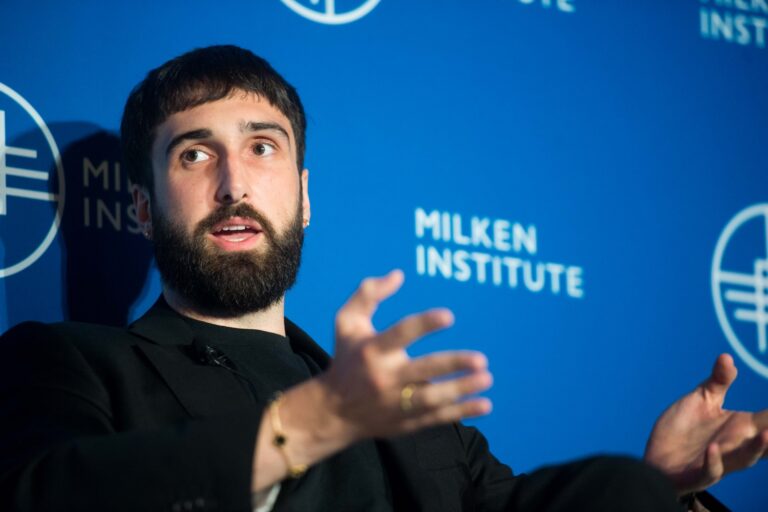
The firm sees “a lot of similarities” in Canada to the requirements in Europe, Robert Jozic, executive vice-president for disruption told The Logic on the sidelines of the All In conference in Montreal earlier this month. He added that the shared challenges of the two jurisdictions present “a decent opportunity for both sides.”
StackIt, the firm’s cloud unit, currently has four data centres in Austria and Germany. Schwarz is building a new 240-megawatt facility in the eastern German town of Lübbenau that could eventually scale to 1.1 gigawatts. StackIt also runs cloud services out of telecom firm KPN’s data centres in the Netherlands, under a deal announced in May.
Schwarz Digits could strike similar telco partnerships for AI infrastructure in Canada, although it is not ruling out other approaches, Jozic said. “The intention is to become a hyperscaler, which is right now primarily into the software stack and the capabilities.”
Related Articles
Major Canadian telcos have recently made big pushes into AI infrastructure. Bell employs a similar model to KPN, building and networking data centres, then letting tenants install their own hardware to generate compute.
Schwarz Digits is in “continuous dialogue with potential partners to strengthen the development of independent, secure, and high-performance digital infrastructures,” spokesperson Philipp Kloß said, although the firm declined to disclose whether it has initiated any tie-up talks in Canada so far.
The company will soon have a significant Canadian asset by way of portfolio firm Aleph Alpha’s planned tie-up with Cohere. The merger is designed to establish a cross-Atlantic AI champion that can win sovereign business around the world, and better compete with OpenAI and Anthropic. Under deal terms announced in April, Schwarz pledged to invest US$600 million to lead Cohere’s next financing round, while the Toronto-headquartered firm committed to use StackIt’s AI infrastructure.
Cohere is racing to secure processing power so it can scale its models to compete with Anthropic and OpenAI, CEO Aidan Gomez told The Logic earlier this month. The AI firm recently agreed to buy capacity from a seven-megawatt Bell data centre in British Columbia. “We’re investing heavily in compute,” Gomez said. “We’re trying to do that as much as we can in Canada and in Germany.”
Gomez cited Cohere’s deals with Bell and StackIt. “We have really good partners, and so we’re largely able to get what we need,” he said.
The Cohere-Aleph Alpha deal “accelerates the build-up of an independent AI infrastructure,” Kloß said, adding the combined firm’s partnership with Schwarz was focused on “sustainably strengthening the sovereign digital future of Europe and Canada.”
Aleph Alpha’s AI tools already run on StackIt’s compute, and are part of the technology stack that Schwarz Digits sells to clients.
The German conglomerate’s backing for Aleph Alpha and soon for Cohere is motivated by “a strong belief that there is a market for sovereign closed models,” Jozic said.
Amid rising costs and concerns over control when using technology developed by the likes of OpenAI and Anthropic, some businesses are swapping in open source AI from Chinese developers to power their applications. Jozic said such an approach was fine for answering routine questions, but provenance matters a lot more for critical industries like defence, health care or public services. Cohere has long targeted such highly regulated sectors, and they also form much of Aleph Alpha’s existing German clientele.
Countries and companies outside the U.S. and China are also increasingly seeking to avoid becoming reliant on technology from the two superpowers. Schwarz touts its combination of cloud, cybersecurity, data, AI and workplace tools as a European alternative to the U.S. hyperscalers.
Firms are realizing that “dependencies can cast you a fortune,” Jozic said, citing the possibility of losing access to AI or other online services at the behest of a foreign government. He added that “customers are willing to pay this additional price for sovereign solutions.”
Cohere and French rival Mistral, for example, both saw a major influx of customer inquiries after the Trump administration temporarily imposed controls on Anthropic’s newest models in June.
There’s room in the market for two European AI champions, according to Jozic. “We are convinced that globally there is a strong demand on sovereign solutions,” he said, citing opportunities in major Asia-Pacific economies like Australia, India, Indonesia, Japan and South Korea, as well as markets in Africa and South America.
Schwarz Digits is the latest international tech player eyeing Canada as a place to generate compute. Rather than the much–touted advantages of cheap power and a cool climate in Canada, the firm’s interest is based on the country’s AI talent and the shared sovereign priorities of its governments and businesses.
By combining German and Canadian AI strengths, “we are not just a middle power, we’re a very uncomfortable competitor when it comes to innovation,” Jozic said.













