Listen Now
0:00
Canada’s ambition to diversify its trade partners outside of the U.S. was on full display this week, as the government launched a charm offensive aimed at foreign mining investors.
In Canberra, Prime Minister Mark Carney struck an agreement with Australia to share mining talent and collaborate on critical mineral investments. Across the world in Toronto, Natural Resources Minister Tim Hodgson announced a $12-billion package of investments in Canadian companies by both the Canadian government and allies, including a co-operation deal with Greenland, investments from German companies like Siemens and Finland-based steel giant Outokumpu, and commitments from Belgian institutional investors and authorities.
Talking Points
- Canadian mining companies announced deals with companies and investors from Germany, Finland, Belgium and Greenland this week, as the federal government touted its trade diversification strategy and geopolitical stability
- Still, investments from some countries, like China, remain taboo as Canada pushed its mining industry to other “middle powers” at a major mining conference in Toronto
While the U.S. is part of the G7 mineral alliance that helped broker the deals, Hodgson told the mining industry that it is also part of Carney’s call for “middle power” countries to stick together amid pressure from larger countries.
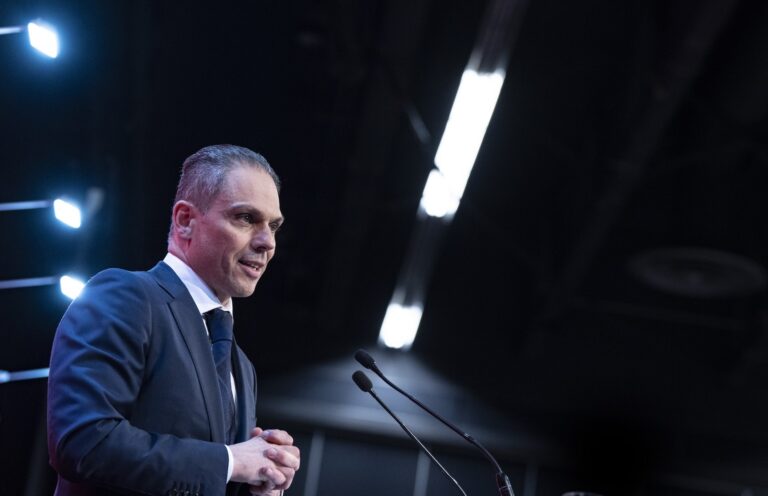
“We’ve been launched into a harsh environment where geopolitical competition is intensifying and major powers feel few, if any, constraints on their actions,” Hodgson said in a speech on Monday. “There is perhaps no sector where this moment matters more than in metals and mining.”
The Prospectors & Developers Association of Canada conference is always an international affair, with over 27,000 attendees swarming downtown Toronto in 2025, a third of them from abroad. But securing foreign investment took on a new urgency for the federal government this year, attendees said, as geopolitical uncertainty loomed over the four-day event.
Related Articles

‘Harsh environment’: Mining stocks slid this week as markets grappled with war in the Middle East and cartel-related violence in Mexico.
Theo Yameogo, who leads EY’s mining practice in the Americas, said the industry was likely watching developments closely, given that Pakistan, Iran’s neighbour, is a copper hub, and Mexico is a leading silver producer.
Against that backdrop, Hodgson tried to position Canada as a stable and predictable place to invest.
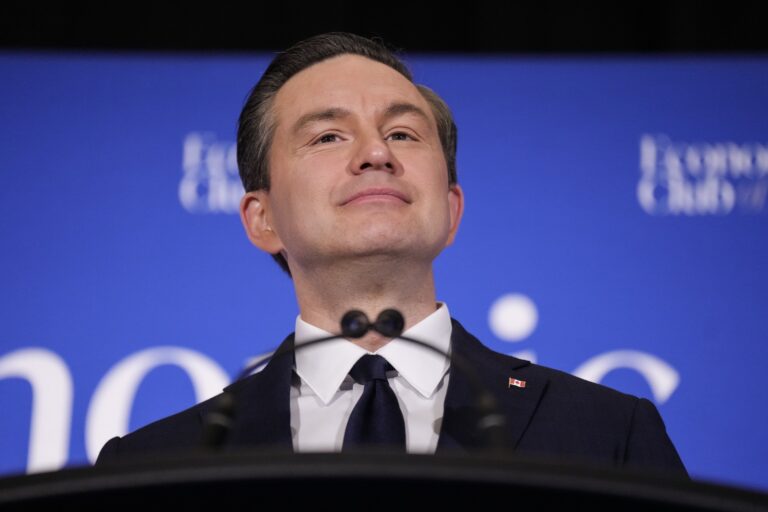
‘Overreliance on concentrated foreign supply chains’: Canada’s push for new trade partners will not include China, at least when it comes to the mining sector, Hodgson said.
China-based Zijin agreed to acquire Canada’s Allied Gold in January, potentially signalling a shift in the federal government’s approach to foreign investment approvals, said Dean McPherson, who runs TMX Group’s mining financing business, on a panel. But William Pellerin, a trade lawyer at McMillan, told the panel audience that Canada is “still very much aligned with the United States on critical minerals as compared to China.”
New ‘core library’: Artificial intelligence also featured prominently. AI Minister Evan Solomon touted the technology as a way for Canada to speed up critical mineral exploration, launching an initiative with major mining companies to scan old drilling samples with AI.
Johan van Jaarsveld, the chief technical officer of Australia-based BHP, said in an interview that it’s too early to see how the data will change sector valuations. The company has been backing AI-native startups as part of its Toronto-based accelerator program, and uses AI to monitor safety breaches on mine sites.
Perennial permitting promises: The government said it will finally make long-awaited changes to improve the permitting process for mining companies, announcing a new web portal, a regulatory overhaul led by the Major Projects Office, and another $165.2 million to fund programs used by mining firms.
Hugues Jacquemin, CEO of Northern Graphite, said that after attending recent trade missions in Rome, Munich and Paris, he’s hopeful that the federal government’s strategy to attract foreign investment is gaining momentum.
“We’ve been playing defence for the last couple of years now we’re playing offence,” said Jacquemin on the sidelines of the event. “They’re showcasing their companies and trying to attract more foreign investment in Canada, and that’s helping us a lot.”