Listen Now
0:00
TORONTO — A team of former Nvidia AI researchers led by renowned computer scientist Sanja Fidler has launched a new startup to develop world models for physical AI, The Logic has learned.
The firm, Veeda AI, has raised over US$90 million in seed financing so far, and is backed by major AI investors Radical Ventures and Khosla Ventures, according to people familiar with the matter and corporate filings. The Logic agreed not to identify the sources because they were not authorized to speak publicly.
The Toronto-headquartered company is staffing up, recruiting scientists and machine learning engineers to help build technology that works across language, image and video, with applications in robotics and other forms of so-called embodied intelligence.
Talking Points
- Sanja Fidler, a University of Toronto professor and former star Nvidia AI researcher, has launched a new startup to develop world models for physical AI
- Veeda AI has raised over US$90 million in seed financing, and is hiring scientists and machine learning engineers. The firm’s other co-founders are Huan Ling and Zan Gojcic, former colleagues of Fidler at Nvidia.
Last week, Fidler announced she was leaving Nvidia after eight years helping to lead AI research. The University of Toronto professor joined the chip giant in May 2018 to head up a new Toronto unit, later named the Spatial Intelligence Lab (SIL).
Fidler is Veeda’s chief executive. The firm’s other co-founders include chief scientist Huan Ling, who also worked at SIL, and chief technology officer Zan Gojcic, a Zurich-based former Nvidia research director. The three researchers incorporated their new firm, legally named Veeda Innovation, in early June. Late last month, it issued 60.6 million seed shares, at a price of US$1 each. On the same day, it added two new directors, Radical partner Tomi Poutanen and Khosla partner Sven Strohband. Such changes are typically associated with fundraising.
In a LinkedIn post on Wednesday, Fidler confirmed Veeda’s founding and focus, and that Khosla and Radical are investors.
Veeda did not answer questions about its fundraising and plans ahead of publication. Khosla confirmed it has backed the firm. Radical did not initially respond to a request for comment, but later posted on LinkedIn confirming it had backed Veeda, which it said has “unparalleled spatial intelligence and simulation expertise.”
Related Articles

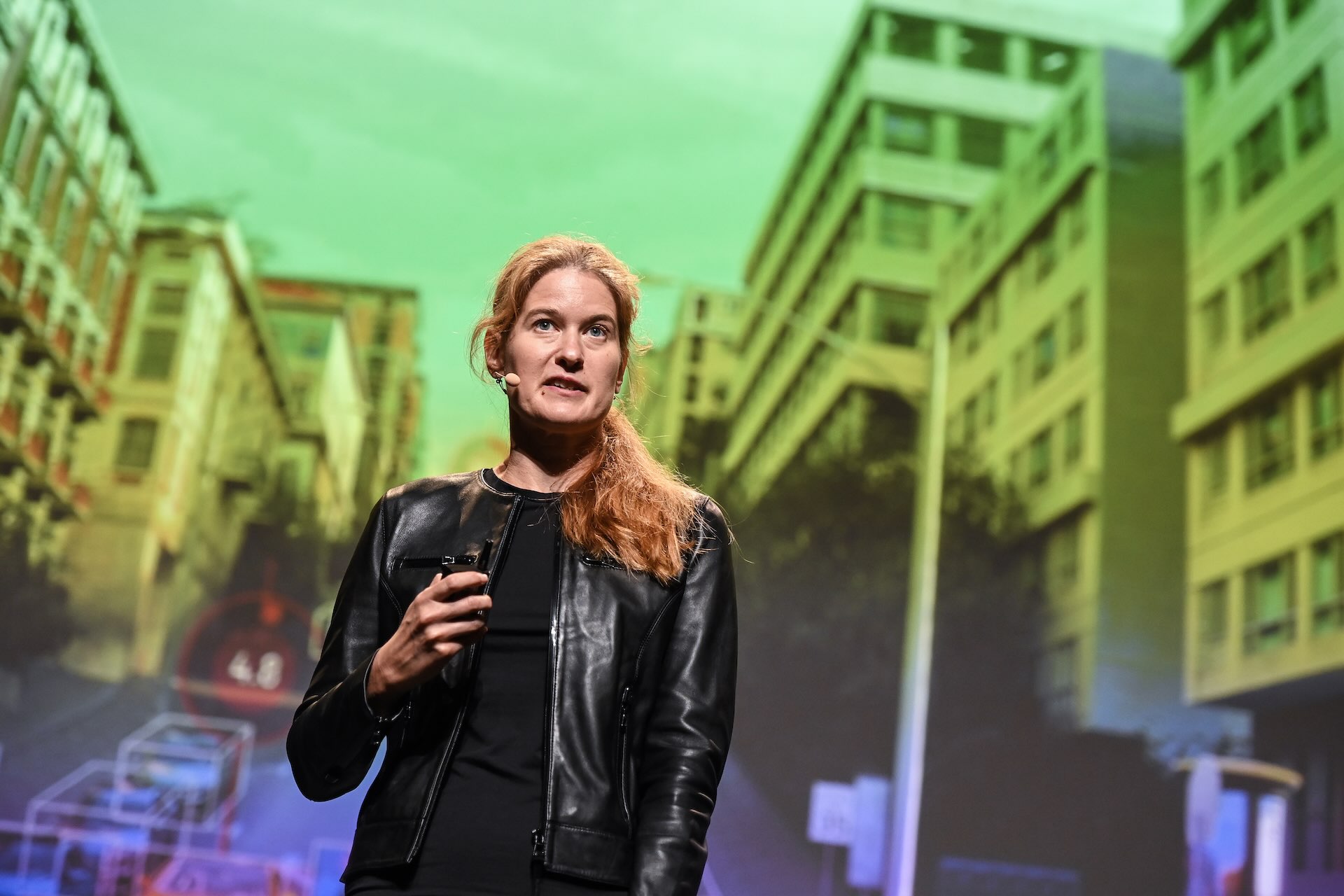
Fidler is a major figure in Canadian AI research. She got her doctorate at the University of Ljubljana, and joined U of T’s computer science faculty in 2014. She was also a founding member of the Vector Institute, a major Toronto AI research and commercialization hub, and holds a research chair position under the federal AI strategy.
Veeda is building The Matrix for physical AI, Fidler said in her post. As in the 1999 movie, the firm’s technology ensures “robot intelligence can interact with an entirely virtual world in a million possible ways, learning from its own mistakes,” she said, adding that it isn’t safe or economical for such systems to improve with trial and error in real life.
Typically trained on image and video data, world models simulate the consequences of their actions and have a better grasp of real-life mechanics.
Veeda is “building the next generation of multimodal foundation world models for physical AI,” according to its website, which says the startup is in stealth mode and does not identify its founding team.
A Veeda job posting states it’s seeking to “push the frontier on generative world models,” including by advancing ways of creating image, video and 3D content. The firm is also recruiting staff to collect and prepare data to train its systems, and manage the chip clusters that will power that process.
Ling wrote on his personal website that he’s “building a stealth team focused on the future of generative content creation,” which will develop systems to “redefine how creative content is generated, edited and brought to life.”
Startups developing world models have attracted significant backing, including AMI Labs, started by former Meta AI chief Yann LeCun, and World Labs, founded by Radical scientific partner Fei-Fei Li. Waabi, led by Raquel Urtasun—another U of T professor and Vector co-founder—is also developing world models for physical AI as part of its technology, although its application is autonomous vehicles. It raised a US$750-million round in January co-led by Khosla with participation from Radical.
The SIL team at Nvidia has developed software to simulate how autonomous vehicles and humanoid AI agents would interact with the real world, as well as to generate and edit three-dimensional digital content. Fidler also previously supervised Ling’s doctorate at U of T, and the two were part of the team that created Nvidia’s flagship world model, which helps developers build physical AI systems. The firm has patented some of their joint work on AI-generated images. Fidler and Gojcic, meanwhile, have co-authored research papers on how to improve AI systems’ renderings of reality based on different data sources.
Veeda’s financing would make it one of Canada’s three largest seed rounds ever, according to data from PitchBook. Fidler is the latest star researcher to leave a U.S. tech giant to form a so-called neolab developing foundation AI models. Such systems require significant compute to train, and most of the new startups have raised mega-rounds from major investors.
Earlier this month, Menlo Park, Calif.-based Khosla and Toronto-headquartered Radical co-led a founding round for Discovery Loop, an AI-for-science startup led by former Google chief scientist Jeff Dean. Neolabs with Canadian-trained founders include Ineffable Intelligence, Safe Superintelligence, Thinking Machines Lab and Periodic Labs.
Veeda’s site lists offices in Toronto as well as Mountain View, Calif., Singapore and Zurich. Corporate filings show it set up a Swiss subsidiary in July, which lists Gojcic as its local managing director and Fidler as management chair.
Veeda would join a handful of foundation model firms in Toronto. Cohere sells large language models and generative AI tools to businesses; Radical co-led a US$600-million financing which closed last September. Ideogram, meanwhile, makes image-generation models.
Editor’s note: This story has been updated to include details from social media posts from Veeda AI and Radical Ventures.














