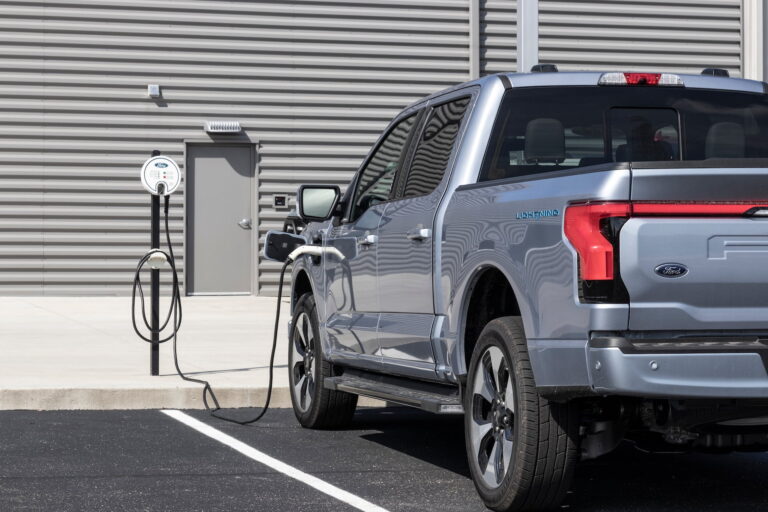
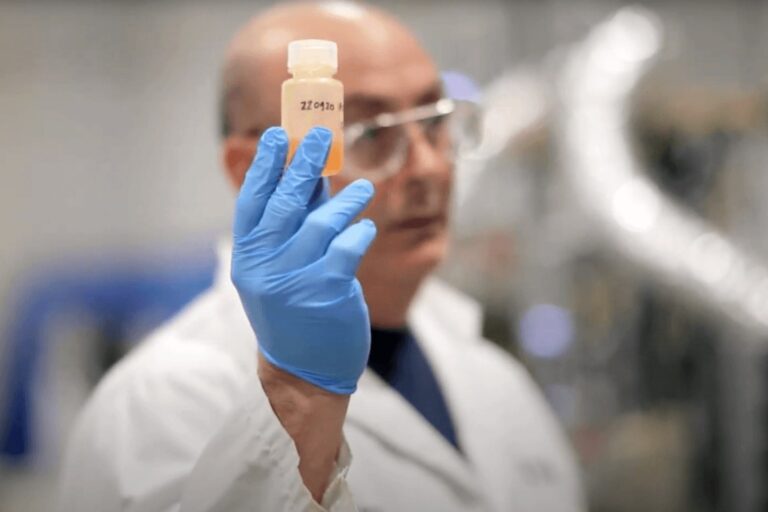
As the EV business booms, the mining industry is, quite literally, in need of an accelerator.
It takes nearly 17 years, on average, to get a mine from discovery of the mineral deposit to producing the ore. Meeting Paris Agreement energy-transition goals will require quadrupling the mineral requirements for cleantech by 2040, according to the International Energy Agency. It’s a challenge that keeps the industry up at night.
Sonia Scarselli, vice-president at BHP Xplor, recently relocated to Toronto to oversee the inaugural cohort of its accelerator program, as the Australian mining giant tries to innovate its way out of problems that have faced the industry for decades.
BHP sold its petroleum business and moved its exploration and nickel and copper headquarters from Chile to Toronto in 2021, citing the desire to buoy the growth of its critical-minerals business in a “hotspot” for junior exploration firms.
Scarselli said the accelerator program is about more than just crowdsourcing investment opportunities for BHP. For one, she said, junior mining companies often find themselves on an endless quest to raise funds, having to go out and raise more money to proceed through each stage of drilling.
“We remove that bottleneck and we finance the entire exploration activity,” she said. “So instead of taking five to six years, they can do [it] in a couple of years, and finance early on.”
Secondly, she said, big production companies like BHP often inherit the problems that junior miners face, and can fend off those problems by giving the small firms with a handful of staff access to resources, such as experts in certain Indigenous cultures or the anti-bribery laws of different jurisdictions. Members have told her it ends up being like a “mini MBA.”
BHP isn’t the only one taking a page from the tech industry and applying concepts like accelerators to the critical minerals that end up in cleantech products, like batteries. The Canadian government created the Mining Innovation Commercialization Accelerator in 2021, and Vale launched a US$100-million venture capital fund last year.
Like tech startups, junior miners often fail, and Scarselli said not every junior miner is set up to succeed in a program like BHP’s. She said she looks for leadership teams that are coming to her with more than just drilling results, but that are able to think critically about the future development opportunities surrounding a deposit—and are willing to be honest when a project might fail.
She said she sees two technologies as being key to speeding up the energy transition: imaging systems and seismic surveying that lets miners see what’s going on underground.
Mining companies aren’t only facing political pressure to focus more on metals for green technologies—they’re also facing pressure from their customers, which increasingly include EV makers impatient with the status quo of an industry that literally dates back to the Stone Age.
“The resources are there to support the transition. … History teaches, the more we look, the more we find,” said Drew Baglino, Tesla’s senior vice-president of powertrain and energy engineering, at the company’s investor day this spring. “These are not, like, crazy technologies. It’s just [that] the investments need to be made.”
Scarselli said there “hasn’t been that cross-pollination” between the mining industry and its customers, but she’d like that to change.
“There’s still a lot of disconnect,” she said. “I think the more we see being part of the solution together … the better it is going to accelerate and also improve the way we are bringing in the resources to the market.”
Read Shift—The Logic’s authoritative weekly newsletter on automotive technology industry news—for more; and if you know someone who should be reading it, they can sign up here.