Listen Now
0:00
OTTAWA — The “new and more ambitious” partnership that Canada and the European Union began working on last year is expected to be announced at a joint summit next month in Montreal, says the EU’s top envoy to Canada.
The transatlantic partners are exploring an arrangement that would bolster co-operation across a wide range of policy areas, which could include defence, security, critical minerals and artificial intelligence, but will stop short of making Canada a member of the 27-nation bloc.
Talking Points
- Canada and the European Union are developing a “new and more ambitious” strategic partnership, with details expected at the joint summit in Montreal next month
- Geneviève Tuts, the EU’s ambassador to Canada, told The Logic this could also encourage progress from the 10 countries that have not yet ratified the Canada-EU trade deal
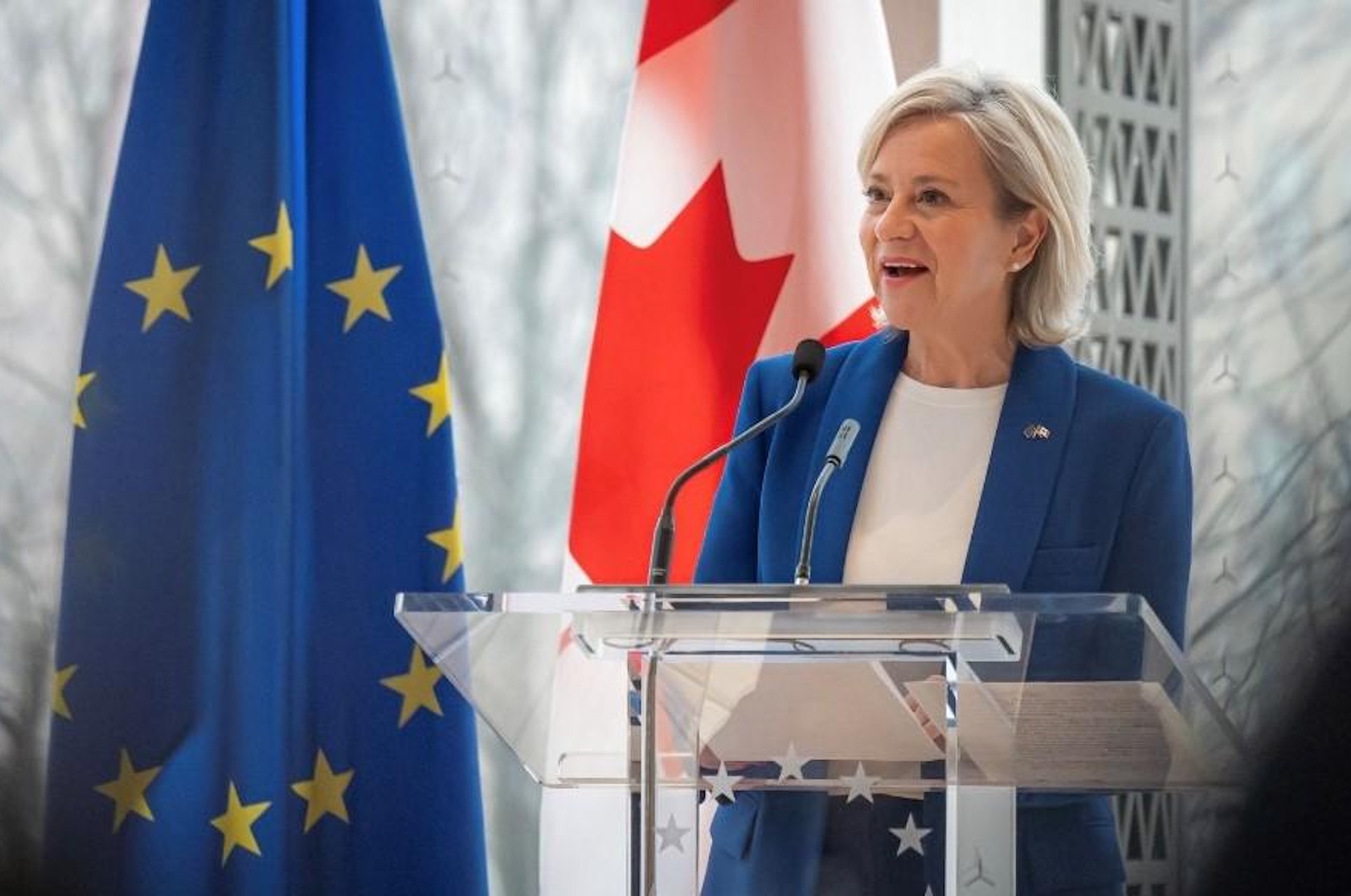
“On both sides there is a strong willingness to elevate the relationship—something more than the partnership we have had so far,” Geneviève Tuts, the EU’s ambassador to Canada, said Wednesday in an interview with The Logic about the discussions between Ottawa and Brussels.
Prime Minister Mark Carney has made strengthening ties with Europe a priority as he pushes to diversify Canada’s sources of trade and investment amid the escalating disruption—including tariffs and now, import bans—caused by U.S. President Donald Trump.
After calling off talks with the White House last month, Carney said Canada and the EU would start discussions this fall on building “a much stronger and deeper security and economic partnership.”
In fact, those negotiations began long ago. On a visit to Brussels in June 2025, Carney joined EU leadership in announcing a new strategic partnership based on common values, including the international economic order grounded in the rules of the World Trade Organization. They also promised to launch “comprehensive negotiations across multiple areas to strengthen co-operation and connection.”
Related Articles

The annex to that “New EU-Canada Strategic Partnership of the Future” lists AI, defence, critical minerals, energy, supply chains, labour mobility and regulatory alignment among the many areas where both partners said they wished to strengthen ties. The Canada-EU Comprehensive Economic and Trade Agreement (CETA) already eliminates tariffs on 99 per cent of goods in both directions, but they agreed to look at reducing barriers to food and agriculture trade.
Some of those discussions have already borne fruit. Canada joined the EU’s €150-billion military procurement fund, becoming the first non-member to do so. The two governments are also well into negotiations for a digital trade agreement to complement CETA. In October, the prime minister named former Privy Council clerk John Hannaford his personal representative to the EU. Carney tasked Hannaford with building ties between Europe and the Pacific Rim trade bloc, whose dozen member countries include Canada.
Tuts said more details on the future partnership will be revealed at the next Canada-EU summit, which is set to take place Oct. 29-30 in Montreal. “This summit is the key moment where the two partners will announce what they will do or not,” she said, although it might be just the beginning. “There will be a momentum in October, but there may be more than that coming.”
The transatlantic partners are still sorting out the shape of that stronger partnership. As it stands, Canada cannot become a formal member of the EU because the founding treaty of the bloc restricts membership to “European states.” And Tuts said a partnership with Canada would likely differ from those with other non-member states, such as the United Kingdom after Brexit.
“We cannot simply mirror the form of integration we have with other countries so far,” she said in the interview. “We cannot mirror what we have with Norway or with the U.K. So, it probably will be something very unique, but I can tell you that it’s more than what we have now. The idea is to have something new and more ambitious.”
Those ambitions could also support some unfinished business, as 10 members of the EU have yet to fully ratify CETA: Belgium, Bulgaria, Cyprus, France, Greece, Hungary, Ireland, Italy, Poland and Slovenia. “These are not easy questions, and they are different from state to state,” Tuts said. “But we hope that with this renewed commitment between Canada and the EU, this could maybe help the process in view of more ratifications.”
European Commission President Ursula von der Leyen is expected to highlight the EU’s plans for deepening its relationship with Canada in her Sept. 16 state of the union address in Strasbourg, France, which is an annual speech outlining the priorities for the bloc. Carney will attend the speech and is scheduled to address the European Parliament the next day.
Tuts said she could not comment on what is in the speech, which is “kept close” to von der Leyen. Still, she said it is “quite exceptional” to have a foreign leader there. “It’s, in my view, obvious that she might say something about Canada, but this is not the objective of the speech.”
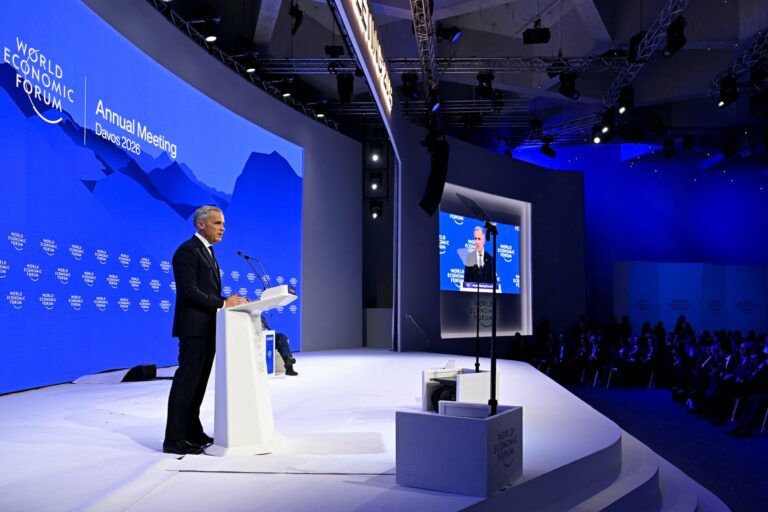
In January, Carney made a splash with his own speech at the World Economic Forum in Davos, Switzerland, where he urged “middle powers” to unite against “economic intimidation” and forge a new path amid the upheaval created by superpowers—such as China and the U.S. The remarks were particularly well received in Europe, which was grappling with Trump ramping up his threats to take over Greenland, the semi-autonomous Arctic territory of Denmark.
Canada and the EU, which traded $134 billion worth of merchandise in 2025, have long been allies. Yet Tuts said the recent changes increase the desire for an even closer relationship. “With the turbulence we are facing, we both want to diversify,” she said. “We know that Canada and the EU are both partners, reliable, who will respect their commitments, who will work with trust and respect. This is an important thing.”