Listen Now
0:00
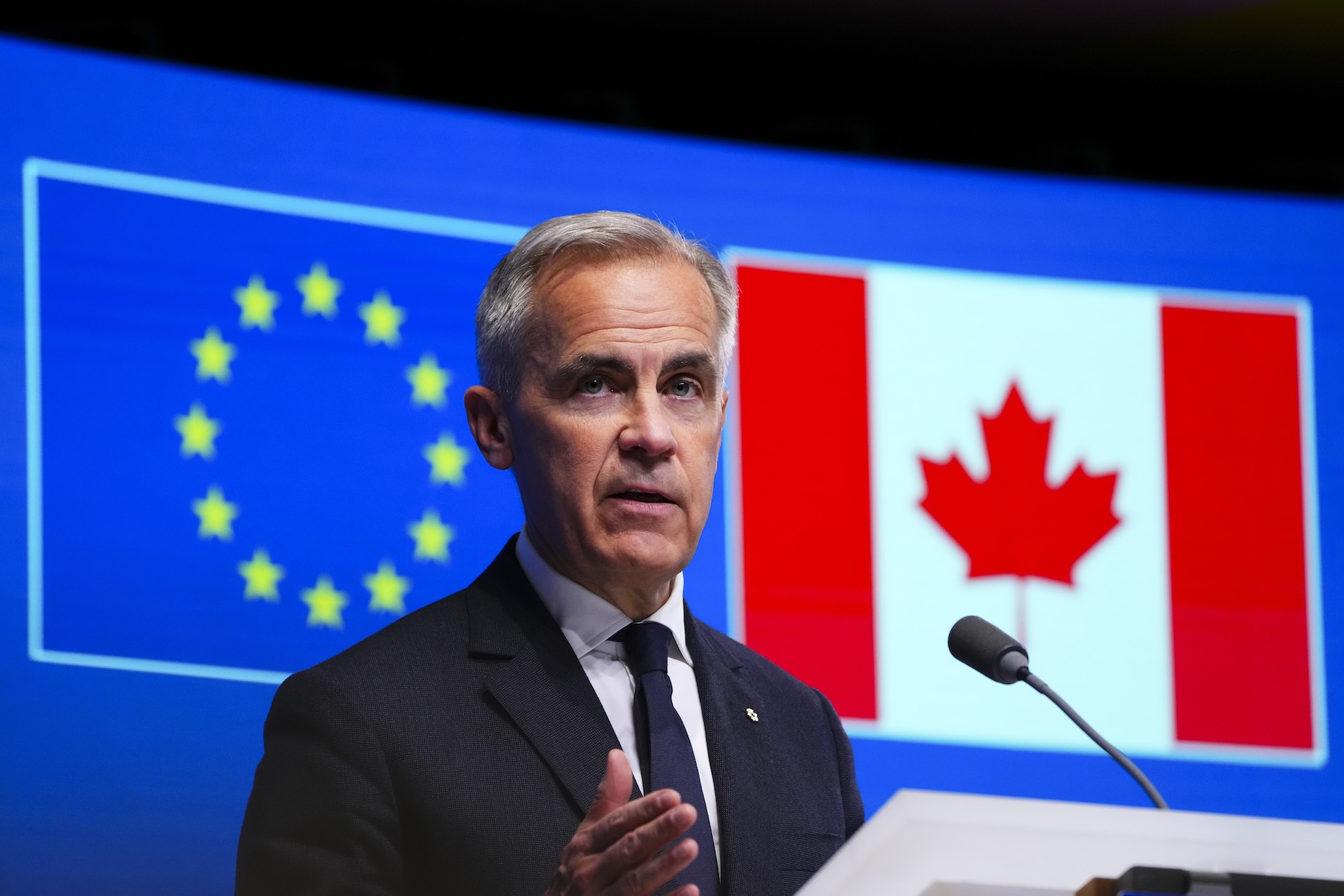
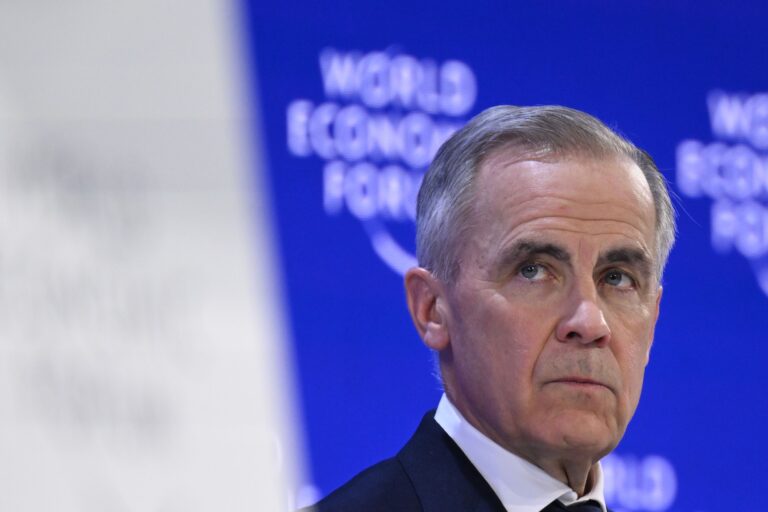
LONDON, U.K. — Europe knew only too well what Mark Carney meant when he said there had been a “rupture in the world order.” In his headline-grabbing Davos speech, the Canadian prime minister called out the same problem that many business leaders, economists and policy experts have railed against for years: an overwhelming reliance on U.S. technology in the bloc, and a perceived inability to do anything about it.
“Carney was very courageous in sending this very strong signal in Davos,” said Martin Hullin, director of network for technological resilience and sovereignty at Bertelsmann Stiftung, a German non-profit. “He’s a better European than we are at this stage.”
Talking Points
- Closer ties on defence could be a boon for businesses on both sides of the Atlantic, but major increases in trade and business between Canada, the EU and the U.K. will only happen once landmark agreements are in place
- To make those deals, politicians in Europe and Ottawa will need to blast through red tape that has stalled trade agreements for years, and do so without incurring the wrath of Washington
Davos has afforded Canada a “window of trust” with Europe, Hullin said—but now, he added, Carney needs to put his money where his mouth is. His promise of a new world order hinges on an ability to cut through red tape, strike stronger trade deals and avoid angering the U.S. in the meantime.
On paper, Canada and Europe are a good match. Canada has strong AI expertise, access to huge reserves of critical raw materials and, by some European standards, a strong startup culture. Europe, on the other hand, has a strong industrial base and regulatory leadership on the world stage.
Related Articles
So far, Carney has focused on trying to reinforce trade with Europe by focusing on defence. He spent the latter half of 2025 securing Canada’s participation in Security Action for Europe (SAFE), a program that provides up to $244 billion in loans to EU member states to support large-scale defence projects, including acquiring ammunition, missiles, drones, artillery systems and infantry weapons. Carney has also started talks with Europe on a digital trade agreement, and committed to co-operating on critical raw materials and industrial policy.
The defence industry is a good starting point for Carney’s vision of closer ties with Europe, experts say. But, for larger-scale co-operation to happen at any speed, both sides need to fully ratify trade agreements that will allow companies to stop talking and start doing.
Despite this urgency, obstacles remain. Full ratification of the Comprehensive Economic and Trade Agreement (CETA) between Canada and the EU, which has been provisionally applied since 2017, has stalled due to objections from several member states, notably France and Ireland. In June 2025, the two allies signalled their intent to solve the impasse with Carney saying he wanted to “deepen Canada’s relationship” with the bloc by increasing co-operation on defence, trade and commerce.

Canada faces similar problems with post-Brexit Britain, where trade talks have stalled because of a row over cheese, beef and cars. “It does feel like a missed opportunity,” said Sabina Ciofu, international policy and strategy lead at UK trade association techUK, of the impasse between Canada and the U.K. “In the current geopolitical context, we should probably move beyond that.” Attempts to do so may already be underway. Last December, Ralph Goodale, then Canada’s high commissioner to London, suggested that 2026 would bring about an “ambitious” new strategic partnership between Canada and the U.K.
Ciofu said that U.K. businesses see opportunity in Canada—especially in national security and defence. The U.K. has worked toward striking more bilateral agreements and sending delegations to Canada, but major movement is unlikely unless a trade deal is in place to shield companies from geopolitical shocks.
Whatever makes it into such a trade agreement—be it agreements about data flow, co-operation on AI or quantum—it gives companies some degree of confidence, Ciofu said. “It provides a lot more legal certainty for businesses operating on both sides,” she added.
“We can think about this as a generational opportunity for deeper transatlantic co-operation.”
Even before a trade deal is inked, a defence alliance between Canada and Europe could be a boon for businesses on both sides of the Atlantic. “We can think about this as a generational opportunity for deeper transatlantic co-operation, and especially also a very lucrative opportunity for the Canadian defence sector,” said Raluca Csernatoni, a research fellow at Carnegie Europe in Brussels, who recently co-authored a report on how Canada and Europe might better work together. “I think that the political will is there,” she added.
The problem is that political will could soon collide with political reality. “The key here is the sustained political commitment across the Atlantic between the Canadian and the EU sides,” Csernatoni says. “The proof is in the pudding.”
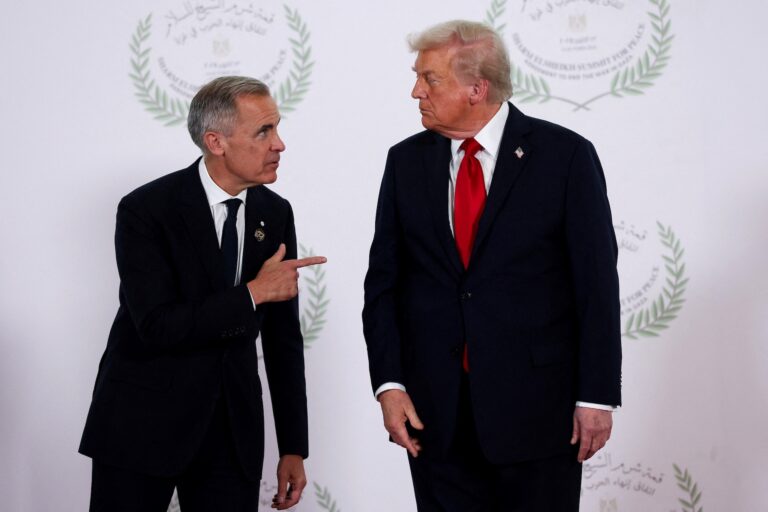
Beyond the pudding lies U.S. President Donald Trump. The joint review of the U.S.-Mexico-Canada Agreement (USMCA) looms large over all trade negotiations and could hamper Canada’s ability to do deals elsewhere if there’s a risk of angering Washington.
Still, there are plenty of areas in which Canada and the EU could work far more closely, including AI safety, data exchange for disease research and sharing data without physically moving it to comply with privacy regulations on both sides of the Atlantic. Canada has also signalled interest in opening up a new supply chain for critical minerals to the EU, something on which the bloc is currently heavily reliant on China for. Both sides could also bolster their regulatory standards in areas such as AI and digital currencies by agreeing on a joint approach, experts say.
Agreeing on regulation may also help with Canada’s attempts to untangle itself from America’s Big Tech firms. Last June, Ottawa abandoned its planned digital services tax following objections from the White House in an attempt to advance trade negotiations. Such a move might not have been necessary were Canada and the EU singing from the same regulatory hymn sheet.
Such complications make it unlikely there will be a sudden surge in transatlantic deals between Canada and Europe. On defence, however, there is some urgency. The EU has given SAFE a deadline of 2030 to spend its allocated budget on defence, Csernatori said. “Time is of the essence. But it’s also very important to consider what we call the typical defence procurement timelines,” she said. These projects can take years to finalize, especially for major deals.
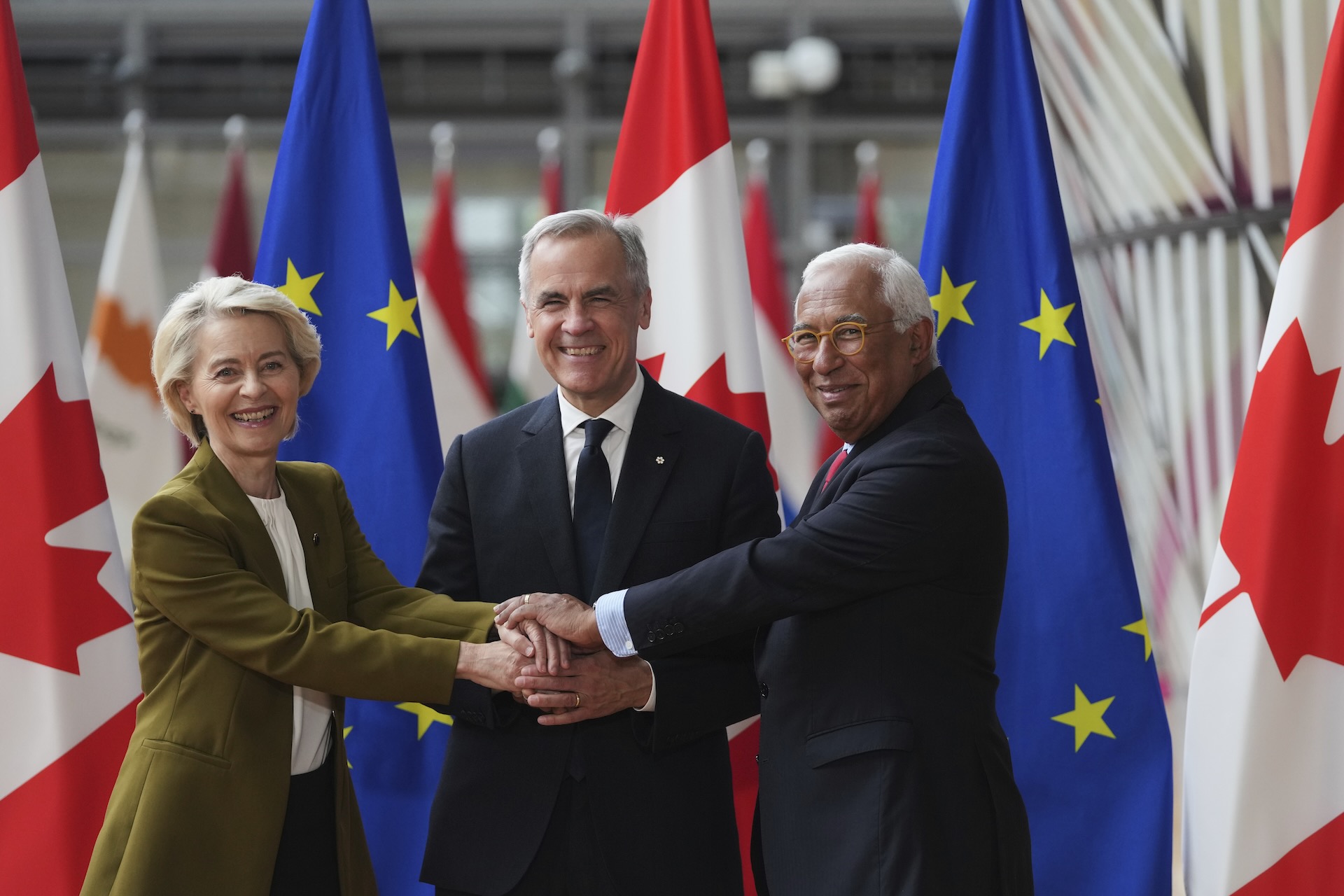
Untangling Europe and Canada from America’s Big Tech dominance will be equally complex, experts say. To do so, the two allies need to stop focusing solely on trying to unpick and regulate U.S. tech, and instead focus on growing alternatives and safeguarding against any possible fallout. In Europe, many experts believe that unpicking the bloc’s reliance on major U.S. tech firms is unrealistic—instead, they believe it should be possible to force such companies to hand over more control of the data they collect and give their homegrown rivals more opportunities to compete.
“Europe will never become digitally independent, nor should they,” said Johan Linåker, senior researcher at RISE Research Institutes of Sweden, an independent government research institute. “However, the continent needs to become way more resilient, treating digital infrastructure as a critical asset that can function in a situation of crisis.”
To achieve this, Linåker said, buyers need to start imposing terms that will allow them to control their own data, force companies to consider open-source technologies as much as possible and create an exit strategy should the relationship break down.
Canada could be inspired by this approach, and also sidestep some of the headaches that Europe has suffered by focusing too heavily on regulating U.S. technology firms. Instead, experts say, both the bloc and Canada should focus on growing domestic alternatives and giving them preferential treatment.
“You do not create an industry by regulating the monopolies,” said Cristina Caffarra, an economist, antitrust expert and chair of EuroStack, a strategic initiative aimed at establishing European digital sovereignty by reducing reliance on foreign, primarily U.S., technology. What Europe has traditionally failed to do, she argued, is spend time and energy on building up its own digital capabilities.
Caffarra believes Europe needs to use “brute force” to build a domestic tech industry that can also be competitive elsewhere. “The irony is that we have tremendous capabilities and assets,” she said.
Promoting homegrown talent is just the starting point for both Canada and Europe. The real challenge, Csernatoni said, is to identify potential vulnerabilities and hunt down lucrative areas of investment. She called for “a holistic technological and digital vision of the future.” For Europe that means greater economic security, technological sovereignty, reindustrialization and also a reskilling of the workforce, she added.
Rather than trying to compete directly against the likes of Google or Microsoft, Europe and Canada should work together to try and build the most trusted alternatives to U.S. behemoths, said Hullin. “Who will be first to be trusted in a geopolitically very volatile world?” Europe and Canada, he said, could benefit greatly by working together on such an approach.
“Europeans are sick of being told we are schmucks,” Caffarra said. “We’re not schmucks when it comes to a lot of things. In aerospace, satellites, biotechnology and robotics, we have some pockets of absolute total excellence,” she said. As with Canada, Caffarra believes Europe needs to take a stand—and deliver. “I don’t get why we end up being slapped around in this way. We need to just do it.”