Listen Now
0:00
OTTAWA — As the federal government works to draw private investment to the North, a key U.S. voice in the Arctic has proposed that Canada’s pension funds put money into rival projects in Alaska.
Thomas Dans, chair of the U.S. Arctic Research Commission, told business leaders and policymakers in Toronto last month that the Trump administration is serious about resource development in Alaska—and that Canadians would be wise to get in on it.
Talking Points
- Thomas Dans, chair of the U.S. Arctic Research Commission, says Canadian institutional investors should put their money into Alaska’s energy and infrastructure projects, such as the proposed US$44-billion Alaska LNG pipeline and export facility
- He argued that the U.S. is outpacing Canada in developing its natural resources, but energy expert Heather Exner-Pirot said there is still a better business case for LNG on the B.C. coast
“You’re looking at an absolutely historic amount of investment that’s going to Alaska—orders of magnitude, really—the biggest investment ever into the U.S. energy industry,” Dans said during a panel discussion on Canada-U.S. relations in the Arctic at a conference hosted by the Eurasia Group and RBC.
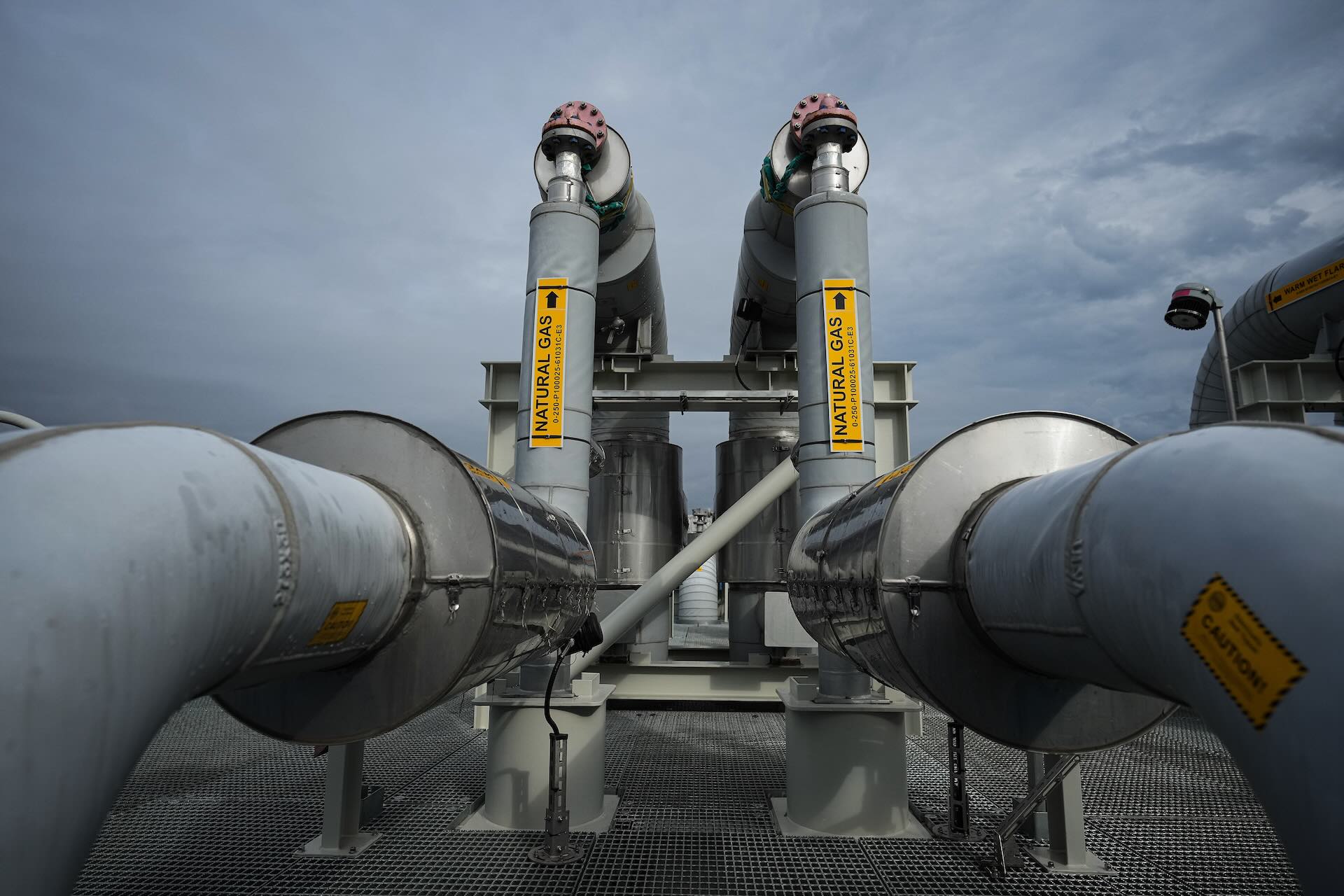
That list of projects, he said, includes Alaska LNG, a proposed US$44-billion project to build a 1,300-kilometre natural gas pipeline from the North Slope to a new liquefaction plant and export facility. It would eventually open direct access for U.S.-produced liquefied natural gas to Asia—and compete with Canada for market share.
Related Articles
“So, great investment opportunities. Come to Alaska,” Dans said. Mentioning his career background in investment management and venture capital, he said that if he were a younger man, he would want to get there quickly. “I’d probably fly rather than go through the Yukon over land,” he quipped, “but I would set up shop first thing, find the capital; second thing, call the Canadians to help me make some of this stuff happen.”
In an interview with The Logic, Dans said he had Canadian pension funds in mind when he made that appeal. He has not spoken to any, but he is not the only one hoping to win them over.
Prime Minister Mark Carney has been trying to give Canadian institutional investors a reason to choose more domestic assets as part of efforts to diversify the economy amid the ongoing trade war. About three-quarters of the $2.6 trillion in assets actively managed by Canada’s largest pension funds is invested outside Canada, including south of the border.
Dans, who has played a big role in Trump’s push to bring Greenland under U.S. control, is making the case for investors to choose Alaska. “I think we’re just going to be further ahead,” he told The Logic when asked why Canadian investors would put their money there instead of at home.
The White House published an executive order on Jan. 20, 2025, “literally hours after President Trump was sworn in,” as Dans put it, aimed at helping the U.S. “fully avail itself” of Alaska’s natural resources and land to benefit the state and entire country.
In Toronto, Dans highlighted Alaska LNG as “the headline project,” while also mentioning a US$7-billion plan to upgrade a U.S. Air Force base in Anchorage. Oil production began last month at Pikka, owned by Santos of Australia and Repsol of Spain. Willow, another oil project on the North Slope from Houston-based ConocoPhillips that was approved in 2023, is set to begin production in early 2029. In the interview, Dans also mentioned a planned industrial access road to the Ambler Mining District that got the green light last year—reversing a decision by the Biden administration to deny permits.
“We have been really running at full speed since then in this direction,” Dans told The Logic, referring to inauguration day. “My impression is that Canada is not placing the same emphasis on developing its own resources,” he added. “That’s why I think this is a near-term opportunity for Canadians—both strategic and portfolio investors—to access the opportunities.”
Heather Exner-Pirot, director of energy, natural resources and environment at the Macdonald-Laurier Institute, said it was a “provocative statement” from Dans, whom Trump appointed last December. She said Alaska LNG is not really competing with Canadian development in the Arctic, but rather with Canada’s LNG projects on the B.C. coast.
“I think the West Coast LNG [projects] are good businesses and have backing obviously from the world’s oil supermajors and consumers,” she said. The LNG Canada terminal in Kitimat, B.C., sent its inaugural shipment across the Pacific to Asian markets in June 2025. The federal government referred a proposal to expand the facility to the Major Projects Office last September. Ksi Lisims LNG, a proposed floating liquefaction and export facility near Prince Rupert, B.C., was recommended for fast track last November and has a buyer lined up in Securing Energy for Europe, a German state-owned energy company. Neither of those projects have received their final investment decision.
While Dans might have been trying to make some waves by urging Canadians to invest in Alaska energy development, the U.S. has been quite serious about courting investment in its LNG from Japan. Last year, Japan reached a deal with the U.S. to invest US$550 billion, which included commitments by Tokyo Gas and Japanese power generation company JERA to buy LNG from the proposed pipeline in Alaska. (Japan also buys some of the LNG shipped from Kitimat.) “Canadians tend to need a little bit of a fire under their butts to get moving,” said Exner-Pirot. “If we don’t move fast, Alaska will get chosen ahead of our projects.”
Alaska LNG has had its own challenges. ConocoPhillips, BP and ExxonMobil walked away from it years ago amid rising costs and the remote location. Last year, private developer Glenfarne Group reached an agreement with state-owned Alaska Gasline Development Corporation to lead the project, but those factors remain. “There’s lots of things that make Canada uncompetitive, but sometimes geography and the resource base is in our favour,” said Exner-Pirot.