The first set of major national projects blessed with special federal treatment are all well underway but will get help to reach the finish line, Prime Minister Mark Carney said in announcing them Thursday. He said a second set will be announced by Nov. 16.
Skip to content


News
Carney’s first five major projects aren’t new, but expect more to join them soon
An Ontario nuclear plant, Montreal’s port expansion and LNG Canada’s next phase make the first list. The next is coming by Grey Cup, the prime minister says.
First-phase construction of LNG Canada’s terminal in Kitimat, B.C.; the second phase is on Ottawa’s list of projects of national interest. Photo: The Canadian Press/Darryl Dyck
The first set of major national projects blessed with special federal treatment are all well underway but will get help to reach the finish line, Prime Minister Mark Carney said in announcing them Thursday. He said a second set will be announced by Nov. 16.
Head of the pack
The new federal major projects office, whose job is to streamline government approvals and assist with financing, gets these on its to-do list first:
- The second phase of LNG Canada’s liquefied natural gas facility in Kitimat, B.C. The first phase opened this year and had exported 10 shiploads by Sept. 2.
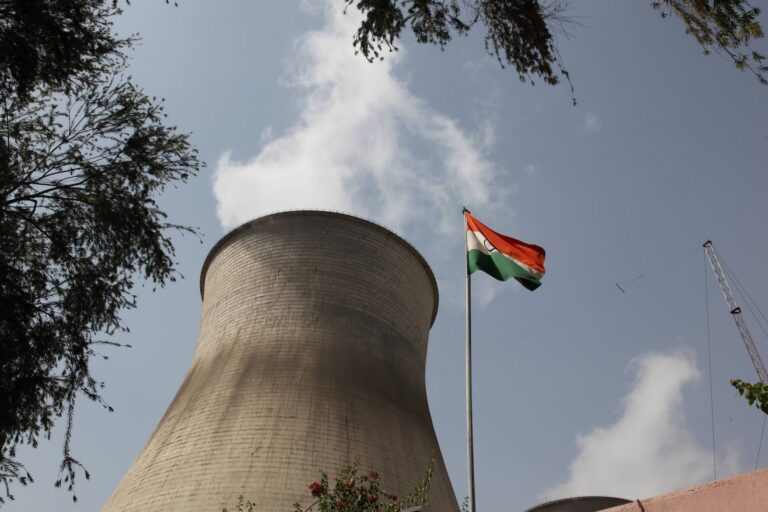
- A new small modular nuclear reactor at Darlington, Ont.
- A new container terminal in Contrecoeur, Que., part of the Port of Montreal
- Two copper mines—at McIlvenna Bay in east-central Saskatchewan, and an expansion of the Red Chris Mine in northwestern B.C.
Several have substantial federal money behind them already. The Canada Infrastructure Bank backed the Contrecoeur terminal with $300 million in 2019, for instance, and promised $970 million for the Ontario nuclear project in 2022. Foran’s Saskatchewan mine project got $41 million through the Strategic Innovation Fund earlier this year.
The container terminal has an operator lined up; the Ontario nuclear reactor is actually under construction, though it will eventually need a licence to operate.
Talking Points
- Prime Minister Mark Carney’s first set of top-priority national projects is a batch of five that are late in the planning stages or even under construction, but will get help from the new major projects office to cross the finish line
- Expect multiple waves of announcements within a year, Carney said, as more speculative proposals crystallize into specific plans
- Besides resource-development efforts like mines and ports and a natural-gas export facility, the prime minister said he wants the projects office to help develop a Canadian sovereign cloud-computing capability
The next phase of the Kitimat LNG facility is awaiting a final investment decision from its private operators, but they’ve hired engineers for it. (Electrifying the facility, so it doesn’t burn gas to power itself, remains an unresolved challenge.)
“The proponents behind each of these projects have already done much of the hard work,” Carney acknowledged.
Second wave
More projects—and flashier ones that are currently more speculative—are “to be announced by the Grey Cup,” Carney said, referring to the CFL final set this year for Nov. 16. Without guaranteeing that they’ll be on the next list, Carney named other projects he wants the new office to try to move along:
- The Wind West Atlantic Energy wind farm proposal off Nova Scotia, a key component in a bigger multi-province green-energy effort in Atlantic Canada.
- Pathways Plus, a proposal to capture and store carbon dioxide from Alberta’s oil sands.
- The Arctic Economic and Security Corridor, a road and port project meant to link Yellowknife to the Arctic Ocean at Nunavut’s Grays Bay, serving mines along the way.
- Expansion at Manitoba’s Port of Churchill.
- The Alto high-speed rail plan to connect Toronto, Ottawa, Montreal and Quebec City, which Carney said he wants to start construction in four years instead of eight.
Carney also said he wants the major projects office to move along critical-minerals projects in Ontario’s Ring of Fire, the Northwest Territories’ Slave region and the Labrador Trough that spans Labrador and Quebec. He didn’t specify any particular project in any of those regions, though he said they could include anything “from mine to magnet.”
Related Articles


One of these things is not like the others
When Carney made his announcement at an Edmonton carpenters’ union hall, he added an item to the to-do list that didn’t make it into the written materials, and isn’t a heavy-construction job.
“We will ask the major projects office to begin assisting in the development of a Canadian sovereign cloud,” the prime minister said. “This will give Canada independent control over advanced computing power, while reinforcing our leadership in AI and quantum.”
He didn’t give details, but this seems to mean the government wants data centres built in Canada and owned by Canadians, to keep Canadian information and processing out of other countries’ control.
Whom the office will assist to do this, Carney didn’t say, and the Prime Minister’s Office didn’t immediately respond to a query about it.
Low-carbon oil, but not yet
No oil pipeline projects made the lists because no private proponent is actively proposing one, Carney said, but if that changes, he’s listening. He cited Alberta Premier Danielle Smith’s idea of a “grand bargain” that pairs a major decarbonization project—like the Pathways carbon sink—with a pipeline.
“We have the lowest-risk oil in the world. We know exactly where it is. We know how to mine it and develop it. The marginal costs are amongst the lowest costs in the world,” he said. “We need to move toward it being one of the lowest-carbon sources of oil in the world.”
Smith stuck up for Carney on X Thursday morning, saying they had had an “exceptionally productive meeting” the day before and that she’s “more optimistic than ever that the concerns of Albertans are FINALLY BEING HEARD.”
Goldy Hyder, CEO of the Business Council of Canada, though he welcomed the Kitimat LNG and Montreal port project’s appearances on the first list, said he doesn’t expect any private proponent will want to build an oil pipeline as long as laws cap emissions from the oil and gas sector and restrict tanker traffic off the Pacific coast.
“We need certainty and predictability that is best done legislatively,” he told The Logic.
More waves
When Carney said he expects to have additional projects to support by mid-November, he was speaking seriously. Semi-jokingly, he also said to expect yet more by the Stanley Cup late in the spring, and the World Cup (FIFA’s global men’s soccer championship is to conclude July 19).
Dawn Farrell, the former energy-sector executive named to head the office, has an inbox stuffed with proposals, he said.
“We will dedicate the resources with the intention of moving as rapidly as possible, and the definition of ‘fast’ has changed dramatically,” Carney said.
Indigenous consultation
The law establishing the major projects office, called Bill C-5, infuriated multiple Indigenous groups and leaders, who said the bill itself—let alone the projects it’s meant to enable—trampled their rights to be consulted on projects that affect them and to control what happens on their land.
Late Wednesday, the government named 11 members of the office’s Indigenous advisory council, including from seven First Nations, two Métis federations and Inuit groups in Nunavut and northern Quebec.
Criticism
The announcement is “pathetic,” Conservative Leader Pierre Poilievre said before Carney spoke. “What he’s done today is announced that he’s going to send an email to an office that isn’t even fully staffed up yet, which will one day consider, possibly, approving five projects.”
Some of the announcement’s fiercest critics cited the environment and Indigenous Peoples’ rights.
“Rather than being met with partnership, we are given an ultimatum: accept fossil fuel expansion or be pushed aside,” said Grand Chief Stewart Phillip, president of the Union of B.C. Indian Chiefs, in a written statement. “LNG Canada is not only a massive source of greenhouse gas emissions but also drives destructive fracking, further threatening our lands, waters and communities—emissions do not recognize territorial boundaries.”
“We see some good ideas in the tentative project list—wind energy generation and high-speed transit, for example,” said Caroline Brouillette of Climate Action Network Canada. “We also see within this list some dangerous initiatives that further entrench us in [U.S. President Donald] Trump’s dream of an uncompetitive, volatile and fossil-fueled North American economy, while the world sails to green tech.”
With files from Joanna Smith and Laura Osman



Loading...
Thanks for sharing!
You have shared 5 articles this month and reached the maximum amount of shares available.
CloseThis account has reached its share limit.
If you would like to purchase a sharing license please contact The Logic support at [email protected].
CloseGift the full article!
You have gifted 0 article(s) this month and have 5 remaining.
Recipients will be able to read the full text of the article after submitting their email address. They will not have access to other articles or subscriber benefits.
Photo: The Canadian Press/Darryl Dyck
Most Popular This Week



In-depth, agenda-setting reporting
Great journalism delivered straight to your inbox.
The Big Read
Beacon is building an AI empire by fixing Main Street’s software
Briefing
Inovia raises US$200M for new VC fund as it eyes AI’s impact
43% of eligible Albertans voted ahead of Monday’s referendum
AI chip company Tenstorrent raises US$1.5B, valuing it at US$6.2B
Best business newsletter in Canada
Get up to speed in minutes with insights and analysis on the most important stories of the day, every weekday.
Exclusive events
See the bigger picture with reporters and industry experts in subscriber-exclusive events.
Membership in The Logic Council
Membership provides access to our popular Slack channel, participation in subscriber surveys and invitations to exclusive events with our journalists and special guests.