Skip to content

Commentary
Carmichael: Canada can’t make USMCA its only focus
It’s not just about America. Canada’s prospects depend on making more of what the whole world wants.
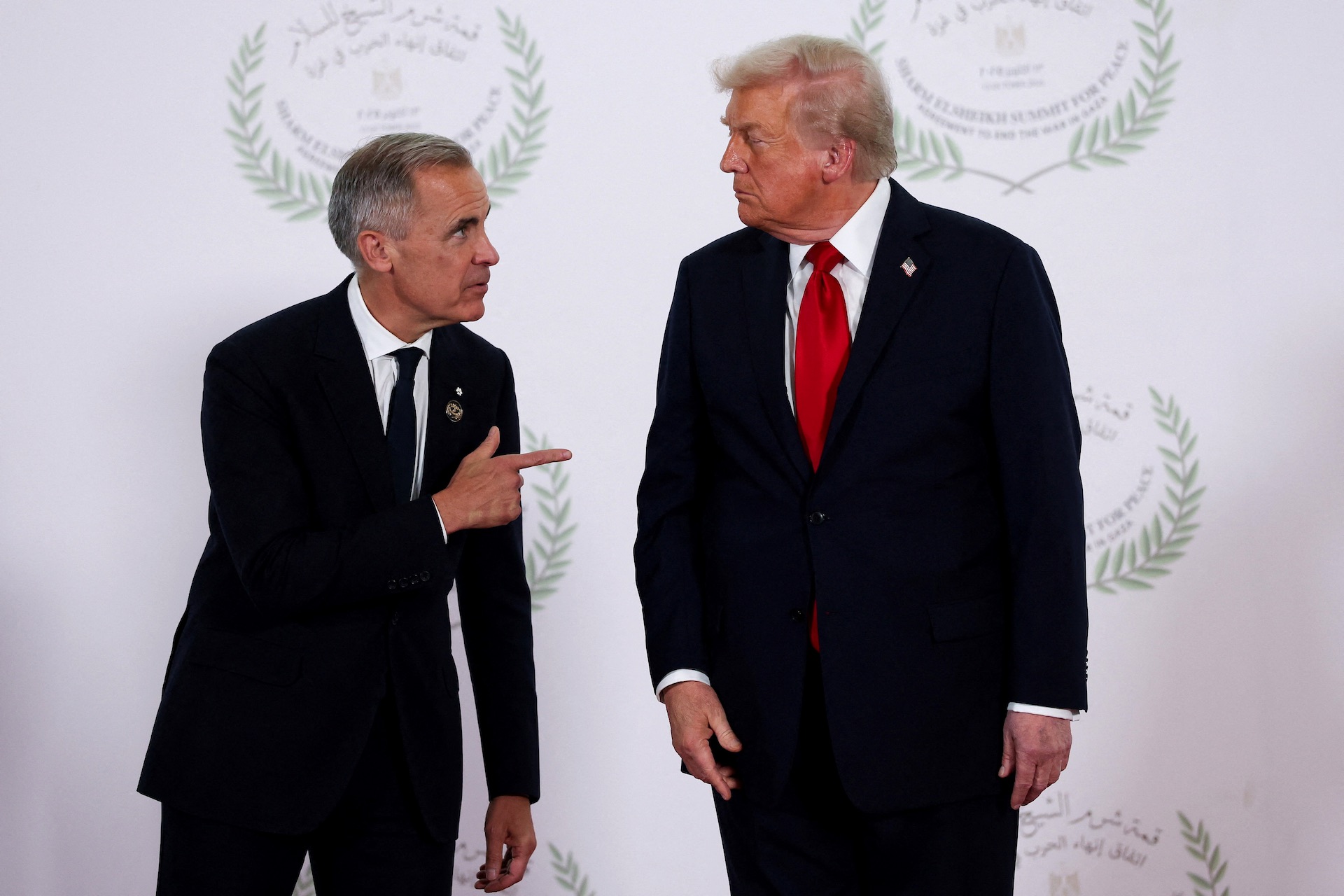
Prime Minister Mark Carney and U.S. President Donald Trump at a summit on ending the war in Gaza, in Sharm el-Sheikh, Egypt, in October 2025. Photo: Reuters/Suzanne Plunkett/Pool
It feels like a good time to resurface the contributions of a little-known Canadian hero: James Vosburgh, the courier who rushed into Upper Canada in June of 1812 with a warning that the Americans were coming.
Vosburgh wasn’t Canadian. Nor was the man who gave him the dispatch. John Jacob Astor was America’s leading merchant and financier, and a rival of the Hudson’s Bay Company. Treasury secretary Albert Gallatin had tipped Astor off to Washington’s declaration of war on Great Britain. Astor swiftly sent Vosburgh to instruct his business partner in Queenston, Thomas Clark, to protect their furs from British seizure.
Related Articles


Clark was also a local magistrate. He shared the news with the British commanding general Isaac Brock a dozen hours before the U.S. troops on the Niagara front knew they were at war. That wasn’t part of Astor’s plan, but he had his priorities. “Loyal to profits rather than Britain, Astor meant no treason,” historian Alan Taylor wrote in The Civil War of 1812. “Vosburgh escaped trial because no law criminalized the passage of commercial news. This folly confirmed the British conviction that Americans would do anything for money—and that the diffuse republic could do nothing to control them.”
I like this story because it reminds me that traders are the source of trade, not trade negotiators and their political masters. Physical constraints and agreements like the one Canada, the U.S. and Mexico ratified in 2020 only shape commerce. Not even war can stop the magnetic attraction of entrepreneurial ambition and human desire for scarce goods and services. While slaughtering each other’s soldiers by the thousands during the First World War, British and German officials arranged an exchange via Switzerland of German binoculars for British rubber. German firms were the runaway leaders in precision optics, while Britain had access to vast rubber supplies from its colonies. Where there’s want, there’s a way.
I’m going to come back to the power of want at the end. But first let’s confront the boogeyman. We’re already letting our imaginations run wild about what could come of this year’s review of the United States-Mexico-Canada Agreement (USMCA). The Bank of Canada set aside an entire page in its latest Monetary Policy Report to discuss its attempt to think through where talks could lead. Conclusion: anything could happen. “The outcome is an important risk to the outlook,” the report said.
For now, governor Tiff Macklem has chosen to assume the three parties will opt to re-up the trade agreement in its current form. That’s a reasonable assumption. Revealed preference theory assumes that what we do is a truer indicator than what we say. The fact that U.S. President Donald Trump’s tariff blitzkrieg left USMCA untouched suggests he understands the benefits of economic efficiency more than he lets on.
Nevertheless, the revealed and stated preferences of most executives since Trump’s return has been to hunker down. The Bank of Canada reckons business investment subtracted from gross domestic product growth in 2024, and contributed nothing to last year’s meagre expansion. The central bank’s latest quarterly Business Outlook Survey suggests a large majority of executives intend to spend only enough to keep their existing operations fit for purpose; only a third said they were planning investments that would make them more competitive.
That’s a concern. If this is indeed a make-or-break moment for Canada, we’ll surely break if companies’ idea of investment is duct tape and bailing twine.
Go ahead and accuse business leaders of meekness, as long as you include yourself in the criticism. For the better part of four decades, we’ve equated economic prosperity with access to the U.S. market. The political class, trade associations and labour leaders amplified this dependency dynamic by treating the renegotiation of the North American Free Trade Agreement like it was a death match. They focused on little else for more than two years, until the revised agreement cleared its final hurdles at the end of 2019.
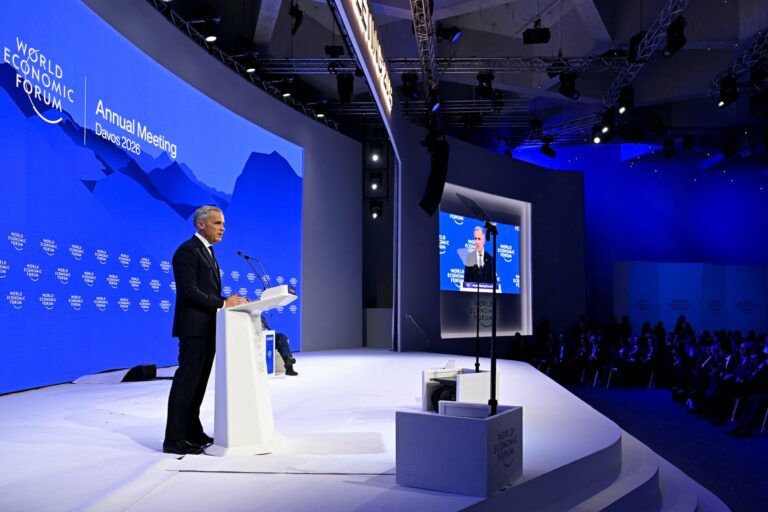
Prime Minister Mark Carney’s Davos speech offered another way to think about that moment: the all-hands-on-deck approach to negotiating a set of tariff schedules was an act of subordination.
Who knows if Trump really thinks Canada would cease to exist without U.S. charity. But the way we behaved a decade ago would have given him every reason to think so. Imagine if a portion of that political capital had been spent on a royal commission on tax reform, or erasing the trade barriers that prevent Canadian companies and consumers from maximizing their proximity to another G7 economy: their own. The International Monetary Fund’s latest review of Canada includes math that suggests a mostly free internal market for goods and services would increase gross domestic product by $210 billion over the longer term—and estimates that a 10-per-cent rise in U.S. trade costs could be offset by lowering internal trade costs by five per cent.
The modern day Astors will determine the future of USMCA. Let them do the heavy lifting this time. Canada would do better to focus on making more of what the world wants, rather than relying on our bounty of raw materials. That’s where strength lies. Look at South Korea, Taiwan and the Netherlands. They’ve made themselves essential by supplying something that everyone wants: the hard-to-make computer chips that make artificial intelligence possible.
Canada’s prospects are contingent on the quality of its traders, not its trade agreements. We’ve been putting the emphasis on the wrong thing.
Kevin Carmichael is The Logic’s economics columnist and editor-at-large. He has spent more than two decades covering economics, business and finance for outlets including Bloomberg News, The Globe and Mail and the Financial Post, where he also served as editor-in-chief.



Loading...
Thanks for sharing!
You have shared 5 articles this month and reached the maximum amount of shares available.
CloseThis account has reached its share limit.
If you would like to purchase a sharing license please contact The Logic support at [email protected].
CloseGift the full article!
You have gifted 0 article(s) this month and have 5 remaining.
Recipients will be able to read the full text of the article after submitting their email address. They will not have access to other articles or subscriber benefits.
Photo: Reuters/Suzanne Plunkett/Pool
Most Popular This Week




In-depth, agenda-setting reporting
Great journalism delivered straight to your inbox.
News
A tech firm born from post-Brexit trade chaos sets its sights on Canada
Briefing
Czech defence conglomerate CSG buys 9.5% stake in MDA Space
Dominion Dynamics strikes preliminary deal to produce ground drones with Ukraine’s Tencore
Aritzia shares pop after earnings rise 204%
Best business newsletter in Canada
Get up to speed in minutes with insights and analysis on the most important stories of the day, every weekday.
Exclusive events
See the bigger picture with reporters and industry experts in subscriber-exclusive events.
Membership in The Logic Council
Membership provides access to our popular Slack channel, participation in subscriber surveys and invitations to exclusive events with our journalists and special guests.





