Skip to content

Commentary
Carmichael: Canada needs to bring back royal commissions. Yes, really
They used to help the country build consensus, but it’s been more than four decades since the last one
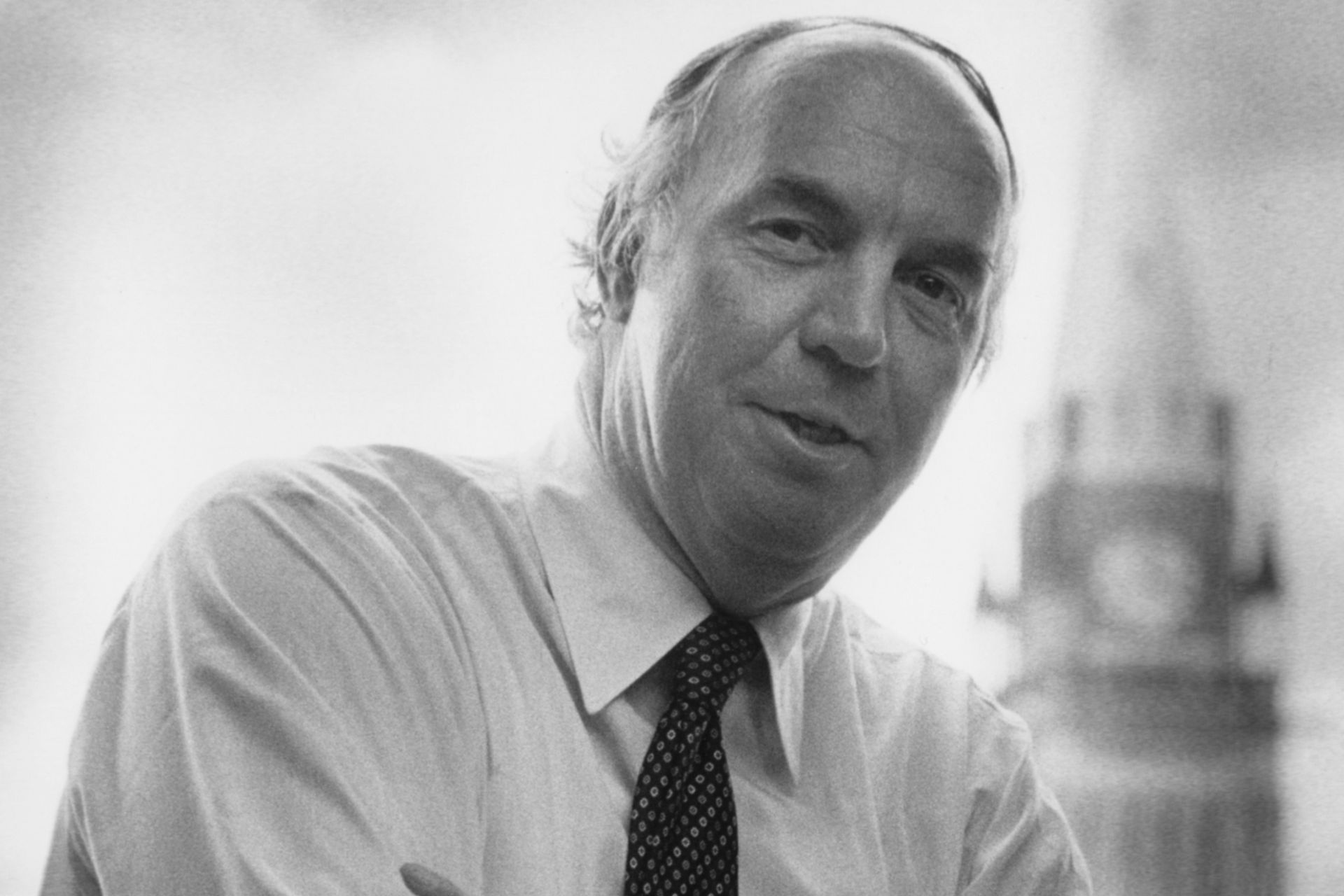
Donald MacDonald, a former Liberal cabinet minister and chairman of the Royal Commission on the Economy, in the commission’s headquarters in Ottawa on August 15, 1983. Photo: The Canadian Press/UPC/Chris Schwarz
You know that thing that happens when you buy, say, a blue car, and suddenly it seems like every other car you see on the road is blue? That might be what’s behind these next 900 words. But I don’t think so. I think Canadians are desperate for a return to the ways this complex country worked toward consensus before the political class forgot why it got into politics.
This is one of the main arguments of The Adaptable Country: How Canada Can Survive the Twenty-First Century by Alasdair Roberts, a Canadian professor of public policy at the University of Massachusetts Amherst, which I read after it was named a finalist for the 2025 Shaughnessy Cohen Prize for Political Writing. Roberts argues for bringing back royal commissions, the broad inquiries the federal government used to convene into complicated matters in the national interest, because they were a device that previous generations used successfully to think about the long term. Maybe we would feel less at U.S. President Donald Trump’s mercy if the last deep think we’d had about the economy weren’t the Macdonald Commission, which published its findings in 1985.
Related Articles

“An awareness of fragility is a necessary condition for adaptability because it heightens alertness to potential dangers,” Roberts wrote. “But alertness is not enough. An adaptable country must have methods for gauging the severity of threats, crafting potential responses and building consensus about a path forward.”
In early December, I asked Matthew Boswell, Canada’s now former gunslinging competition commissioner, for some policy advice as he rode off into the sunset. He said he’d spent much of his seven-year term trying to convince politicians to assemble a task force of experts that had a mandate to “attack” a regulatory thicket that protects legacy players and impedes new entrants. “This is one of my biggest regrets, that we haven’t got this to happen yet,” he said.
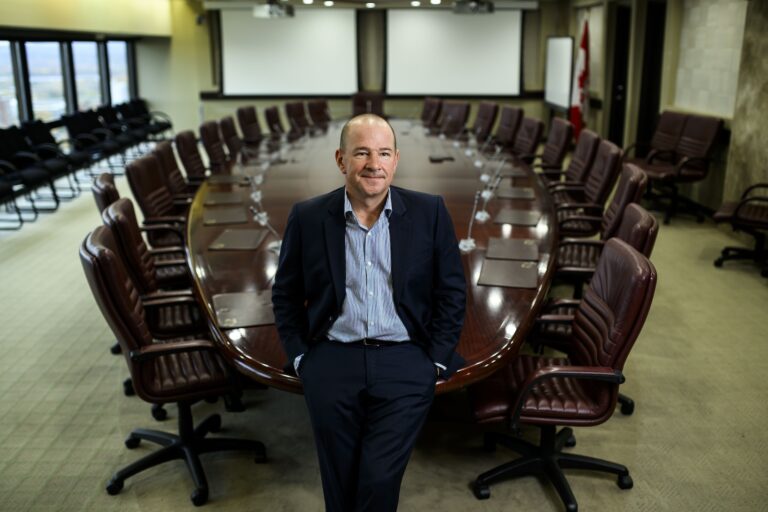
TMX Group chief executive John McKenzie told me in December that while tax policy has become a “great job creation regime for tax accountants and lawyers,” it is otherwise one of the best explanations for Canada’s chronically weak business investment. He’s pretty sure a simpler code with lower rates and fewer top-down nudges, such as the federal government’s new “productivity super-deduction,” would both jumpstart investment and pay for itself. “But the only way to get to that kind of reform is to actually do a proper, for lack of a better word, royal commission or independent study on how you actually reset the tax structure,” he said.
At a Christmas party, I met Queen’s University law professor Robert Yalden, who thinks Canadian corporate law is overdue for a rethink because the theory on which so much of it is based—the Reagan-era idea that the management’s only concern should be maximizing shareholder value—has been found wanting.
There’s even an open letter circulating that calls on the government to set up a royal commission on “securing Canada’s future,” signed by dozens of people who make a living thinking about such things. Once you finish rolling your eyes, ask yourself how exactly Canada should secure its future when the U.S. president has all but said that he sees himself as emperor of the Western Hemisphere? Scotiabank chief economist Jean-François Perrault and I had a go at that question last week on Amanda Lang’s podcast, and then three of us did it again at the Canadian Club’s annual outlook lunch in Toronto. Trust me, you need more than an hour of debate to get to a good answer.
I don’t know if we have the wherewithal to run multiple commissions and task forces simultaneously. Canada has conducted only two royal commissions in the past quarter-century. What Roberts calls the “political service” has developed a deep aversion to anything that might produce inconvenient expectations or make it harder to exploit excitable segments of the electorate. The governments of Stephen Harper and Justin Trudeau appointed their share of handpicked experts to study various things, but those leaders were polarizing figures. Each governed after their party won less than 40 per cent of the popular vote, and an average of 36.5 per cent over six elections.
Huge sections of Canada’s highly polarized electorate were destined to reject anything Harper or Trudeau touched. Prime Minister Mark Carney and Conservative Leader Pierre Poilievre are now fighting behind even harder lines, with each commanding the support of about 40 per cent of voters. The political service has spent two decades destroying the credibility of its opponents. Consensus might no longer be possible. If it is, the work of building one will need to be outsourced to institutions that can resist the political fray.
The Macdonald Commission was struck in the aftermath of the economic upheaval of the 1970s and early 1980s. It created a foundation for the political consensus around free trade and fiscal prudence in the 1990s and 2000s. The conditions on which many of those ideas were based no longer hold. Everything we’ve done since at least the end of the Cold War has been on the assumption that Great Power struggles were over. They weren’t.
Worse than that, Canada is without a protector. If that doesn’t demand a reconsideration of everything we thought we knew, what does? Carney might have a plan, but what he’s trying to do seems destined to clash with the concerns of a population that keeps telling pollsters that what it cares about most is affordability, not making difficult choices to create a resilient economy.
The urgency of the moment might argue against a process that could run for months or even years. But the core argument of The Adaptable Country is that a nation that doesn’t know where it’s headed will be too fragile to survive all that’s coming, whether it be from geopolitical clashes, demographics or climate change. Good leaders recognize that sometimes you have to slow down and think. “The time I took speaking to mentors, reading, learning, that did constrict the growth of the business for a while,” Shopify founder Tobi Lütke once said of the period when he transitioned to chief executive. That was around 2008. Look at Shopify now. It’s probably the country’s most important company.
Canada needs to spend some time speaking to mentors, reading and learning. Ahead of the election, both the Liberals and the Conservatives promised to appoint expert panels to review corporate taxes. Maybe that would be a good place to start.
Kevin Carmichael is The Logic’s economics columnist and editor-at-large. He has spent more than two decades covering economics, business and finance for outlets including Bloomberg News, The Globe and Mail and the Financial Post, where he also served as editor-in-chief.



Loading...
Thanks for sharing!
You have shared 5 articles this month and reached the maximum amount of shares available.
CloseThis account has reached its share limit.
If you would like to purchase a sharing license please contact The Logic support at [email protected].
CloseGift the full article!
You have gifted 0 article(s) this month and have 5 remaining.
Recipients will be able to read the full text of the article after submitting their email address. They will not have access to other articles or subscriber benefits.
Photo: The Canadian Press/UPC/Chris Schwarz
Most Popular This Week



In-depth, agenda-setting reporting
Great journalism delivered straight to your inbox.
News
An obscure data standard is the latest open banking holdup—and an unlikely political hot potato
Briefing
OSFI won’t dictate whether banks block AI agents, says Routledge
Deep Sea Minerals files to raise US$5M as U.S. spurs on seabed mining
Celestica expects sales to nearly double next year as AI demand surges
Best business newsletter in Canada
Get up to speed in minutes with insights and analysis on the most important stories of the day, every weekday.
Exclusive events
See the bigger picture with reporters and industry experts in subscriber-exclusive events.
Membership in The Logic Council
Membership provides access to our popular Slack channel, participation in subscriber surveys and invitations to exclusive events with our journalists and special guests.