Canada Pension Plan Investment Board receives visitors on the 25th floor of a tower in downtown Toronto. The vastness of Lake Ontario in the distance is offset by the density of the surrounding skyscrapers. The concrete jungle will continue to encroach as time goes on. I counted nine construction cranes at work, a reminder of the struggle to match supply with this country’s insatiable demand for housing.
Skip to content


Commentary
Carmichael: The country’s biggest pension fund is ready to help build Canada
For the first time in a while, CPP Investments CEO John Graham is feeling hopeful about nation-building infrastructure projects
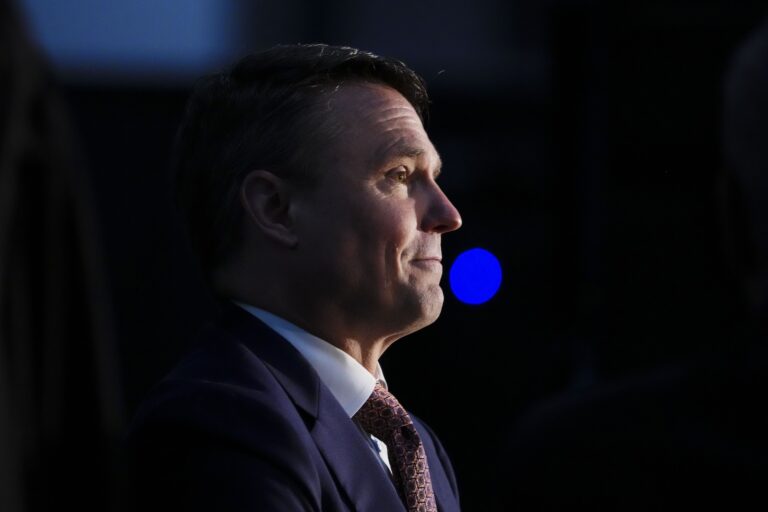
CPP Investments CEO John Graham at the Canadian Chamber of Commerce's Annual General Meeting Convention in Ottawa in Oct. 2022. Photo: The Canadian Press/Sean Kilpatrick
Canada Pension Plan Investment Board receives visitors on the 25th floor of a tower in downtown Toronto. The vastness of Lake Ontario in the distance is offset by the density of the surrounding skyscrapers. The concrete jungle will continue to encroach as time goes on. I counted nine construction cranes at work, a reminder of the struggle to match supply with this country’s insatiable demand for housing.
If Mark Carney makes good on his ambition to “build, baby, build,” crane spotters will have fun in the years ahead. The prime minister listed seven priorities in the mandate letter he sent his cabinet ministers this week; priority number two involves “expediting nation-building projects” and priority number four encompasses his campaign pledge to double the pace of home construction.
All that building will require a lot of money. That’s why the political class has begun casting a covetous eye at all the riches stored in the country’s big public pension funds.
It started in 2023 when former finance minister Chrystia Freeland flirted with the idea of assigning funds a domestic investment mandate. That idea never took off—but it never really died either. The more than $2 trillion in wealth managed by the biggest public pension funds will be part of the answer. The only question is how Ottawa and the provinces choose to channel it. “We’re going to build for the next 25 to 30 years,” Carney told podcaster Scott Galloway in April, during the federal election campaign. “We can finance it. We’ve got all the pension funds. We’ve got lots of money to finance it, but we need to kick-start it.”
Related Articles

We can finance it. We’ve got all the pension funds.
The biggest of those funds is the one overseen by John Graham, the former Xerox chemist who joined CPP Investments as a researcher in 2008, climbing the ranks to his current position as president and chief executive in February 2021. The fund reported this week that the value of its assets increased 9.3 per cent in the fiscal year that ended March 31, to $714.4 billion.
Graham’s time as CEO has coincided with an extraordinary period for any asset manager. A sudden uptick in casual political interference is but one of many new variables with which he must now contend.
Graham makes a habit of sparing 30 minutes or so for people like me after the release of each annual report. My big question for him was how he intends to respond to the pressure to invest more in Canada. The debate has been simmering for more than a year, yet the funds themselves haven’t said much about it—maybe because they don’t say much in public, period.
But first I wanted to know how one of the world’s most influential investors makes sense of a moment when age-old investment theses and correlations are blowing up on the regular.
“The punchline is, diversification is an act of humility,” Graham said.
The notion that you could generate greater returns without taking on undue risk by spreading your assets across geographies and classes was one of the reasons Canada’s governments loosened the reins on the managers of the Canada Pension Plan back in the 1990s. But the strategy has its detractors. A rigid diversification strategy ties the hands of managers who spot good ideas. You might end up limiting yourself to middling returns, raising questions about what all those well-paid asset managers are doing to earn their keep.
Diversification is looking like a wise path these days. The past few months provide a good demonstration of how a pension fund is different from a hedge fund. Graham described working in markets this year as a “really wild ride.” It started with surging enthusiasm for what a Trump presidency could mean for investors, and then a collapse in confidence in the U.S. dollar and treasuries following Trump’s “Liberation Day” tariffs.
Yet if you went to sleep on Jan. 1, woke up this week and looked at the markets, you wouldn’t know much had changed. Hedge funds and other active investors made and lost billions on good and bad bets through all that volatility. Graham’s strategy was to stay on course, buying and selling to keep the portfolio balanced.
“People feel very delicate right now, especially the institutional investors,” Graham said. “But there’s been support into the markets from lots of different sources, including retail [investors] that are pricing in a pretty benign environment. So I think people are taking this opportunity to think about how they want to position their portfolios over the next few years.”
He added: “One of the best things you can do right now is to stay calm and focus on the long term. I call the portfolio a supertanker. What I mean by that is it just has to plow ahead. We can’t avoid things. We just have to be able to run them over and just keep pushing forward.”
An example of something CPP Investments ran over: its promise that its portfolio of assets would stop contributing to climate change by 2050. The annual report disclosed that “recent legal developments in Canada”—an allusion to the federal anti-greenwashing law—meant that keeping a specific target could expose the fund to lawsuits down the road. Graham said he plans to plow through the political backlash to environment, social and governance (ESG) initiatives in the U.S. and elsewhere. “We haven’t changed anything,” he said.
“We’ve invested so much time and money in tools and expertise to incorporate climate into the portfolio, and I think we have a pretty good handle on it,” Graham continued. “We want to increase gender representation in the senior ranks. We want to improve visible minorities in the senior ranks. We’ve made good progress. We’re not where we want to be. We do it because we think as an investment organization that makes decisions, we’ll make better decisions. We’re going to keep doing exactly what we’ve been doing.”
But what many want to know is whether CPP Investments intends to invest more of those billions in Canada. Dozens of CEOS signed an open letter last year that called on finance ministers to “encourage” the biggest funds to do more at home. The other side of that argument is that the sole mission of the CPPIB and its peers is to maximize the contributions of pensioners, and they should be left alone to do that however they see fit.
The criticism is odd, at least when it comes to CPP Investments: 12 per cent of its portfolio is in Canada, even though the country represents only about two per cent of global gross domestic product. But Graham nonetheless appeared open to increasing that share. Maybe it’s the political pressure. Or maybe it’s because Canadians have just given a new government permission to do big things.
Geographically, Graham said CPP Investments has shrunk its focus to places where they think they have an “edge.” The new investing map includes Canada, the U.S., Europe, developed Asia and a “handful of emerging markets.” That bodes well for Canada, but it will be up to promoters to come forward with good projects.
“We have teams kind of scouring the country,” he said. “For the first time in a while, we’re hopeful that we’re going to see some large-scale infrastructure investments—that we’re actually going to see nation-building infrastructure.”
It turned out that I had been gazing at an example of the kind of project that CPP Investments teams turn up. In 2021, one of Graham’s first big bets as chief executive was to take a 70-per-cent stake in a multi-family rental development that is nearing completion a few blocks away from the fund’s headquarters.
Graham got out of his chair to point in the direction of the construction site that will eventually house thousands of people. “Those buildings over there,” he said. “We’re building those.”
Kevin Carmichael is The Logic’s economics columnist and editor-at-large. He has spent more than two decades covering economics, business and finance for outlets including Bloomberg News, The Globe and Mail and the Financial Post, where he also served as editor-in-chief.



Loading...
Thanks for sharing!
You have shared 5 articles this month and reached the maximum amount of shares available.
CloseThis account has reached its share limit.
If you would like to purchase a sharing license please contact The Logic support at [email protected].
CloseGift the full article!
You have gifted 0 article(s) this month and have 5 remaining.
Recipients will be able to read the full text of the article after submitting their email address. They will not have access to other articles or subscriber benefits.
Photo: The Canadian Press/Sean Kilpatrick
Most Popular This Week




In-depth, agenda-setting reporting
Great journalism delivered straight to your inbox.
News
A tech firm born from post-Brexit trade chaos sets its sights on Canada
Briefing
Aritzia shares pop after earnings rise 204%
First Nation in Alberta goes to court over fast-tracked oil pipeline
Chinese EV maker Geely Auto Group to launch in Canadian market in 2027
Best business newsletter in Canada
Get up to speed in minutes with insights and analysis on the most important stories of the day, every weekday.
Exclusive events
See the bigger picture with reporters and industry experts in subscriber-exclusive events.
Membership in The Logic Council
Membership provides access to our popular Slack channel, participation in subscriber surveys and invitations to exclusive events with our journalists and special guests.





