CALGARY — Lobby groups representing industries from automotive to mining to manufacturing are raising alarm over the federal government’s new anti-greenwashing rules, warning that they limit companies’ ability to promote environmental achievements and could even hinder access to capital.
Skip to content


News
Uncertainty over Ottawa’s anti-greenwashing rules could silence promotion of net-zero efforts, industry groups warn
From canola producers to automakers, the federal government’s new law discourages discussion about companies’ green efforts, business representatives argue
A Syncrude mining facility where reclamation efforts are underway near Fort McKay, Alta., in September 2022. Photo: AFP via Getty Images/Ed Jones
CALGARY — Lobby groups representing industries from automotive to mining to manufacturing are raising alarm over the federal government’s new anti-greenwashing rules, warning that they limit companies’ ability to promote environmental achievements and could even hinder access to capital.
Criticism of the provisions, which came into force in June following the passage of Bill C-59, the government’s budget implementation act, has so far come mostly from the oil and gas industry. But in interviews with The Logic, industry groups outside the energy sector spoke out against the legislation, arguing it will stifle promotion of the very net-zero goals Ottawa has sought to enforce.
Talking Points
- Groups representing a range of industries warn that changes to Canada’s Competition Act meant to clamp down on “greenwashing” will discourage companies from promoting environmentally positive initiatives
- Oilsands companies were the earliest to oppose the new law, but objections are now coming from across the economy
The new rules stem from the federal government’s effort to clamp down on “greenwashing,” a term used when a company obfuscates its environmental impact, often by promoting its green credentials, to improve its public image.
The anti-greenwashing provisions fall under changes to the Competition Act, which was updated as part of C-59. The law exposes companies to legal challenges should they make claims about their environmental performance that cannot be verified through an “adequate and proper test, the proof of which lies on the person making the representation.”
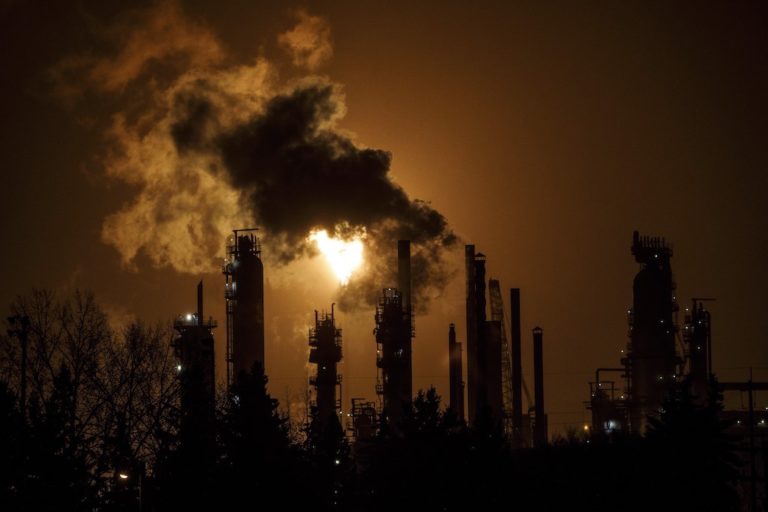
Its passage caused a scramble in the oil and gas sector. Uncertain how to interpret the law, and fearful of legal recourse, some companies immediately stopped discussing their environmental track records or climate targets.
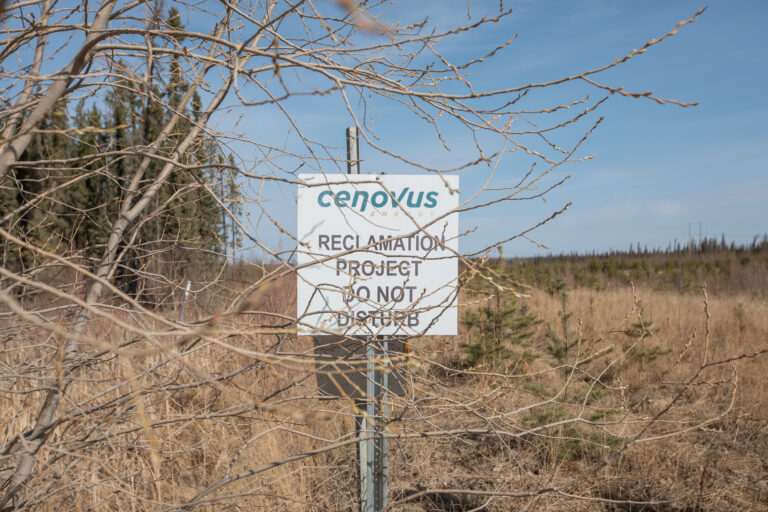
Pathways Alliance, a consortium of six oilsands companies with plans to build a $16.5-billion carbon-capture and -storage hub in central Alberta, almost entirely scrubbed its website before the provisions became law. (The group is also tasked with promoting the industry’s environmental activities.) Oilsands companies posted disclaimers on their websites and two—Cenovus Energy and Canadian Natural Resources—delayed publishing their annual environmental reports.
Related Articles
Pathways later restored some content to its site, including a page dedicated to the Competition Act regulations where the group claims “there is uncertainty on how the new legislation will be interpreted and applied” and that the anti-greenwashing changes were “introduced with no notice.”
The consortium declined The Logic’s interview request.
Objections to the legislation reach beyond the fossil fuel industry, as companies in a variety of sectors are reconsidering how they communicate their environmental activities.
Dennis Darby, CEO of the Canadian Manufacturers & Exporters association, called the C-59 changes “quite heavy-handed” and said his member companies worry about possible legal challenges for any environmental claims they make. Canadian manufacturers invest in a range of emissions-reducing technologies from carbon capture to higher-efficiency heat recovery systems, he said.
“It’s a disincentive for companies to talk about environmental issues or even talk about projects they’re doing,” Darby said.
He also worries about a potential “chill” on manufacturers’ ability to secure investment should domestic companies fail to fully promote their efforts, particularly at a time when the global finance sector is increasingly environmentally conscious.
Corporate greenwashing has become a global issue in recent years, as activists warn that lack of regulatory oversight lets companies claim environmental bona fides without earning them. In particular, carbon offsets, or schemes in which companies purchase land or virtual renewable power contracts to offset their emissions, have failed to meaningfully reduce CO2 output.
In Canada, environmental groups including Ecojustice, Équiterre and the Quebec Environmental Law Centre lobbied for even more stringent amendments to the law that would’ve outright prohibited certain forms of greenwashing.
The private sector has its own concerns about the new law, though, not least its requirement that companies prove the validity of their climate claims according to globally recognized benchmarks that C-59 doesn’t specify.
“There’s such a lack of clarity, especially on the internationally recognized methodology,” Photinie Koutsavlis, vice-president of economic affairs and climate change at the Mining Association of Canada.
Amendments implementing the changes were introduced hastily, she said, causing a “mad scramble to try to make sense of what this means on the legal side.”
David Adams, CEO of Global Automakers Canada, called C-59 “nebulous” in its wording, saying the bill ratcheted up previous reporting standards.
“There are already provisions in the Competition Act for misleading advertising, but I think these take it to a different level,” he said.
By causing hesitation among private sector firms, Adams said, C-59 is doing the opposite of what the government “is actually trying to achieve, which is to try to be able to put accurate information out there.”
The Canola Council of Canada and Canadian Steel Producers Association raised similar objections to the anti-greenwashing rules.
A spokesperson for Industry Minister François-Philippe Champagne, who oversees Canada’s Competition Act, did not respond to a request for comment before deadline.
Keith Stewart, senior strategist at Greenpeace Canada, said the ability to track and assess industrial activities is key to meeting global climate targets, and anti-greenwashing provisions support those efforts by forcing companies to adhere to specific reporting requirements.
Stewart added that there are clear international standards set by the United Nations and International Energy Agency, and heavy-emitting industries are likely aware of them.
“They are out there, published, and [oilsands companies] know it, and that’s why they freaked out,” he said.
In response to confusion around how the regulations would be enforced, Canada’s Competition Bureau provided updated guidance in July, accelerating its release due to a “large number of requests” for clarity.
Competition Commissioner Matthew Boswell, who’s in charge of enforcing the act, told the House of Commons’ Finance Committee earlier this year that Bill C-59 “probably isn’t the right vehicle for that kind of regulation or legislation,” and suggested Environment Canada or various provincial regulators might be better positioned for the task.
The Competition Bureau has launched public consultations on the anti-greenwashing rules, and is asking industry a range of questions, including “what internationally recognized methodologies” it should consider when assessing claims.
The window for submissions closes Sept. 27, after which the bureau will issue a final report.



Loading...
Thanks for sharing!
You have shared 5 articles this month and reached the maximum amount of shares available.
CloseThis account has reached its share limit.
If you would like to purchase a sharing license please contact The Logic support at [email protected].
CloseGift the full article!
You have gifted 0 article(s) this month and have 5 remaining.
Recipients will be able to read the full text of the article after submitting their email address. They will not have access to other articles or subscriber benefits.
Photo: AFP via Getty Images/Ed Jones
Most Popular This Week




In-depth, agenda-setting reporting
Great journalism delivered straight to your inbox.
The Big Read
Alberta’s referendum is just the start of the turmoil
Briefing
EverWind plans $10B data centre and wind development in Nova Scotia
Canada ready to force Stelco to sell its Canadian operations, Joly says
Feds plan a 60 MW defence-oriented data centre for Ottawa
Best business newsletter in Canada
Get up to speed in minutes with insights and analysis on the most important stories of the day, every weekday.
Exclusive events
See the bigger picture with reporters and industry experts in subscriber-exclusive events.
Membership in The Logic Council
Membership provides access to our popular Slack channel, participation in subscriber surveys and invitations to exclusive events with our journalists and special guests.






