Listen Now
0:00
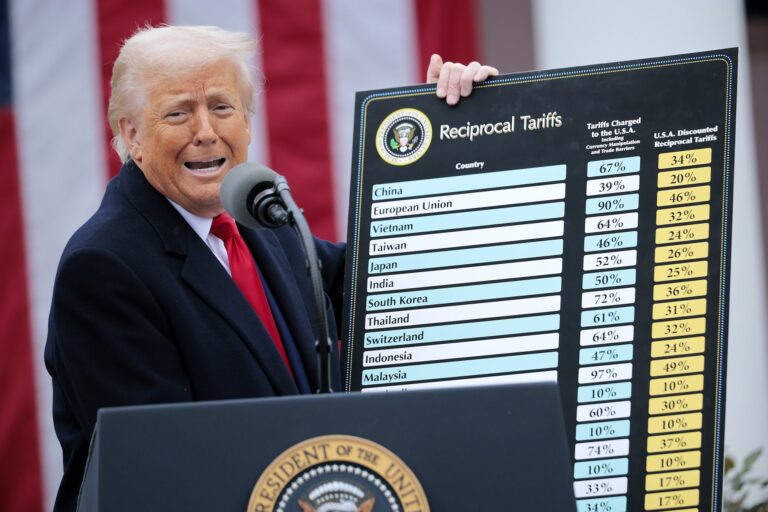
OTTAWA — U.S. President Donald Trump plans to hit Canada with 50 per cent tariffs on a range of exports in retaliation for what the White House claims is discrimination against American goods.
Trump issued three proclamations on Monday, connected to three distinct trade irritants: motor vehicles, supply management in the Canadian dairy industry and provinces’ decisions to take American alcohol off their markets.
Canada’s dairy protectionism has been an issue in Canada-U.S. trade for decades—giving a little way on supply-managed products was part of the first broad Canada-U.S. free trade agreement in 1989.
Related Articles
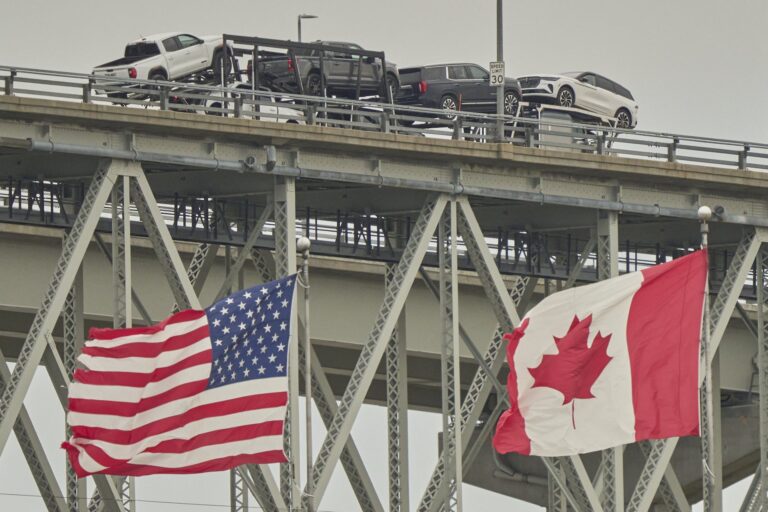
However, Canada’s new tariffs on certain American-made vehicles and parts (some of which Canada subsequently ordered refunded, for manufacturers that kept operations in Canada), and provinces’ bans on selling American booze, were direct responses to the Trump administration’s tariffs on Canadian exports.
The renewed hostility comes as Canada, the United States and Mexico are in the preliminary stages of negotiating an update to the Canada-United States-Mexico Agreement on trade (CUSMA). Canada wants a full renewal, which Trump has rejected.
The irritants
In each case, Trump argued that Canada is unfairly targeting American products and U.S. industries and workers are suffering.
In the auto sector, for instance, Trump alleged that Canada’s tariffs on U.S. exports of cars that aren’t covered by CUSMA drove Canadian imports down from US$25.9 billion between April 2024 and March 2025 to US$20.3 billion in the following year.
“In total, Canadian imports of motor vehicles from countries other than the United States increased by approximately US$2.85 billion over the same period, with Mexico accounting for almost US$2 billion of the increase,” Trump’s proclamation said.
“Canada, unlike other partners and allies, continues to retaliate against the United States for its efforts to rebalance trade and protect U.S. industry in national-security sensitive sectors,” U.S. Trade Representative Jamieson Greer said in a statement Monday. He said the new tariffs would cover about US$20 billion worth of Canadian goods.
The new tariffs are to take effect in 30 days.
What’s hit
Unlike many of Trump’s previous tariffs, this round will affect even goods that are protected under CUSMA.
The alcohol tariffs are mostly straightforward. They would apply to beer, wine and hard liquor, plus a handful of wood products and paper. But also: “ice-hockey and field-hockey articles and equipment… and parts and accessories thereof.”
The dairy tariffs, similarly, would cover Canadian milk and cream products and derivatives, whey protein and some sugar products, including molasses.
The motor vehicle-related tariffs are the most diverse, and—other than motorcycles and boats—the least connected to the source of Trump’s stated frustration. This list of goods covers nearly 18 pages and includes plywood, a variety of papers, a range of agricultural products like seeds and bulbs, clothing, decorative glassware, hand tools, Christmas ornaments and antiques.
What’s not hit
The White House noted the new tariffs won’t apply to energy exports, potash or critical minerals. They also exempt Canadian exports already subject to the Section 232 tariffs Trump imposed last year on autos, steel, aluminum, copper and lumber.
And more
The three proclamations unambiguously targeting Canada were only some of the U.S. president’s trade belligerence Monday. He also issued an executive order tightening restrictions on imports of components and raw materials used in military production, and offered to cut tariffs on imported aluminum in half for suppliers that pledge to increase production within the United States.
The U.S. has historically been a major buyer of Canadian aluminum. Before Trump, it accounted for 91 per cent of Canadian aluminum exports, according to federal figures.
Canada’s response
Prime Minister Mark Carney disputed the U.S. administration’s charges of Canada’s discrimination against American businesses. In a statement on Monday, he noted that Canada has merely matched the unilateral trade measures the U.S. imposed since Trump’s reelection, and added that Canada has proposed several solutions in a bid to modernize CUSMA.
“This trade dispute has raised costs for families, particularly in the United States,” Carney said. “Canada stands ready to engage intensively to address outstanding issues with the United States to the mutual benefit of our citizens.”
The prime minister’s statement did not suggest he plans to retaliate further, but said Canada “will take any measures necessary to build strength at home and to support Canadian workers, farmers, businesses and families.”
Ontario Premier Doug Ford urged the federal government to match Trump’s latest round of tariffs dollar for dollar if they go ahead. “I’ll never stop fighting to protect Ontario,” he said in a statement on social media.
Dennis Darby, CEO of the Canadian Manufacturers and Exporters industry association, called Trump’s announcements “an alarming escalation that will inflict serious damage on manufacturers, workers and consumers on both sides of the border.”
He implored the Canadian government to “engage immediately with the U.S. administration to have these tariffs withdrawn before they take effect.”
The vast array of wood and paper products targeted in the proclamations had the Forest Products Association of Canada scrambling Monday evening, going through the lists line by line to assess the effects.
“We are concerned by the new U.S. tariffs proposed today. We are reviewing in detail to understand the potential impact for our sector before commenting,” spokesperson Rebecca Rogers said.
Trump said Sunday that he had threatened Carney with tariffs over wildfire smoke when they spoke at the FIFA Men’s World Cup Final match in New Jersey, repeating a demand for damages he’d previously made on his Truth Social website. The proclamations don’t mention that complaint.
Carney is expected to meet with provincial and territorial premiers later this week in Charlottetown to discuss Canada-U.S. relations, among other priorities.
The law Trump is using
The new tariffs mark the first time the White House has used Section 338 of the Tariff Act of 1930 to target imports to the U.S.
The Depression-era law lets the president impose tariffs of up to 50 per cent where he finds that other countries have put U.S. commerce at a disadvantage. The provision doesn’t require any federal agency to investigate claims about potential discrimination beforehand. The law also lets the president block imports from a particular country, if he chooses.
Last year, Democrats tried to head off the president by introducing a resolution in Congress to repeal that section of the Act, but it didn’t pass.
The likelihood of a legal challenge “is about as certain as day follows night,” said Lachlan Wolfers, national leader of KPMG Law in Canada. “The question is whether it will be successful, and how long it will take before it will ultimately wind its way through the U.S. legal system.”
With files from Anita Balakrishnan
Editor’s note: This story was updated to add details, background and comment.