When Craig Follett and Adam Meghji sold Universe, the online ticketing company they co-founded, to Ticketmaster in 2015, the first thing they each did with their exit money was buy a house and fill its walls with art.
Skip to content


News
Peggy’s AI ‘digital fingerprint’ for artwork aims to please collectors, artists and galleries alike
‘There’s lots of people out there who have the means to collect … but they’re just not … pulling the trigger.’
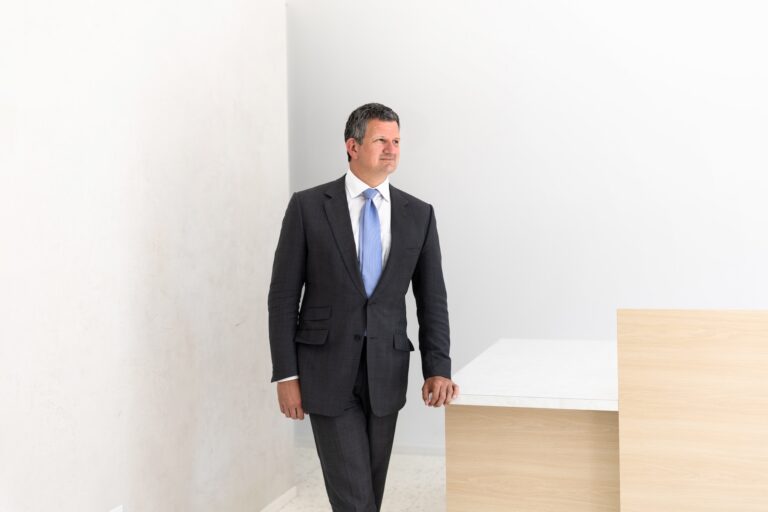
Peggy co-founders CTO Adam Meghji (left) and CEO Craig Follett (right) at their Follett’s backyard garage home office. Photo: Handout/Peggy
When Craig Follett and Adam Meghji sold Universe, the online ticketing company they co-founded, to Ticketmaster in 2015, the first thing they each did with their exit money was buy a house and fill its walls with art.
But as new collectors, they didn’t know what to buy, or where. Follett visited art fairs and galleries around the world. As he travelled, he learned that while billionaires can afford to have their Picassos authenticated, such services are often too costly for sellers to shoulder for works of less renown. He also learned that while artists in Europe earn royalties when their work is resold, the practice is uncommon anywhere else in the world.
Talking Points
- Peggy’s AI-powered tool verifies the authenticity of artwork with a smartphone camera making art collecting accessible to a younger demographic at more affordable price points
- A digital fingerprint following artwork through ownership changes through Peggy means artists and galleries each receive a five per cent royalty on secondary sales
“I built a lot of empathy for … artists, gallerists and collectors, and discovered [their] pain-points and hopes and dreams,” he said.
Those experiences inspired the duo to launch Toronto-based Peggy, a digital platform for the authentication and sale of analog paintings.
Key to the inspiration for the new startup—which in February announced it had raised $10.8 million in early-stage VC funding from investors like Real Ventures, Garage Capital, Portage and U.K. rapper Tinie Tempah, an avid art collector—was Meghji’s idea to replace an artwork’s paper certificate of authenticity, which could get lost or separated from the artwork, with verification via AI. “We realized that we could apply that digital fingerprint to solve that collector pain point, the artist’s pain point and gallery pain point,” said Follett.
Peggy assigns an AI-generated digital fingerprint to each artwork to let collectors trade while skipping auction house authentication. It provides a way for artists to be paid royalties from resales, and a platform on which galleries can reach a broader range of collectors.
Related Articles


Follett describes art as an investment that owners can enjoy as it appreciates, and wants to make that opportunity available for buyers of affordable art—especially in this economy. “Art has historically been an asset class that’s uncorrelated to others,” he said. “I think that this is an interesting aspect to what we’re doing in the [current] macroeconomic climate.”
After 2021’s boom in NFTs—a form of digital art that uses blockchain technology to offer some similar solutions on things like authentication and artist royalties—Portage, the venture arm of the wealthy Desmarais family’s investment company Sagard, saw Peggy as a natural extension of that interest, said partner Stephanie Choo in an email. Although the venture fund focuses on fintech, it’s also leaning into AI and sees potential in democratizing art with technology. “Like many marketplaces, trust is an important component and potential barrier to user adoption. The AI provides that trust,” she said.
That trust begins when an artist scans artwork into Peggy with a smartphone to create the digital fingerprint and register as the first owner. “With this AI, we’re able to look at the intrinsic aspects of this object itself, the brushstrokes, the canvas texture and determine that, yes, this is indeed that specific artwork,” said Follett. After a sale, the buyer scans the art with a smartphone to verify its authenticity and register as the new owner. When the owner resells the artwork, they can ship it directly to the new buyer who will repeat those steps. “Peggy never needs to touch the physical object,” he said.
“Collectors can buy art with the confidence that they can sell it in the future without the need for an intermediary such as an auction house. They can sell peer-to-peer [and] the new collector can verify the artwork using the AI,” said Follett. “That artwork can change hands at any number of times over the years, decades and centuries ahead.”
“We realized that we could apply that digital fingerprint to solve that collector pain point, the artist’s pain point and gallery pain point.”
Apart from creating trust, a digital fingerprint can facilitate royalties for art resales. Traditionally, an artist consigns artwork to a gallery, which finds a buyer for the piece and splits the proceeds 50-50 with the artist, but artists are usually cut out of secondary sales, Clint Roenisch, a Toronto art gallery owner representing five artists on Peggy, said in an email to The Logic. He said Peggy pays the artist and gallery a five per cent royalty each for secondary art sales, the first app to his knowledge to do so. “For decades, [artists] have been shut out of any secondary gains on their work, some of which have been meteoric,” said Roenisch.
Matthew Schofield, an artist on Peggy, said the royalties are a “nice step forward” in recognition that art could appreciate in value. Being an artist isn’t cheap; studio rent, power tools, paint, furniture and moving artwork between shows all add up, he said. “I’m not sure that everything is designed to make money, however, we all have to survive.”
In addition to sharing royalties, Follett said Peggy draws a younger demographic to galleries as their traditional collector base ages out. “There’s lots of people out there who have the means to collect, and they love culture and art, but they’re just not … pulling the trigger,” he said.
Roenisch agreed that Peggy will bring new collectors to his art gallery that he wouldn’t otherwise have reached. “All kinds of people buy art through the gallery, but generally younger, more tech-savvy people are comfortable on the app,” he said.
It’s not just galleries. Artists, too, hope to reach a wider audience. Schofield said the Canadian art market isn’t as vibrant as that of the U.S. or Europe due to its small size. “[It’s] a treat to have something that gives you access outside of the country,” he said. “It’s a nice thing to think of yourself as potentially being a global artist.” He believes selling art through a digital platform will help him reach a wider audience. “That’s the beauty of the internet age … it doesn’t matter where you are.”
In the future, Follett said he’s “excited” about potentially including sculptures in Peggy, but for now, the app only includes two-dimensional art like oil on canvas or pastel on paper. “I learned from my first venture that focus is the name of the game for success,” he said.
“At the end of the day, our mission is to connect people with art that they love and … maybe we’ll make some money off of that,” said Follett.



Loading...
Thanks for sharing!
You have shared 5 articles this month and reached the maximum amount of shares available.
CloseThis account has reached its share limit.
If you would like to purchase a sharing license please contact The Logic support at [email protected].
CloseGift the full article!
You have gifted 0 article(s) this month and have 5 remaining.
Recipients will be able to read the full text of the article after submitting their email address. They will not have access to other articles or subscriber benefits.
Photo: Handout/Peggy
Most Popular This Week




In-depth, agenda-setting reporting
Great journalism delivered straight to your inbox.
News
Canada-U.K. digital trade is set to grow under new phase of Pacific Rim trade pact
Briefing
Canada’s finance minister ready to ‘say what needs to be said’ to U.S. counterpart
Magna adds US$35M to its stake in India-based battery startup Yuma Energy
Global bond yields hit highest level since 2008 as inflation fears deepen
Best business newsletter in Canada
Get up to speed in minutes with insights and analysis on the most important stories of the day, every weekday.
Exclusive events
See the bigger picture with reporters and industry experts in subscriber-exclusive events.
Membership in The Logic Council
Membership provides access to our popular Slack channel, participation in subscriber surveys and invitations to exclusive events with our journalists and special guests.