Listen Now
0:00
TORONTO — The Creative Destruction Lab (CDL) is using a decade and a half of data to understand what makes science-based startups succeed and fail.
The Canadian non-profit is making the information, drawn from its network of accelerators, available to researchers around the world to study how founders, financing, mentorship and other factors impact firms’ prospects. Their findings could help startups make better choices, show investors what to look for, and influence the design of entrepreneurship policy and programs in Canada and abroad.
Talking Points
- The Creative Destruction Lab has built an AI model and dataset to help researchers study what makes science-based startups successful. The Canadian non-profit is drawing on 15 years of analytics on the companies that have been through its accelerator programs.
- The $69-million project was partly funded by $17 million from the flagship federal innovation fund
To do that, CDL has collected “the best dataset in the world for understanding early-stage, venture-backable, scalable companies,” chief data scientist Avi Goldfarb told The Logic.
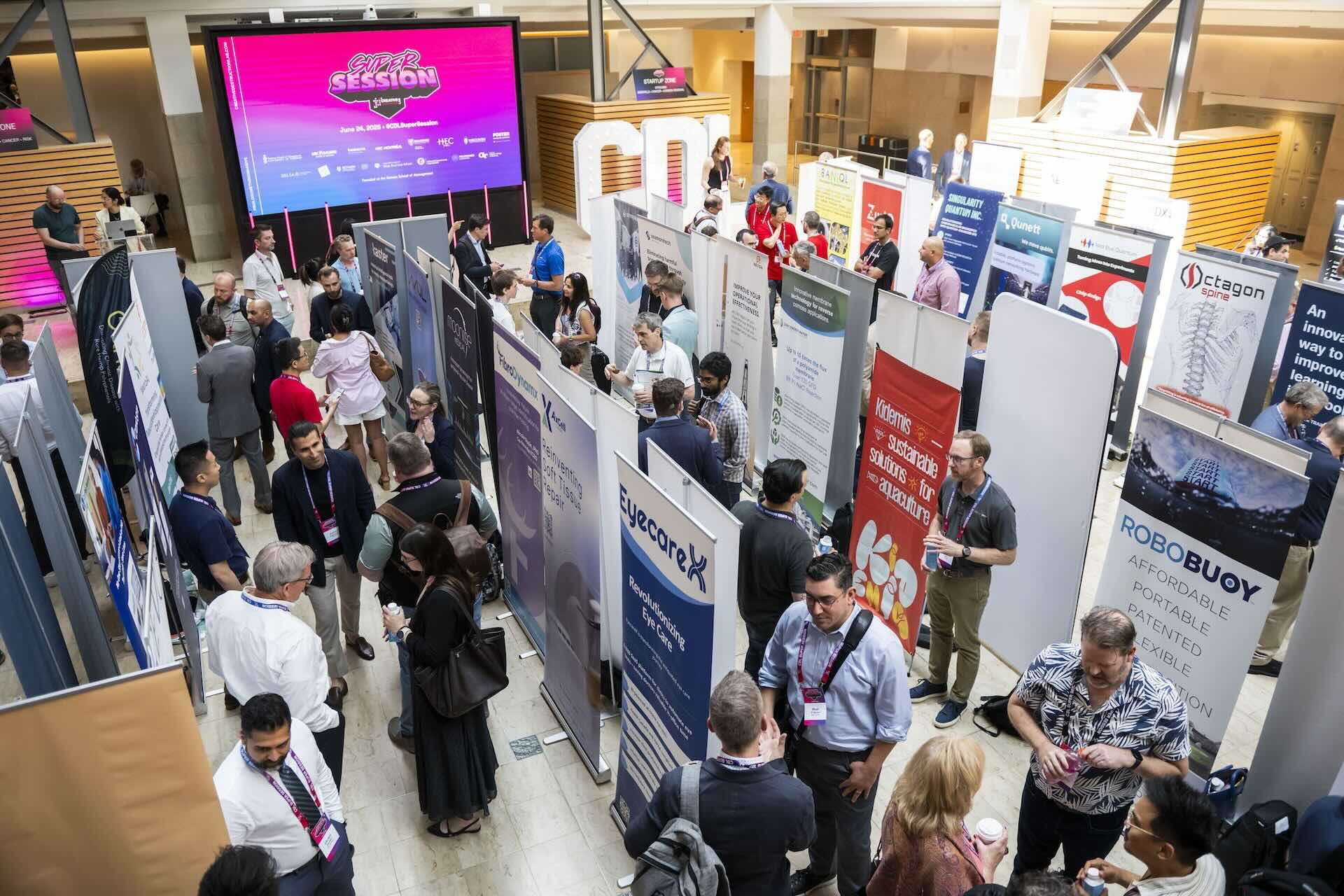
The organization draws information on startups that apply to and go through its 26 programs focused on fields like AI, defence, minerals and quantum, run at 16 university-hosted sites in North America, Europe and Asia. Its data includes details of founders’ backgrounds, the technology they’re developing, their potential customers, the work they do during the process, and the financing they raise once they graduate.
Back in 2018, the CDL originally set out to create an AI model that would be able to predict the likelihood that highly technical, science-based startups would succeed. The early results steered the organization towards studying growth more broadly. “At the earliest stage, the useful thing isn’t a score that ranks ventures—it’s understanding the mechanisms behind why some ventures succeed,” said Sonia Sennik, CDL’s CEO.
Related Articles

Researchers have so far published nearly a dozen academic journal papers based on the data, which covers some 15,000 startups that have applied to the accelerator, their 9,000 founders and 2,000 mentors who’ve worked with them.
In one study, Purdue University management professor Amir Sariri, found that timely advice from experienced counsellors can improve how startups perform in the long term, partly by ensuring teams focus on the right things early on.
Technical founders tend to “under-prioritise learning at the expense of doing—implementing ideas, hiring people, raising money, and so on,” said Sariri, who previously led the R&D group at CDL. While those tasks are valuable, startups should also be spending time gathering information, like identifying target customers and studying the markets they want to enter.
Other findings could guide how firms approach fundraising. In a study of over 5,000 CDL applications, researchers found that founders who used passionate language—lots of “spectaculars” and “terrifics”—but lacked experience, networks, capital or intellectual property were more likely to be rejected. They would have been better off citing specific qualifications, the researchers argued. Another study based on 500 startup financings found that higher-quality firms prefer a type of deal that doesn’t immediately set their valuations, delaying it until future rounds when they’d expect to be worth more.
Other researchers have run experiments with CDL startups on hiring, and developed new ways to assess companies’ core ideas.
CDL treats each cohort of 20 or so startups as its own experiment, according to Sennik, taking notes as the firms work with experienced mentors to set goals and meet them over each of the nine-month program’s eight-week stints. The non-profit is using the data to refine its own programs, said Goldfarb, who is also a professor focused on AI and healthcare at the University of Toronto’s Rotman School of Management.
For example, research showed that mentors gave less useful business advice in early sessions to startups in disruptive fields like quantum science. “This is deeptech, and no one really knows anything,” said Goldfarb. Unlike more established sectors like agtech, the advisors can’t draw on examples of quantum firms selling millions of units of product. So CDL now asks mentors in its most technical streams to hold off on commercial counsel until later sessions.
CDL ultimately measures the success of participating startups and its own programs by how much alumni firms raise and their valuations. Its most successful Canadian alumni include AI agent firm Ada, semiconductor startup Tenstorrent, quantum computer developer Xanadu and robotics company Vention.
CDL spent some $69 million on its AI project, mostly on the salaries of employees who staffed its programs and built the dataset, as well as the software and tools to run it. The federal Strategic Innovation Fund (SIF) kicked in about a quarter of that, through July 2025. Ottawa originally announced a $25-million award for the project in October 2018, but the two sides agreed to reduce that in April 2021 after CDL revised its budget.
While estimates vary, there’s lots of research showing that most venture-backed startups fail. Investors would therefore be very keen on any tool that can reliably forecast which firms will shine, so they can back just those ones. Many VC firms are already using AI for key tasks like due diligence and financial analysis.
CDL has no plans to turn its AI model and dataset into a tool it can sell to investors. The organization instead plans to keep making them available to entrepreneurship scholars whose findings can help founders and funders. CDL was set up to commercialize science so everyone can benefit from it, Goldfarb said. “We started by building these AI models to predict success,” he said. “In the process, what we learned is it would be much more valuable to understand success and not just predict it.”