Listen Now
0:00
OTTAWA — The federal government announced Tuesday it will impose or increase retaliatory tariffs on $27.6 billion worth of U.S. goods next month to match “dollar-for-dollar” the new duties that President Donald Trump slapped on Canadian imports after trade talks fell apart last week.
Metals, lipstick and fishing rods
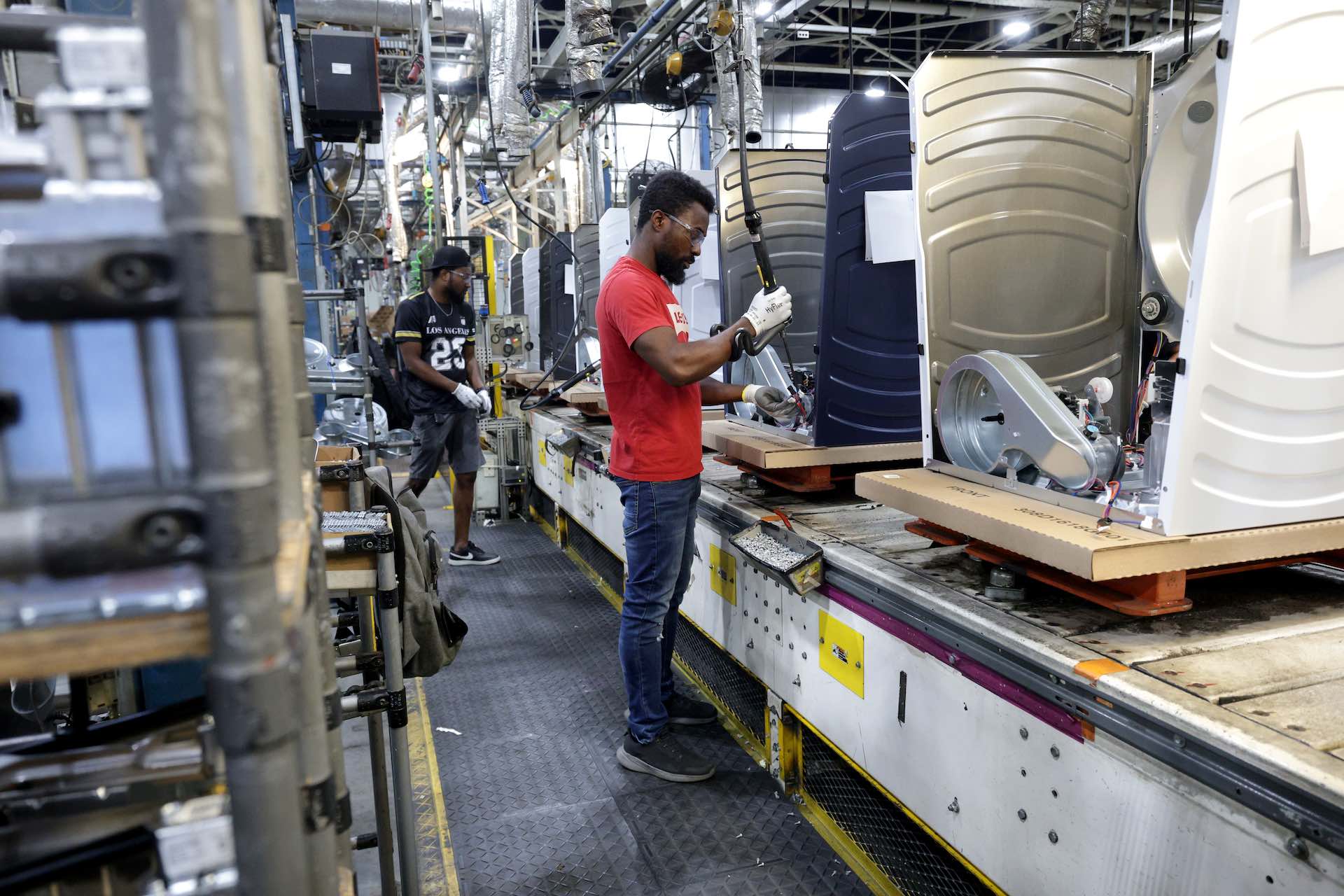
Canada’s retaliation includes doubling the existing counter-tariffs on many U.S. steel and aluminum products to 50 per cent. That matches the rate the Trump administration imposed on Canadian steel and aluminum in June 2025 under Section 232 of the U.S. Trade Expansion Act—and was reportedly open to reducing before negotiations collapsed. The Finance Department also announced duties of 15, 25 or 50 per cent on hundreds of other U.S. products, including a variety of seafood, dairy products, cosmetics, plywood, furniture, home appliances, video game consoles, golf clubs, fishing rods, clothing and even toilet paper.
Related Articles

The new counter-tariffs will take effect at 12:01 a.m. EDT on Sept. 8, while the ones Canada already has in place, including those on autos, will remain.
Why those goods?
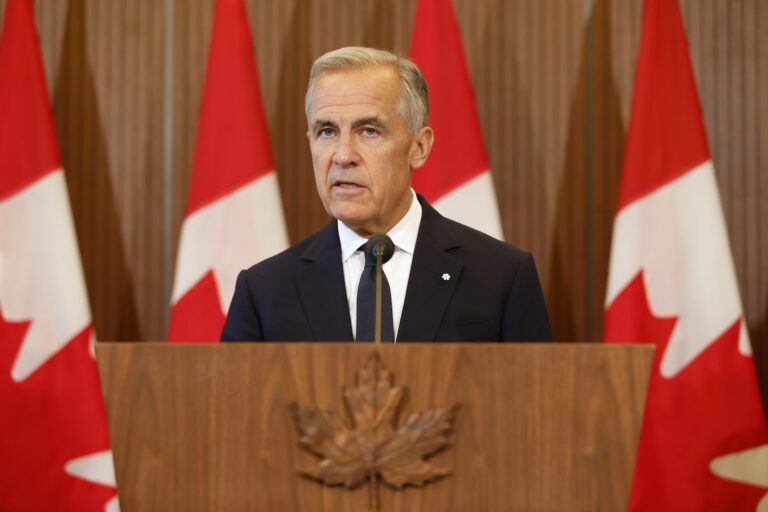
When Canada placed counter-tariffs on $30 billion worth of U.S. goods last year, the government targeted many products important to states where influential Republicans—and their voters—might feel the pinch. That included motorcycles, as there is a Harley-Davidson factory in the battleground state of Pennsylvania. This time, the Liberal government under Prime Minister Mark Carney designed the list to match dollar-for-dollar, based on 2024 import data, the impact of the 50 per cent tariffs Trump imposed on Saturday under Section 338 of the Tariff Act of 1930. They also focus on domestic sectors that are struggling the most under U.S. tariffs, including equipment and pulp and paper.
“Canada’s counter-tariffs are designed primarily to provide protection for Canadian industry impacted by U.S. tariffs and allow them to compete against U.S. products in the Canadian market,” Finance Minister François-Philippe Champagne said Tuesday in Ottawa.
Most of the products that will be targeted have Canadian equivalents, he said, which he hopes will encourage people to supply the country’s small- and medium-sized businesses.
Support for businesses
The federal government is also rolling out $7.5 billion in new or strengthened measures to help Canadian businesses and workers weather the growing storm, mainly by augmenting the $25 billion worth of support Ottawa has brought in since Trump launched the trade war.
The $5-billion Strategic Response Fund that Ottawa retooled from its flagship innovation fund last year to focus on firms grappling with U.S. tariffs is getting a new $2-billion stream called the Canada Strong Diversification Fund for “shovel-ready” projects in tariff-affected communities. There will be a “fast-track, one-step project review and approval process” to get projects moving more quickly.
Meanwhile, a regional tariff response program run through the seven federal regional development agencies is getting another $1.5 billion to help small- and medium-sized businesses, with the cap on non-repayable contributions rising from $1 million to $3 million. Businesses can now use up to $2 million of this money for demonstrated liquidity needs.
The Business Development Bank of Canada is adding a second liquidity stream worth $500 million to its Pivot to Grow program for businesses in any sector that have shortfalls in cash flow due to the U.S. tariffs. The loans ranging from $250,000 to $5 million will require interest-only payments for 36 months. The minimum revenue requirement for the BDC’s tariff-related support is being lowered to $1 million so that small- and medium-sized businesses can qualify. The existing $10-billion Large Enterprise Tariff Loan program for large employers will be more flexible to help major firms navigate this new phase of uncertainty.
Relief for workers and those who hire and pay them
To protect workers who are laid off after having recently switched employers, the federal government is temporarily making it easier for anyone who voluntarily quit their previous jobs to qualify for employment insurance benefits if they lose their new employment for reasons beyond their control. This measure will stay in place for one year.
That new measure is part of a $3.5-billion suite of support that expands what Ottawa rolled out last year, including by waiving for one more year the one-week waiting period to access benefits and streamlining a workforce retention and retraining program.
The reaction
The Canadian Chamber of Commerce urged Ottawa to keep moving with urgency. “Government is now moving at the speed of business to address the current trade negotiation collapse. If the government did not prioritize speed, some businesses would not still be there by the time support rolls out,” president and CEO Candace Laing said in a statement.
Dan Kelly, president of the Canadian Federation of Independent Business, expressed concern about the potential for more red tape. “While we appreciate that the government is trying to move quickly, at first glance it looks like small business owners are being served the usual alphabet soup of complicated programs,” he said in a statement. “They will be challenging for small business owners to figure out, let alone use.”
In a statement issued by the White House, the Trump administration said: “Canadian leadership chose retaliation over partnership—and America is no longer willing to carry them.”
Seeking exceptions
Canadian businesses can still ask the federal government for remission from tariffs on U.S. products for exceptional circumstances. Goods not produced or available in Canada, or imported under contractual obligations that predate the announcement of counter-tariffs, may be eligible. If it grants remission, Ottawa would either excuse the company from paying the tariff or issue refunds for duties already paid.
The federal government will also honour remissions it has already approved. For example, a business granted remission from the previous 25 per cent retaliatory tariff on a steel product would receive remission from the increased 50 per cent rate.
The proceeds
Last year, both the Liberals and the Conservatives projected in their election campaign platforms that counter-tariffs on U.S. goods would generate $20 billion in fiscal 2025-26. That estimate proved highly optimistic, even before Ottawa walked back most counter-tariffs in an effort to kick-start negotiations. According to the Fiscal Monitor for March 2026, customs import duties brought in $10.2 billion last fiscal year—a 65 per cent increase over the year before that was largely linked to the retaliatory tariffs.
At a technical briefing for media, government officials said Tuesday they cannot yet say how much these new counter-tariffs will raise. But the officials, who provided the briefing on condition they not be identified, acknowledged the duties are unlikely to cover the full $7.5 billion in new support for Canadian businesses and workers.
“We will support our workers, our businesses and our industry with whatever it takes, for as long as it takes,” said Champagne. Firmer estimates, he said, will be included in the budget this fall.