News
Macklem keeps benchmark interest rate at 2.25% as trade war heats up
Canada’s economic recovery continues despite new tariffs and the war in Iran, the Bank of Canada says—but it’s looking fragile
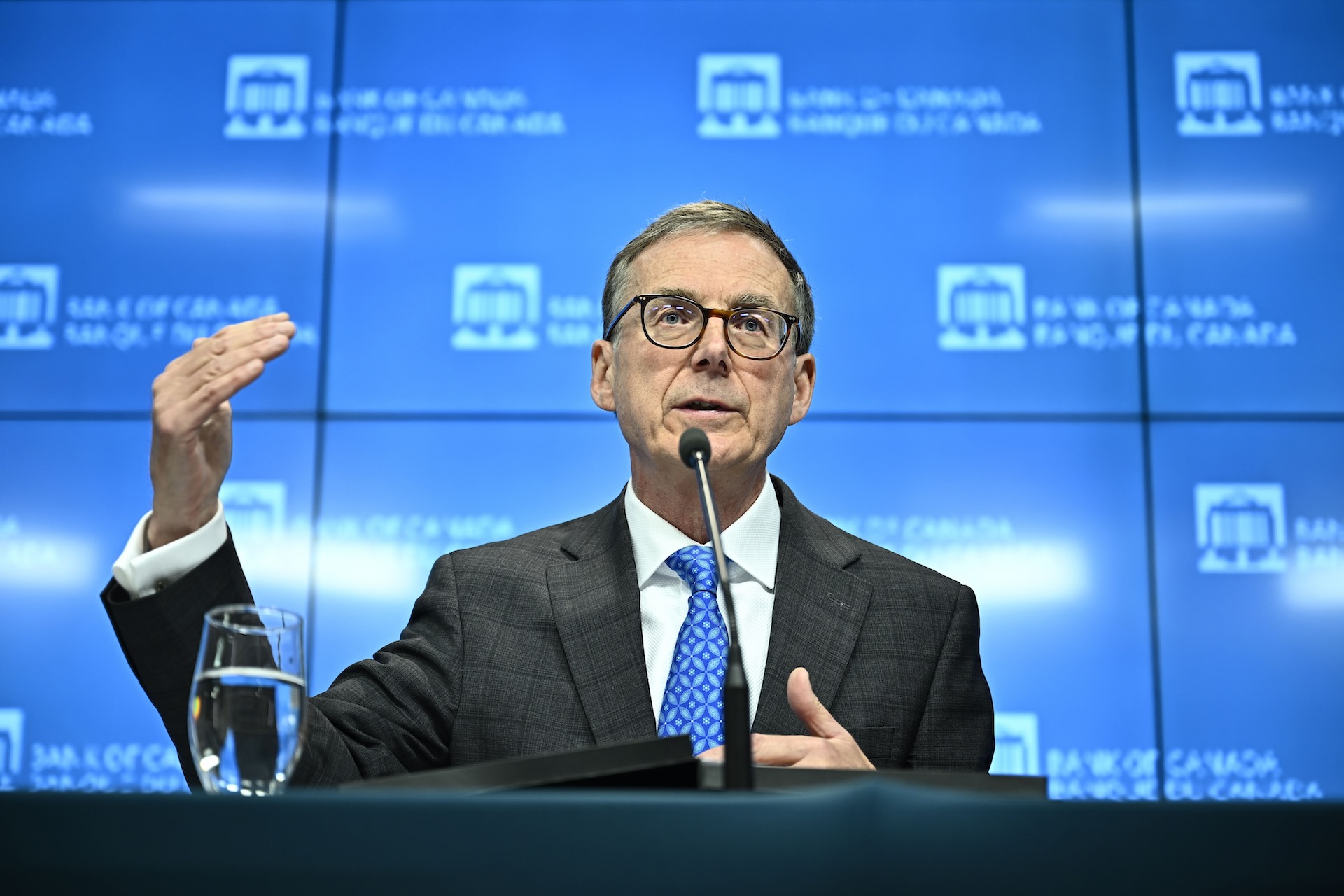
Bank of Canada governor Tiff Macklem speaks at a press conference in Ottawa in May 2024. Photo: The Canadian Press/Justin Tang
Listen Now
0:00
OTTAWA — The Bank of Canada held its key interest rate at 2.25 per cent again, citing “a broadening recovery in Canada’s economy” in the face of uncertainty about the trade war with the United States and the U.S.’s real war on Iran.
Supply disruptions from the Middle East conflict and the Trump administration’s increasing belligerence toward Canada since trade talks broke down in August are obvious menaces to the Canadian economy, but they don’t seem to be hurting it too badly yet. The economy posted a 3.3 per cent annualized growth rate in the second quarter, according to Statistics Canada.
Such recent economic readings have been encouraging, the bank said in its announcement, but “the upside risks to inflation have increased, while new tariffs make growth prospects more uncertain.”
Related Articles


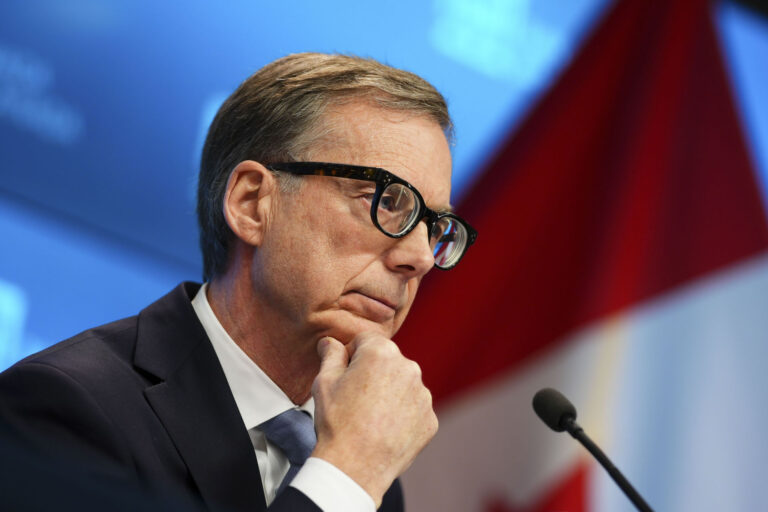
The trade war is disruptive and the Bank of Canada isn’t expecting it to end soon, Tiff Macklem, the central bank’s governor, said in a news conference.
“This U.S. administration, they like tariffs, they like protections,” he said. ”Lower tariffs are good for both countries. If rationality prevails, that should happen. Governments should be doing what’s good for their citizens. But there’s some uncertainty about how that plays out.”
Nevertheless, Macklem said the central bank sees Canadian businesses adapting to mitigate the harms from both the Trump administration’s tariffs and Canada’s counter-tariffs.
Inflation is higher than the central bank’s target rate of two per cent, but much of the excess is from gasoline prices that have been sent higher by the Iran war and the blockades of the Strait of Hormuz. Raising interest rates wouldn’t bring those prices down.
They could spread into the prices of other goods, however, and drive the bank to act. Macklem is more worried about that than the impact of counter-tariffs.
“The bigger issue for inflation is really what’s going on in the Middle East,” Macklem said.
The central bank’s trend-setting rate, which influences everything from mortgage costs to corporate bond yields, hasn’t moved since October 2025. Global economic upheavals’ effects on the Canadian economy have roughly cancelled each other out every time the bank’s governing council has debated whether to change the rate.
The council tries to use the interest rate to keep inflation under control without stifling genuine economic growth. In general, when the economy is doing well, the bank thinks about raising interest rates to keep growth from giving way to higher prices and costs without any real increase in prosperity behind them; when the economy is weak, the council thinks about lowering interest rates to goose borrowing and spending.
“If tariffs remain in place, they will hit targeted sectors hard, but we don’t expect them to have a large direct impact on the overall level of economic activity in Canada,” Macklem said. “However, the situation does remain fluid.”
If the trade fight escalates beyond the roughly five per cent of Canadian exports to the U.S. that are tariffed now, many businesses—even if they aren’t directly affected—might hold off on investment and hiring.
Meanwhile, despite the positivity in the second quarter numbers, the bank said, “demand for labour remains subdued and indicators point to continued excess supply in the economy.” Inflation comes from the opposite—excess demand, with too much money chasing too few goods—so although inflationary pressures are increasing, they’re not here yet.
Editor’s note: This story was updated to add comments and analysis from Tiff Macklem.



Loading...
Thanks for sharing!
You have shared 5 articles this month and reached the maximum amount of shares available.
CloseThis account has reached its share limit.
If you would like to purchase a sharing license please contact The Logic support at [email protected].
CloseGift the full article!
You have gifted 0 article(s) this month and have 5 remaining.
Recipients will be able to read the full text of the article after submitting their email address. They will not have access to other articles or subscriber benefits.