Skip to content

Canada's Business and Tech Newsroom

  • Professional Subscription
  • Partnerships & Advertising
  • Licensing & Syndication
Log In Subscribe
Welcome,
  • My Account
  • Log Out
  • Business
  • Tech
  • National
  • The Big Read
  • Briefings
  • Commentary
Search
Log In Subscribe
Welcome,
  • My Account
  • Log Out
Commentary

Carmichael: Was Chicken Little stirring panic, or just taking precautions?

Listen Now
0:00
Commentary

Carmichael: Was Chicken Little stirring panic, or just taking precautions?

Tiff Macklem’s recent speeches have sky-is-falling vibes, but he’s not panicking—and neither should Canada

By Kevin Carmichael
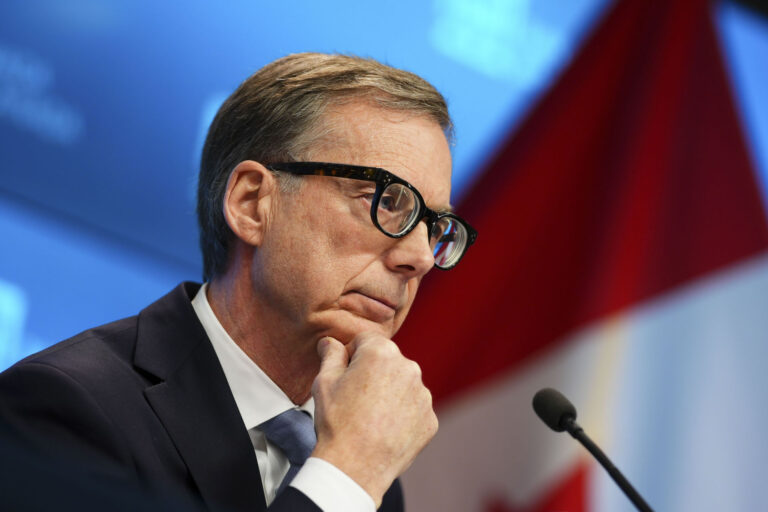
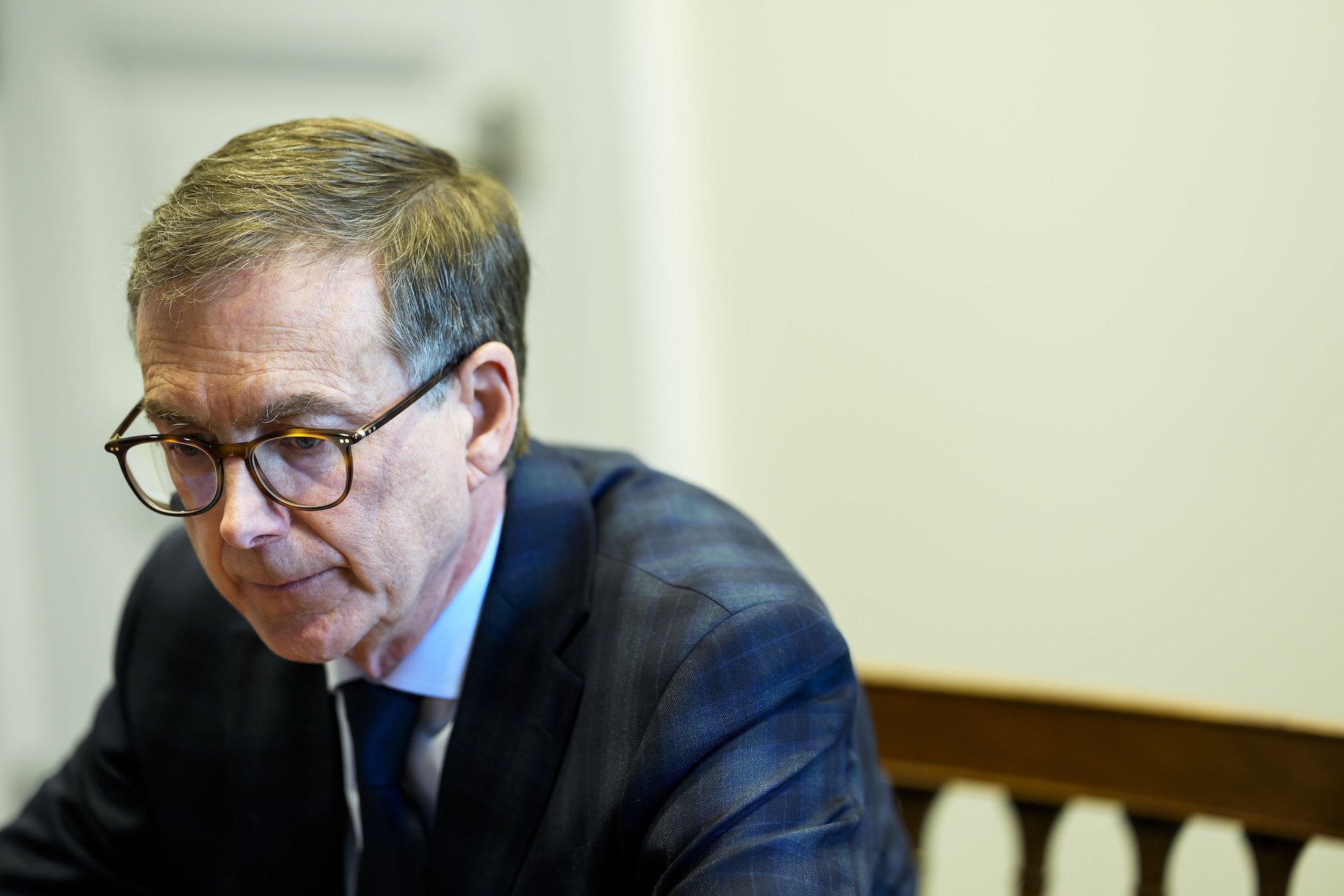
A man sitting in a chair wearing a dark suit and jacket against a light background. The man is wearing glasses and has a serious facial expression.
Bank of Canada governor Tiff Macklem in Ottawa on Jan. 13, 2026. Photo: Justin Tang for The Logic
Jun 27, 2026
A A
A Small A Medium A Large
Share

Gift

Share

Listen Now
0:00

Chicken Little was misunderstood. Yes, she inadvertently led Ducky-Lucky, Goosey-Loosey and the rest of her friends into the maw of the conniving Foxy-Loxy. But as far as Chicken Little knew, they were all facing certain death anyway. Though they ended up in a carnivore’s den, at least she gave them a chance to survive. If the sky really were falling, their odds of survival were zero. 

I think of the Chicken Little fable every time I hear a central banker or a finance minister warn about “global imbalances,” as Bank of Canada governor Tiff Macklem did this week in Paris. It was the second time in nine months that he used a speech to spotlight a subject that has a definite sky-is-falling vibe.

Related Articles
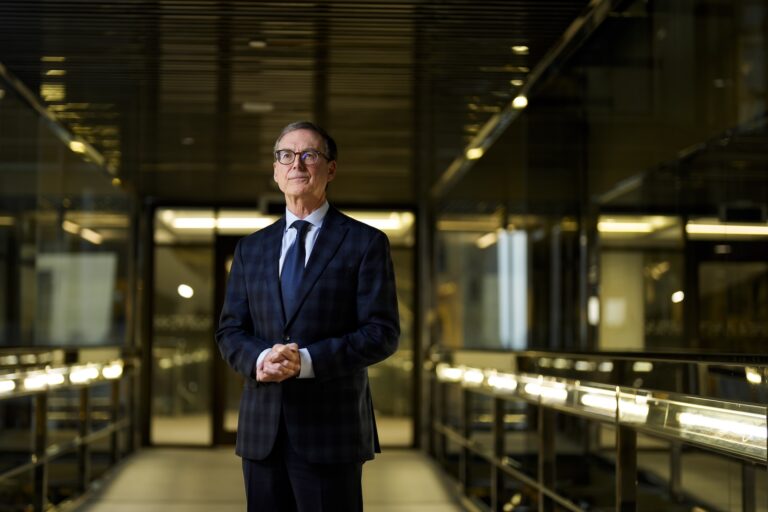
An image of Tiff Macklem standing in a dimly-lit hallway, wearing a blue suit and glasses. He is clasping his hands in front of him and looking ahead.

Carmichael: Tiff Macklem can’t save you

By Kevin Carmichael

Bank of Canada leaves its key interest rate unchanged amid economic ‘dilemma’

By Kevin Carmichael

The U.S. budget deficit is unsustainably massive, we’re told. China’s trade surplus is unsustainably massive, we’re told. But you know what else is massive? The returns generated by American stock markets and the technological leaps taken by Chinese companies. That makes it hard to accept that there’s something wrong. 

The story of Chicken Little is commonly understood as a warning about mass hysteria. But you could also read it as a description of the precautionary principle, an approach to regulation and policymaking that recognizes the scale of a threat might sometimes justify making a decision without the benefit of perfect knowledge. Climate change is an example. You do some things that you know could hurt in the short term because the long-term effect of doing nothing could be existential. The precautionary principle justified former prime minister Justin Trudeau’s bet on the retail carbon tax. The policy failed, but the thinking behind it was sound. The magnitude of the threat demanded that any responsible leader should try something. 

The same idea applies to the global financial system. Financial markets have defied U.S. President Donald Trump’s tariffs and his chaotic war with Iran. Yet their apparent indestructibility isn’t a reason to dismiss all the warning signs. Macklem’s Paris speech showed how current conditions echo those that led to the collapse of the gold standard after the First World War, which brought the Great Depression and the Second World War; those surrounding the collapse of the Bretton Woods system of currency management, which brought stagflation and recession through the 1970s and early 1980s; and the global financial crisis of 2008 and 2009, which caused the Great Recession. 

“When imbalances are left unaddressed, they can undermine the stability of the system,” Macklem said. “When domestic goals overwhelm international rules, the rules eventually give way.” 

I feel like I should apologize for propagating the use of “imbalances,” a term that argues for making literature a mandatory credit for an economics degree. It’s as clunky as it is inaccurate. Like any ledger, global flows of trade and investment are perfectly balanced: China’s outsized surpluses are a mirror image of the U.S.’s outsized deficits. 

When Macklem and others warn about global imbalances, they are making qualitative assessments. You’d like to see China and others spend more of their export earnings at home, rather than taking advantage of the U.S.’s willingness to borrow. You’d like to see the U.S. show some self-restraint, rather than constantly disrupting global trade with tariffs and sanctions. The imbalance is the extent to which the global financial system has become a one-way bet on U.S. consumption and financial assets.

Imports displace domestic production, stirring up local resentment and a desire for retaliation. The centrality of the U.S. dollar fuels demand for treasuries, and the dominance of its largest companies makes U.S. stock markets a magnet for global capital. Bubbles are everywhere. History suggests the question isn’t whether there will be a financial collapse, but which bubble bursts first: debt or equity? 

Chicken Little is famous for stirring panic. But in some versions of the fable, she’s on a mission to inform the king that the sky is falling. She and her friends encounter the fox, who tells them they are going the wrong way. He diverts the well-meaning posse to his cave, where he conducts his slaughter. Only Chicken Little escapes. 

Macklem’s speech is noteworthy because he isn’t panicking. Policymakers like him have spent the last two years talking about trade and investment flows at G7 meetings and at the International Monetary Fund. He said there’s a “growing consensus” that China must consume more, the U.S. must save more and Europe must invest more. He added that there are “encouraging signs” that each of those places knows what it has to do: China’s new five-year plan talks about consumption, European leaders talk seriously about boosting investment, the U.S. “aspires” to narrow its deficit. 

Gift the full article

But Macklem has read—and lived—too much financial history to forego delivering the king a warning. His speech is important for a domestic audience because he shows that the threat isn’t so abstract that there is nothing a country of Canada’s size can do. Macklem said the danger could be reduced by maintaining open trade, broadening the universe of investible assets and making financial transactions more transparent. 

Canadian policymakers can help with all those things. I like the second suggestion. In May, the Government of Canada borrowed in U.S. dollars at a rate that was only marginally higher than actual U.S. treasuries, suggesting that international investors are looking for alternatives. Maybe the U.S. or China or Europe will ultimately cause the sky to fall on our heads, but that doesn’t mean we have to wait for it to happen. “Resilience is a choice,” Macklem said.  

Kevin Carmichael is The Logic’s economics columnist and editor-at-large. He has spent more than two decades covering economics, business and finance for outlets including Bloomberg News, The Globe and Mail and the Financial Post, where he also served as editor-in-chief.


#Bank of Canada #commentary #economy #Tiff Macklem

Loading...

Thanks for sharing!

You have shared 5 articles this month and reached the maximum amount of shares available.

Close
This account has reached its share limit.

If you would like to purchase a sharing license please contact The Logic support at [email protected].

Close
Want to share this article?

Upgrade to all-access now

Close
Gift the full article!

You have gifted 0 article(s) this month and have 5 remaining.

Copy link and gift
Copy Link
Email to a friend
Send Email
Gift on Social Media

Recipients will be able to read the full text of the article after submitting their email address. They will not have access to other articles or subscriber benefits.

A man sitting in a chair wearing a dark suit and jacket against a light background. The man is wearing glasses and has a serious facial expression.

Photo: Justin Tang for The Logic

Most Popular This Week

A shot of Catherine Saine and Sam Ramadori seated at a table in front of screen with LawZero's logo on it.
The Big Read

The small team in Montreal trying to save the world from AI

By Martin Patriquin
Icons of AI-powered apps, including Bing, Gemini, ChatGPT and Copilot, are displayed on a smartphone in this photo illustration.

News

The world’s leading AI models may be more Canadian than American, study finds

By Catherine McIntyre
A shot of a sign bearing the Pfizer logo, with a lowrise office building in the background.
News

So far, foreign-owned firms have dominated Buy Canadian contracts

By Laura Osman
Exclusive

PCO clerk Sabia stayed on Mastercard Foundation board for a year with no conflict screen

By Joanna Smith

In-depth, agenda-setting reporting

Great journalism delivered straight to your inbox.

A person looks at a computer screen displaying a programming interface
News

Companies want the AI productivity boost, but not the big bills

By Murad Hemmadi

Briefing

Businesses scramble to respond to wildfires as evacuations continue

By Anita Balakrishnan   |   Jul 17, 2026 | 3:38 PM ET

CAAT updates the pension’s rules on pay transparency and workplace relationships

By Catherine McIntyre   |   Jul 17, 2026 | 3:32 PM ET

U of T gets government funding for wet-lab space at MaRS

By Catherine McIntyre   |   Jul 17, 2026 | 3:01 PM ET

Best business newsletter in Canada

Get up to speed in minutes with insights and analysis on the most important stories of the day, every weekday.

Exclusive events

See the bigger picture with reporters and industry experts in subscriber-exclusive events.

Membership in The Logic Council

Membership provides access to our popular Slack channel, participation in subscriber surveys and invitations to exclusive events with our journalists and special guests.

Recent Popular Stories

Commentary: Quebec Ink

Quebec’s era of endless, cheap electricity is coming to an end

By Martin Patriquin   |   Jul 6, 2026
A cityscape featuring two tall buildings; the right one has a large orange "Q" logo and a Quebec flag atop. The sky is clear and blue.
News

So far, foreign-owned firms have dominated Buy Canadian contracts

By Laura Osman   |   Jul 14, 2026
A shot of a sign bearing the Pfizer logo, with a lowrise office building in the background.
Exclusive

PCO clerk Sabia stayed on Mastercard Foundation board for a year with no conflict screen

By Joanna Smith   |   Jul 13, 2026
The Big Read

The small team in Montreal trying to save the world from AI

By Martin Patriquin   |   Jul 15, 2026
A shot of Catherine Saine and Sam Ramadori seated at a table in front of screen with LawZero's logo on it.
News

Citi sees Canada heating up in global capital shift

By Chaimae Chouiekh   |   Jul 16, 2026
News

Alberta wants to be a model for government AI and power Canada-wide adoption

By Murad Hemmadi   |   Jul 10, 2026
A shot of Nate Glubish at a lectern, against a backdrop of exposed brick partly covered by a white film screen.

Canada's most influential executives and policymakers are reading The Logic

  • CPP Investments
  • Sun Life Financial
  • C100
  • Amazon
  • Telus
  • Mastercard
  • bdc
  • Shopify
  • Rogers
  • RBC
  • General Motors
  • MaRS
  • Government of Canada
  • Uber
  • Loblaw Companies Limited
logic-logo

Canada's Business and Tech Newsroom

100% human-crafted journalism

Newsroom

  • News Tips
  • AI Policy
  • Editorial Disclosures
  • Story Pitches

Company

  • About Us
  • Terms of Service
  • Privacy Statement
  • Corporate Information

Contact

  • Contact Us
  • Advertise
  • FAQs
  • Work at The Logic

© 2026 The Logic Inc. All Rights Reserved.

Trusted by leaders

Error

Account creation failed.

Please email us at [email protected].

Create Account

[wppb-register form_name=”cozmo-registration-form-for-modal”]

I do have an account
Login
or

[wppb-login]

I don’t have an account