Listen Now
0:00
Toronto-based Meissner has secured the backing of deep-tech executives like Dominion Dynamics CEO Eliot Pence and General Fusion CEO Greg Twinney as it tries to use AI to develop new superconductors with applications from quantum computing to nuclear fusion.
The startup’s $3.6 million pre-seed financing round is anchored by BDC Capital’s Thrive Venture Fund, with participation from the likes of former Shopify executive Daniel Debow, former BlueCat co-founders Michael and Richard Hyatt, and Globalive chair Anthony Lacavera.
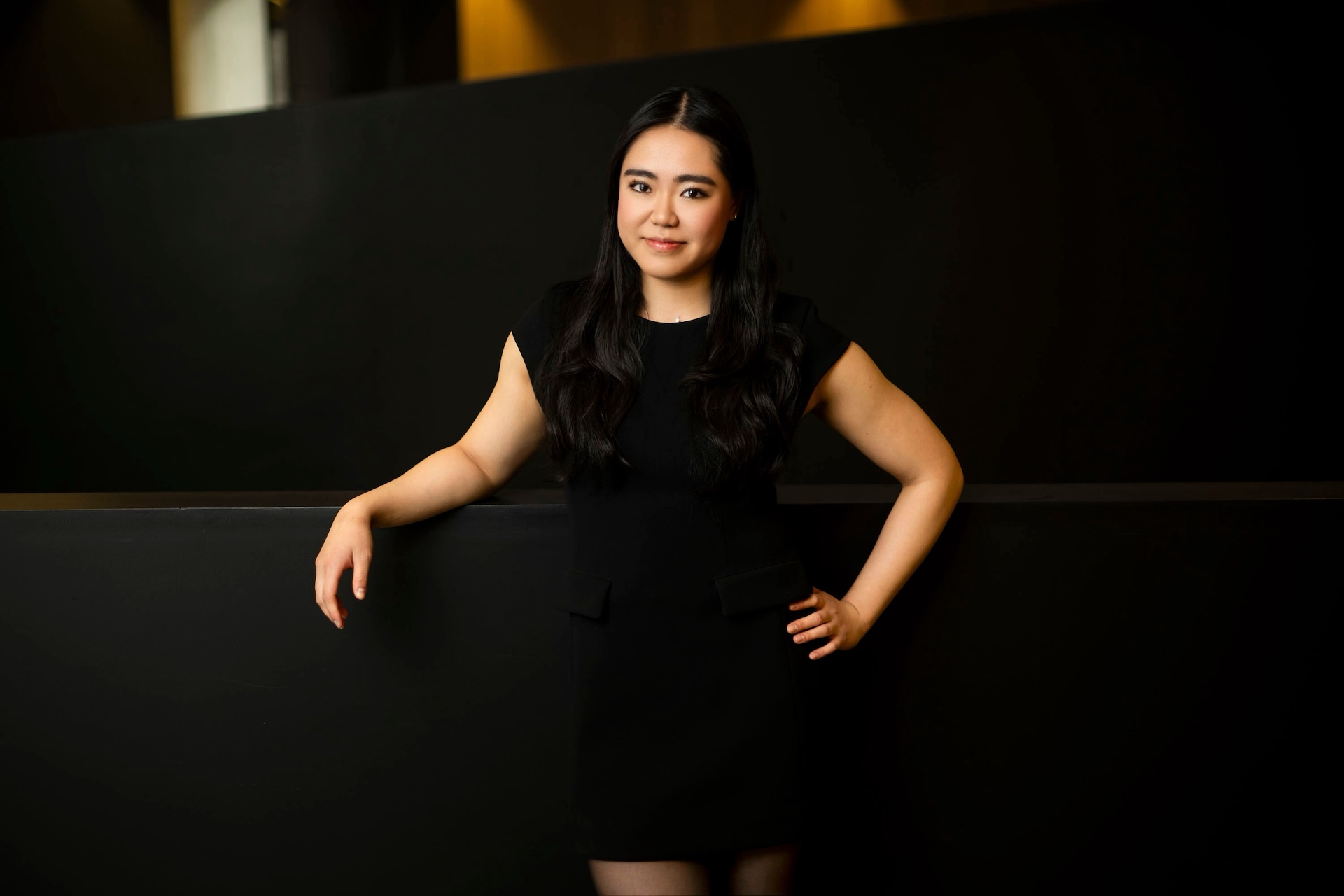
“We care about materials that have immense potential to be commercialized,” said Meissner CEO Olivia Leng, who started the firm a year ago while studying chemistry at the University of Toronto. She sees a market for its superconductors “anywhere that requires a large amount of energy transmission or strong magnetic fields.” Leng said she originally set out to raise $1 million, but upsized the round due to demand.
Related Articles
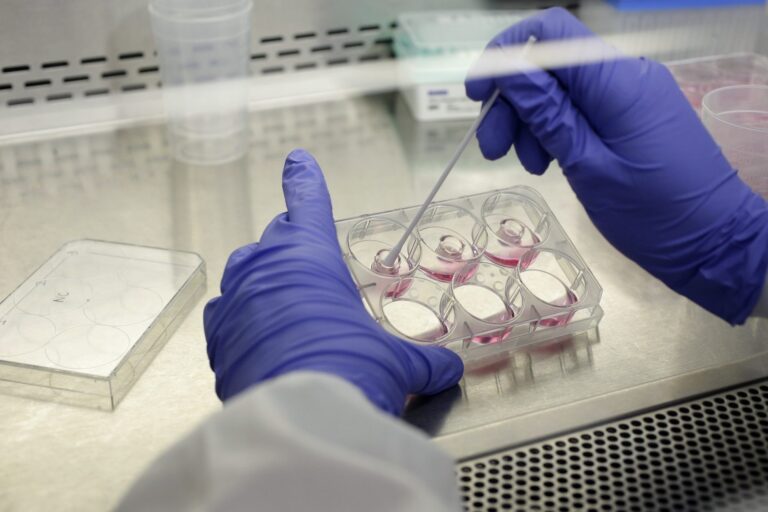
Meissner uses AI to help identify metallic alloys that could become superconductors, and quantum-based simulations to filter down the possibilities. The new capital will help the firm move the materials into the physical world, producing and experimenting on them at the University of Waterloo’s nano fabrication centre. It will also use the funding to employ Leng and three other staff full-time.
The startup is initially targeting quantum computing, and aims to work with a leading developer of the ultra-fast machines to test and validate its leading superconductor candidates. Rather than licensing its materials out to larger industrial firms, Meissner plans to contract with manufacturers to produce its devices in bulk.
Superconductors move electricity with no resistance. They can also push magnetic fields out of themselves, a phenomenon called the “Meissner effect”—hence the startup’s name. Those properties make superconductors valuable in applications where power must be transmitted with no heat or loss, or that require magnetic containment.
Meissner wants to develop materials that work above the freezing conditions that current superconductors require; it’s not yet pursuing the field’s holy grail of a room-temperature superconductor.
The firm is entering an increasingly competitive space. The wide-ranging capabilities of the so-called foundation models that power generative AI tools have prompted prominent researchers and firms to develop similar systems for scientific discovery and experimentation. AI for material science is a particularly hot field.
Last October, Periodic Labs—a Menlo Park, Calif.-headquartered firm led by Université de Montréal-trained Liam Fedus—raised a US$300-million seed round with participation from Toronto-based Radical Ventures. Higher-temperature superconductors are also on its agenda. Cambridge, Mass.-based Lila Sciences (US$550 million) and Cambridge, U.K.-based CuspAI (US$815 million) have also secured significant financing, according to PitchBook data. Some of those firms also run so-called self-driving labs, which autonomously fabricate and test materials.
Leng said Meissner’s area of focus makes it competitive against such well-capitalized rivals. “If you’re building a generalized materials discovery platform, it can’t necessarily be applied—effectively, at least—to finding new superconductors,” she said. “They’re such an exotic, unconventional material class to work with.”
Meissner claims its system generates more accurate predictions than any in academia or industry because its algorithms have been programmed with the specific physics and quantum theory that applies to superconductors. It is also focusing on materials that can be produced in large quantities, because they’re compatible with existing manufacturing processes and raw ingredients are readily available. “Anything that comes out of our workflow is naturally scalable,” Leng said.
Thrive chose to back Meissner because of its “novel approach to accelerating the discovery and development of application-specific superconductors, helping address a key materials bottleneck in quantum computing,” managing partner Mona Minhas said in a statement, citing the expertise that the startup’s team has in the field.
Dominion could use new superconductors, said Pence. The Ottawa-based firm is developing drones to accompany fighter jets and a sensor network for the Arctic—remote locations that often necessitate on-board processing because they’re far away from data centres. “As compute gets pushed to the edge, better materials are critical to reduce power and enhance resilience,” Pence said, adding he’s confident Meissner can compete against bigger firms.