Listen Now
0:00
TORONTO — Transformer Lab has launched what it claims is the most complete and capable autonomous AI scientist around, promising to make breakthroughs quicker and cheaper. The Toronto-based AI startup is competing against lavishly funded firms run by superstar researchers all racing to build self-improving systems.
The AI scientist, called Primus, can generate an academic-style paper from a single question or prompt. AI agents identify and scan relevant scientific literature, come up with a theory, run digital experiments to test it and write up the findings. The firm is initially focusing on machine learning itself so it can use the results to keep developing Primus.
Talking Points
- Toronto-based Transformer Lab has launched Primus, an AI scientist that can produce academic journal-style papers from a single prompt. The firm claims it’s further along than better-known and better-funded competitors founded by star AI researchers.
- The system’s AI agents read relevant scientific literature to come up with a theory, then run experiments to test it
“Every time it does an experiment, it learns about what it could have done better,” said Transformer Lab CEO Ali Asaria. “And then it can improve itself.”
Over the last two months, the firm has used Primus to generate 30 papers of its own, on subjects like improving the output of audio models, making AI accurately cite legal provisions and analyzing the underlying values of ChatGPT. Asaria claims producing them cost less than $3,000. Google DeepMind recently cited a paper written by Primus in a technical report about one of its new models.
In addition to improving its own technology, Transformer Lab plans to sell its AI scientist to businesses that can’t afford or even find machine learning talent. Potential clients could include financial services or pharmaceutical firms that are developing new mortgage or drug discovery models. “You now have access to as many AI engineers as you want,” Asaria said.
While Transformer Lab is still working out its commercial model, it plans to charge a fraction of the expense of employing a human staffer with a master’s degree or doctorate in machine learning, which can cost up to US$1 million a year. The firm plans to apply Primus to produce research in scientific fields beyond AI itself in the near future.
Related Articles

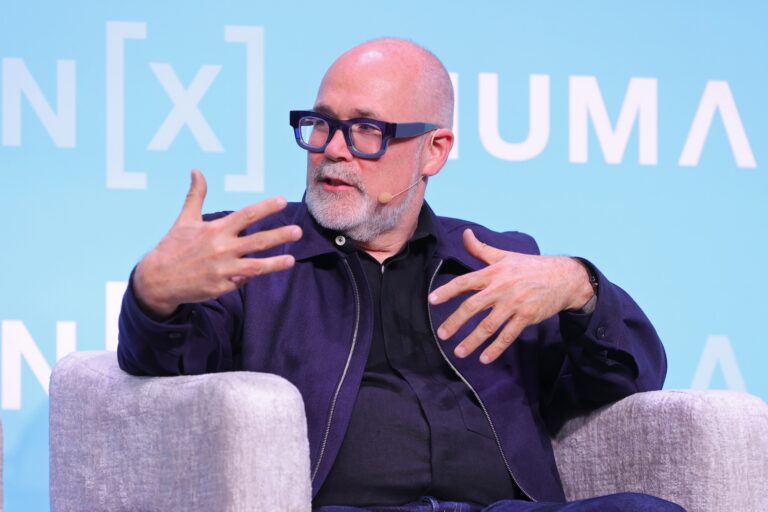
Asaria previously founded retail technology firms Well.ca and Tulip. He co-founded Transformer Lab in September 2024 with former colleague Tony Salomone. The four-person startup has raised a pre-seed round of undisclosed value from backers including Garage Capital and Ripple Ventures, as well as Mozilla’s venture arm. It also sells tools that help research labs train and evaluate their models, and manage their compute.
Transformer Lab’s new AI scientist is up against similar projects from the world’s biggest tech firms and some of the buzziest AI startups right now.
They’re pursuing so-called recursive self-improvement, the stage at which AI systems can design and develop better versions of themselves. Anthropic projects that such a turning point could be close. Star researchers—including University of British Columbia professor Jeff Clune and University of Alberta alumnus David Silver—have recently co-founded companies to develop such AI, raising hundreds of millions of dollars each. Others are applying AI to scientific fields like chemistry, physics and biology, including by developing so-called self-driving labs that use foundation models to direct experiments in the physical world.
One formidable challenger emerged just last week when Jeff Dean, the chief scientist and a key AI architect at Google, joined three decorated colleagues to launch Discovery Loop. Like Transformer Lab, it’s seeking to automate the scientific method, and initially focusing on machine learning research. Discovery Loop has already raised a round of undisclosed size co-led by Toronto-headquartered Radical Ventures.
Asaria sees the competition from such well-known and well-funded names as validation that Transformer Lab chose the right focus two years ago. “This is a humanity-changing category, if we really do automate science,” he said.
Transformer Lab also claims it’s ahead of the competition in key areas, like giving Primus relevant literature from which to learn, and stopping it from hallucinating. “It’s not making up answers based on the question you ask,” Asaria said. “It’s actually running experiments.”
The firm has assembled its own library of research papers weighted by quality, so that its tools aren’t just searching for whatever looks good on the web. As academic use of generative AI increases, studies are turning up many cases of fake citations. To prevent that and try to ensure accurate findings, Primus must demonstrate real data to back up its results, and address critiques of its choices posed by inbuilt AI agent reviewers.
Rubric Labs, a Toronto-based software development agency, has used Primus to explore ways to condense the data it feeds into AI models’ working memory, so they cost less to use and can do more. The firm’s three co-founders already spend a lot of time reading AI research papers to find advances they can put to work for clients, said CEO Sarim Malik.
In the process, the Rubric team has come up with its own potential technology innovations; Primus lets them test theories without needing expensive chips and researchers. That reduces the barrier to innovation, Malik said. “Ultimately, it’s boiling down to, ‘What ideas do you have?’”
That’s one of Transformer Lab’s bigger goals—to free AI progress from the confines of top academic institutions and well-funded tech firms. “The big bets are being made on folks with a resume,” Asaria said. Primus is designed to test the theory that in science, researchers’ citation counts shouldn’t matter as much as the quality of their idea. “You can just log in and start writing your own papers,” he said.
Asaria also argued that many more companies around the world need to develop AI scientist systems to maintain access if tech giants restrict access to such technology for commercial or geopolitical reasons.