Skip to content

News
Trump’s push to revive Venezuela’s energy industry hits Canadian oilsands stocks
Shares in Cenovus, Suncor and CNRL dip as the White House promises to ramp up Venezuela’s heavy oil output
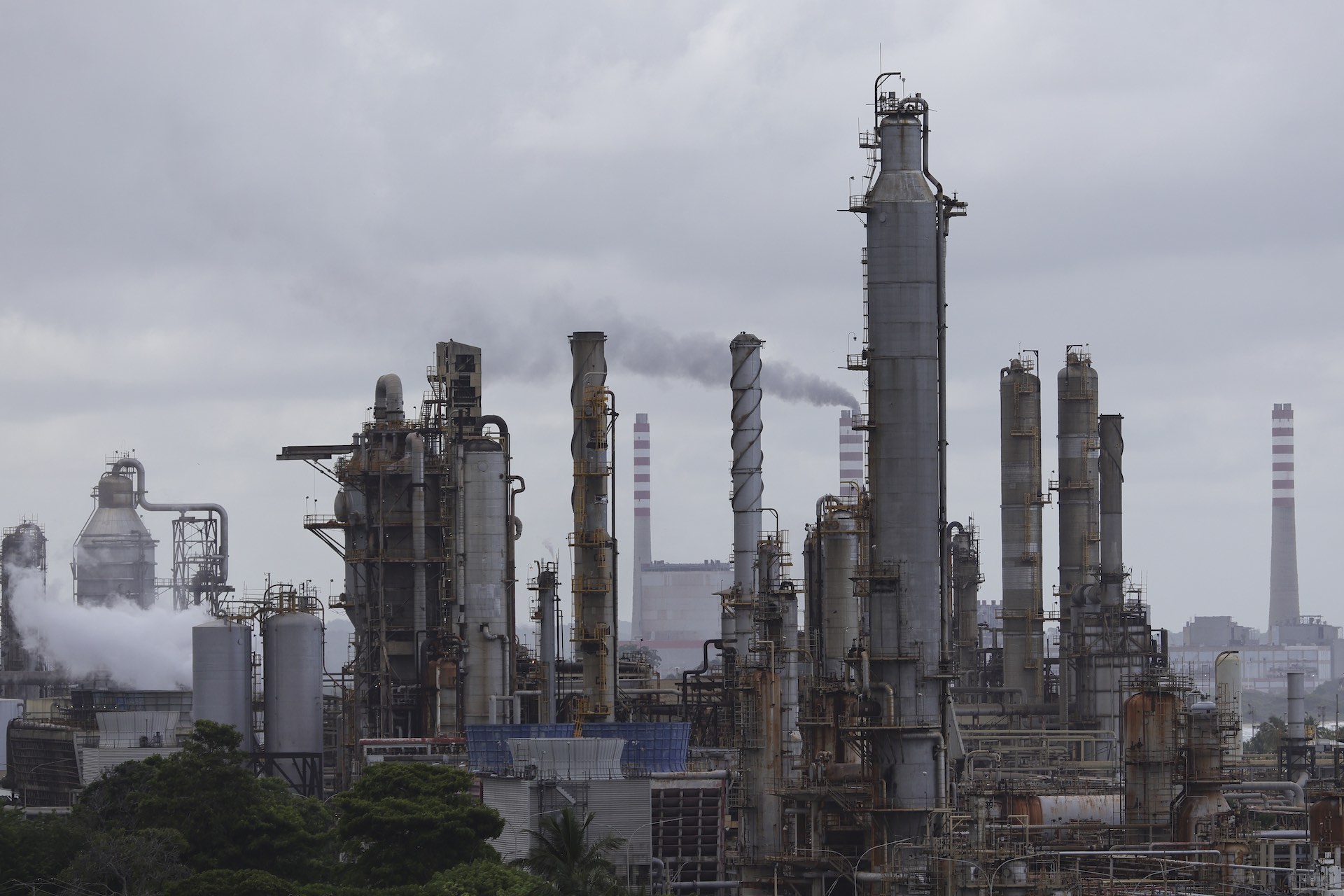
Venezuela produces a heavy crude similar to Canadian bitumen, which is processed in many U.S. refineries. Photo: Picture Alliance via Getty Images/Jesus Vargas
CALGARY — Shares in Canada’s biggest oilsands companies tumbled Monday as U.S. President Donald Trump’s stated plan to ramp up Venezuelan oil production poses a new threat to Canadian heavy crude.
Companies pared losses after drops in morning trading, but by market close Cenovus Energy stock had fallen more than 4.8 per cent on the Toronto Stock Exchange, settling at $22.89, and Canadian Natural Resources had dropped over 6 per cent to $44.28. Suncor Energy decreased 1.7 per cent to $61.58, while Imperial Oil, majority owned by ExxonMobil, fell by over one per cent.
Related Articles



A new heavyweight contender?
The declines came after the U.S. military’s capture of former Venezuelan strongman Nicolás Maduro, who was flown to New York where he now faces drug trafficking charges. Trump has urged U.S. oil companies to reinvigorate Venezuela’s dilapidated oil sector as part of the extraordinary intervention.
That presents a new threat to Canada’s heavy oil firms. Many of America’s oil refineries—particularly on the U.S. Gulf Coast—are calibrated to process the sort of thicker, more sulphur-intensive oil those companies produce. Demand for it has given Canadian companies largely unrivalled access to U.S. refiners, creating a deep interdependence that has helped Alberta dodge the worst of Trump’s trade war.
Venezuela, however, is one of the few countries that produces a similarly heavy-grade crude at scale, so a ramp-up in output from the country could increase competition for the prized U.S. refining market.
An ocean of oil
Venezuela has the world’s largest oil deposits, with over 300 billion barrels worth of proven reserves, most of which is embedded in the Orinoco Belt in the country’s northeast. (Canada has the fourth-largest reserves—behind Saudi Arabia and Iran—with around 170 billion barrels.)
Yet Houston-based Chevron is the only U.S. energy company still operating in Venezuela after former president Hugo Chávez seized majority control of all foreign oil and gas operations there in 2007.
Easier said than done
While Canadian oil stocks flinched on Monday, the drop was materially less than the April 2025 sell-off that resulted from fears that Trump’s tariffs would trigger a recession.
That’s largely because stimulating Venezuela’s moribund oil industry would require immense infrastructure investments. The country’s output collapsed after the 2015 oil crash, falling from almost 2.5 million barrels per day to less than 500,000 in 2020. Today, production remains around one million barrels per day.
While Venezuela could compete for capacity in the U.S. Gulf Coast, Canadian oil exporters dominate U.S. regions insulated from the South American country’s tanker-dependent exports. In the U.S. Midwest, for example, Canada supplied 99.99 per cent of the crude that refineries purchased in October, according to the Energy Information Administration.



Loading...
Thanks for sharing!
You have shared 5 articles this month and reached the maximum amount of shares available.
CloseThis account has reached its share limit.
If you would like to purchase a sharing license please contact The Logic support at [email protected].
CloseGift the full article!
You have gifted 0 article(s) this month and have 5 remaining.
Recipients will be able to read the full text of the article after submitting their email address. They will not have access to other articles or subscriber benefits.
Photo: Picture Alliance via Getty Images/Jesus Vargas
Most Popular This Week




In-depth, agenda-setting reporting
Great journalism delivered straight to your inbox.
Commentary
Carmichael: Canadian ignorance about India is a strategic weakness
Briefing
Aritzia shares pop after earnings rise 204%
First Nation in Alberta goes to court over fast-tracked oil pipeline
Chinese EV maker Geely Auto Group to launch in Canadian market in 2027
Best business newsletter in Canada
Get up to speed in minutes with insights and analysis on the most important stories of the day, every weekday.
Exclusive events
See the bigger picture with reporters and industry experts in subscriber-exclusive events.
Membership in The Logic Council
Membership provides access to our popular Slack channel, participation in subscriber surveys and invitations to exclusive events with our journalists and special guests.




