Cost-cutting in the oilsands has made Canadian crude hard for Trump to quit
CALGARY — After a catastrophic oil price collapse blew a hole in their balance sheets in 2015, Canadian oilsands producers embarked on a decade of cost-cutting to streamline their operations.
Those efforts, made largely below the public radar, lowered the industry’s production costs over the last five years, analysts say—a development that could complicate U.S. President Donald Trump’s efforts to replace Canadian oil with domestic supply as he pushes for U.S. energy independence.
News
Cost-cutting in the oilsands has made Canadian crude hard for Trump to quit
Canadian oilsands firms spent years driving down costs. Those efforts will be pivotal as Trump looks to slap tariffs on imports and boost U.S. oil production.
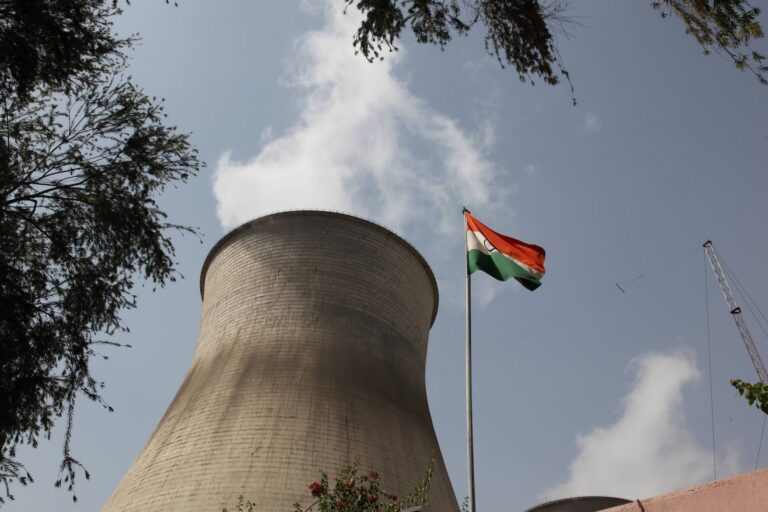
Oilsands companies have driven down costs sharply at operations like Cenovus's Christina Lake facility north of Edmonton. Photo: The Canadian Press/Amber Bracken
CALGARY — After a catastrophic oil price collapse blew a hole in their balance sheets in 2015, Canadian oilsands producers embarked on a decade of cost-cutting to streamline their operations.
Those efforts, made largely below the public radar, lowered the industry’s production costs over the last five years, analysts say—a development that could complicate U.S. President Donald Trump’s efforts to replace Canadian oil with domestic supply as he pushes for U.S. energy independence.
Talking Points
Canadian oilsands companies have spent the last decade driving down costs
Those efforts, which started to bear fruit in the last five years, could be pivotal as Trump looks to slap tariffs on Canadian crude and boost U.S. oil production
Long considered among the costliest sources of crude, Canadian heavy-oil producers have narrowed the gap with their American rivals. That will step up the challenge facing Trump as he threatens to slap a 25 per cent tariff on Canadian oil imports and boost domestic fossil fuel production.
“We are not the expensive producer anymore, we’re the cheap producer,” said
Heather Exner-Pirot, an energy policy advisor at the Business Council of Canada and senior fellow at the Macdonald-Laurier Institute.
A recent Scotiabank report estimated that Canadian producers on average could break even and maintain dividends with an oil price of US$50 per barrel, well below the current price of around US$75. Unconventional oil producers like hydraulic fracturing companies are responsible for the majority of American supply. Those firms require an oil price between US$60 and US$70 to justify drilling new wells and maintaining production levels, according to some estimates.
Trump declared an “energy emergency” on his first day in the Oval Office on Monday, and has threatened to slap import tariffs on a range of Canadian goods as early as Feb. 1.
Tariffs, though, would immediately increase gasoline and home-heating costs for American consumers. That would undermine Trump’s other goal of keeping inflation in check while dealing a massive jolt to the U.S. Gulf Coast refiners who depend on a steady flow of Canadian crude, Exner-Pirot said.
“Their energy dominance agenda will benefit from us,” she said of the contradictions in Trump’s agenda. “You have to think at some point economics outweighs whatever one person does or thinks for a couple days.”
Import levies would also upend the increasing integration between the Canadian and U.S. energy sectors. Canada exported a record 4.3 million barrels per day to the U.S. in July 2024, roughly 60 per cent of the country’s total crude imports.
Meanwhile, global oil markets have fundamentally shifted since Trump last occupied the White House, altering capital investment in a way that favours longer-term sources like oilsands.
Ten years of relatively low oil prices has stifled investment in new production, which had previously favoured U.S.-focused producers that target fast-depleting reservoirs on drilling cycles of only a few years. Oilsands companies, by comparison, develop larger-scale plants designed to draw from a single pool of bitumen for 20 years or more.
The 2015 oil price collapse—prompted in part by a frenzy of production in U.S. oilfields—gave rise to a period of consolidation in the oilsands, now centred around a few key players including Suncor, Canadian Natural Resources, Imperial Oil and Cenovus. Those giants, now highly leveraged following a wave of acquisitions, “worked relentlessly” to drive down costs, Exner-Pirot said.
Their efforts have only recently started to bear fruit, according to Andrew Lamb, partner at legal firm Gowling WLG in Calgary.
“The oilsands industry put in hard work for 50 years, and five years ago we finally started really seeing the benefits of all that hard work,” Lamb said. “It’s a shame that now our main customer says they don’t want it.”
At Cenovus’s Christina Lake facility north of Edmonton, the company can produce a barrel of oil for just $8, the same as what it cost when the facility came online 25 years ago. That’s in spite of more than two decades of inflation, Jeff Lawson, the company’s senior vice-president of corporate development, said at a Calgary energy conference in October.
Lawson said gains are partly attributable to new technologies like AI, as well as solvents, which are fluids oilsands companies use to make production less energy intensive.
Canadian producers have long sold their oil at a discount to the U.S., in large part because of a lack of pipeline access that has made them dependent on American buyers. The completion of the Trans Mountain pipeline has narrowed that discount, but Canada’s benchmark oil blend, Western Canadian Select, still sells at $15 less per barrel than its U.S. equivalent.
American producers, for their part, have already signalled they are unlikely to re-open the spigots.
Liam Mallon, an executive at American oil giant ExxonMobil, told investors in November that “we’re not going to see ‘drill, baby, drill’ mode,” as producers focus on capital discipline. Wells in the Permian Basin of Texas and New Mexico are depleting fast, meaning more capital is needed to access deeper-down reservoirs.
Another potential hurdle for Trump’s “America First” energy agenda: much of Canada’s oil exports feed U.S. Gulf Coast refineries specifically calibrated to accept heavy oilsands blends.
American companies have meanwhile spent billions building export infrastructure that lets them sell products to foreign markets, turning the Gulf Coast region into a global export hub. Recalibrating their facilities to accept lighter crude would cost refiners time and money, and shippers are unlikely to start selling domestically, unless economics support such a shift.
“They’ve sunk a lot of capital into export terminals and export infrastructure,” Lamb said. “They’re not going to be keen on turning off all that infrastructure. They’re only going to do that if they can get a higher price for their oil inside the United States as opposed to overseas.”
That’s not to say the economic realities can’t change, Lamb noted. Should Trump artificially inflate Canadian oil costs through tariffs and keep them in place, he said, the result could cripple an industry that sends the majority of its product across the Canada–U.S. border.
Recipients will be able to read the full text of the article after submitting their email address. They will not have access to other articles or subscriber benefits.
Great journalism delivered straight to your inbox.
The Big Read
Alberta’s referendum is just the start of the turmoil
By
Meghan Potkins
Briefing
EverWind plans $10B data centre and wind development in Nova Scotia
By Catherine McIntyre |
Canada ready to force Stelco to sell its Canadian operations, Joly says
By Joanna Smith |
Feds plan a 60 MW defence-oriented data centre for Ottawa
By David Reevely |
Best business newsletter in Canada
Get up to speed in minutes with insights and analysis on the most important stories of the day, every weekday.
Exclusive events
See the bigger picture with reporters and industry experts in subscriber-exclusive events.
Membership in The Logic Council
Membership provides access to our popular Slack channel, participation in subscriber surveys and invitations to exclusive events with our journalists and special guests.