Skip to content

Canada's Business and Tech Newsroom

  • Professional Subscription
  • Partnerships & Advertising
  • Licensing & Syndication
Log In Subscribe
Welcome,
  • My Account
  • Log Out
  • Business
  • Tech
  • National
  • The Big Read
  • Briefings
  • Commentary
Search
Log In Subscribe
Welcome,
  • My Account
  • Log Out
News

The cost of Trump tariffs on Canadian oil would reach far beyond U.S. gas pumps

CALGARY — As Donald Trump threatens to include petroleum among the Canadian exports he’d hit with steep tariffs—“We don’t need their oil,” he said—energy analysts warned the move would drive up the price of gasoline at U.S. pumps. 

The actual impact would run much deeper. Due to the unique makeup of Canadian heavy oil, and America’s enthusiastic use of it, tariffs would inflate prices of everything from airline jet fuel to asphalt. They would even drive up prices of bunker fuels used to propel ocean tankers—ships that carry oil products to and from U.S. refineries.

News

The cost of Trump tariffs on Canadian oil would reach far beyond U.S. gas pumps

Years of energy integration means the U.S. needs Canadian crude for everything from asphalt to jet fuel

By Jesse Snyder
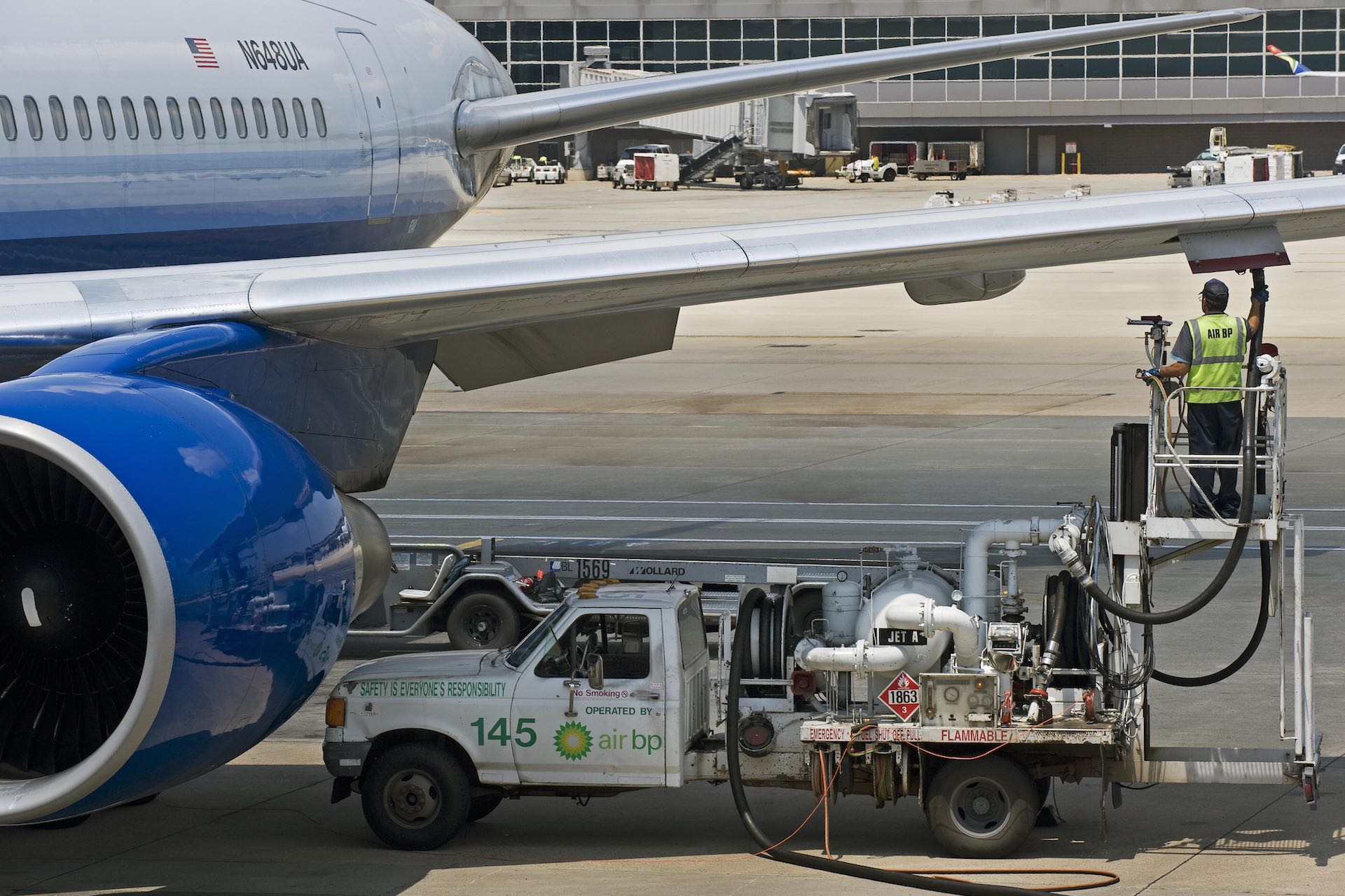
A view of a worker in a reflective vest under the wing of a United Airlines jet, connecting a fuel line from the platform of a white pumping truck.
Jet fuel is among the products that could get more expensive for Americans if U.S. President Donald Trump applies tariffs to Canadian oil. Photo: AFP via Getty Images/Paul J. Richards
Jan 31, 2025
A A
A Small A Medium A Large
Share

Share

CALGARY — As Donald Trump threatens to include petroleum among the Canadian exports he’d hit with steep tariffs—“We don’t need their oil,” he said—energy analysts warned the move would drive up the price of gasoline at U.S. pumps. 

The actual impact would run much deeper. Due to the unique makeup of Canadian heavy oil, and America’s enthusiastic use of it, tariffs would inflate prices of everything from airline jet fuel to asphalt. They would even drive up prices of bunker fuels used to propel ocean tankers—ships that carry oil products to and from U.S. refineries.

Talking Points

  • Energy interests on both sides of the Canada-U.S. border have warned about higher gasoline prices should Trump slap tariffs on Canadian oil
  • The move would hit a range of products, from jet fuel to kerosene, underscoring the deep energy trade dependence between the two countries

“Oil touches everywhere in the economy,” said Cameron Gingrich, managing partner at Calgary-based energy analysis firm Incorrys. “When you have a 25 per cent increase in oil prices, that’s going to head to the consumers’ pocketbook in a hurry.” 

That might help explain why Trump seemed to hesitate Thursday when the subject of oil came up, telling reporters it “may or may not” fall under the 25 per cent tariffs he’s threatened to slap on Canadian imports, starting this weekend. Canada’s government has not specified how it might respond, but Prime Minister Justin Trudeau has said “nothing is off the table” as to what could be included in tit-for-tat trade actions.  

The knock-on effects of either move may surprise many American businesses and consumers. For years, Gulf Coast and Midwest refineries have used Canadian oil as feedstock, and their ability to accept those barrels of heavier oil speaks to how deeply integrated the two countries’ energy industries have become.

Gulf Coast refiners in particular have invested billions in so-called hydrocracking units, giant tanks where hydrogen is mixed with oilsands crude to break down the heavy hydrocarbon molecules into lighter distillates and fuels. 

Related Articles

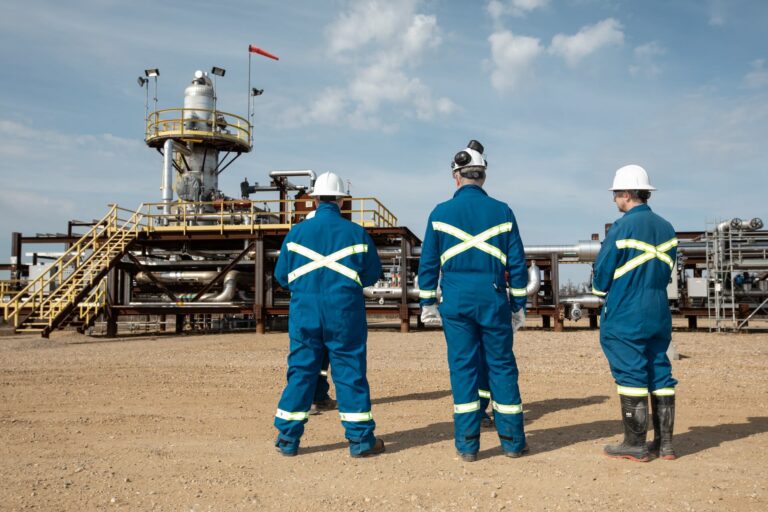
A view of oil extraction equipment consisting of pipes, catwalks and cylindrical tanks; there are three company representatives in the foreground wearing white hard hats and blue coveralls with yellow reflective striping.

Cost-cutting in the oilsands has made Canadian crude hard for Trump to quit

By Jesse Snyder

Tariff threat could force Canada to get more productive, leading economists say

By Catherine McIntyre
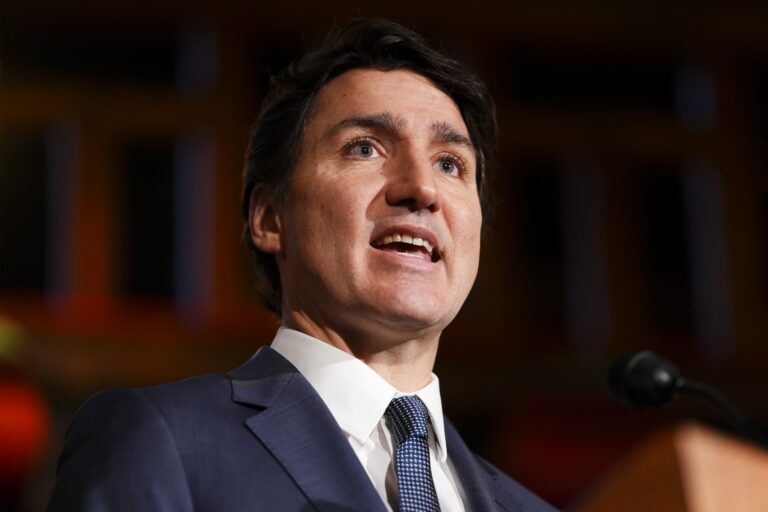
A close-up of Justin Trudeau in mid-sentence. He's wearing a blue suit jacket and blue tie.

Retaliation against Trump tariffs will cost Canadians, Trudeau warns

By Laura Osman

Unlike conventional crudes extracted in the U.S. (and parts of Canada), oilsands crude is thicker than peanut butter and requires more energy to distill. The suite of products made from it are the lifeblood of the U.S. economy. They include kerosene, aviation fuel and diesel, which is heavier than regular gasoline; oilsands bitumen also serves as the glue that holds together asphalt used to pave U.S. streets and highways. 

In November, Canada exported nearly four million barrels per day of oil to the U.S., or roughly 95 per cent of the country’s total exports, according to the Canadian Centre for Energy Information. That in turn accounted for just over 56 per cent of total U.S. imports for the month, data show. 

Major companies like BP, Chevron, ExxonMobil and Valero have oriented much of their refining capacity around those heavier Canadian blends, and would be reluctant to shift toward lighter feedstocks. 

“These refinery guys, these engineers, are super risk-averse,” Gingrich said. “Once they get a configuration of crudes, they like to stick with it.” 

Some of those companies have also invested in desulphurization capacity at their facilities, which, like hydrocracking units, comes at steep upfront cost. (Canadian oilsands is designated as a heavy “sour” blend due to its sulphur content, making it distinct from the light “sweet” blends found in regions like Texas or Saudi Arabia.)  

“These are multibillion dollar pieces of equipment that would all of a sudden become rendered economically worthless,” said Rory Johnston, founder of the Toronto-based energy analysis firm Commodity Context. “So that’s obviously a huge hit to the refining companies.”

Canadian oilsands companies have produced more synthetic crude in recent years—oil that is upgraded and stripped of sulphur before it is shipped. U.S. refiners have tuned their facilities so perfectly for synthetic blends that commodity traders often refer to it as the “champagne of North American crudes,” Johnston said.

Canadian companies produced 1.37 million barrels per day of synthetic crude in November—the most recent available month—or nearly 29 per cent of the country’s entire daily oil output during that period.

Integration of the two countries’ sectors goes beyond the oil itself. Oilsands crude that isn’t upgraded in Alberta needs to be combined with a condensate mixture known as diluent—a product that dilutes it into liquid form so it can be shipped via pipeline. American companies produce diluent and send it to Canada in pipelines, where it is mixed with crude and transported back. 

That scale of integration has developed only over the last 20 years, and sped up as capital investment flowed into the oilsands. 

Dennis McConaghy, a former executive at Calgary pipeline company TC Energy, said the Canadian oilsands went through a period of “incredible transformation of integration” with the U.S., when soaring Chinese demand in the early 2000s fed an oil frenzy in northern Alberta. 

Production skyrocketed as investors piled in, and Canada’s share of U.S. oil imports leapt from around five per cent in 2000 to well over 50 per cent today. 

That has U.S. energy groups like the American Petroleum Institute speaking out against Trump’s tariff threats, saying the move would “directly undermine energy affordability and availability for consumers.” 

“There are significant U.S. interests who don’t want this disrupted,” McConaghy said.
#Donald Trump #economy #Oil #oilsands #tariffs

Loading...

Thanks for sharing!

You have shared 5 articles this month and reached the maximum amount of shares available.

Close
This account has reached its share limit.

If you would like to purchase a sharing license please contact The Logic support at [email protected].

Close
Want to share this article?

Upgrade to all-access now

Close
Gift the full article!

You have gifted 0 article(s) this month and have 5 remaining.

Copy link and gift
Copy Link
Email to a friend
Send Email
Gift on Social Media

Recipients will be able to read the full text of the article after submitting their email address. They will not have access to other articles or subscriber benefits.

A view of a worker in a reflective vest under the wing of a United Airlines jet, connecting a fuel line from the platform of a white pumping truck.

Photo: AFP via Getty Images/Paul J. Richards

Most Popular This Week

A shot of Mark Carney standing in a dark suit in front of a large, red excavator on a construction site. Carney is looking behind him, off-camera.
News

Canada needs an investment ‘hub’ as Carney steps up push for foreign money, says federal agency

By David Reevely
Construction workers walk across a deck as a crane lifts a large bundle of steel rebar into place at a construction site.
The Big Read

Inside Bell’s all-Canadian plan to power the country’s AI future

By Murad Hemmadi
Melbourne city center skyline with views towards the Evan Walker pedestrian bridge flanked by Eureka Tower and far left Crown Casino on Melbourne Southbank.
News

Australia’s pension giant has $10B ready to invest in Canada. It wants something from Ottawa first

By Catherine McIntyre
Aerial view of four large buildings with hundreds of small stacks lining their roofs. There are some brown fields and lightly trafficked roads in teh background, along with other warehouses and industrial buildings.
News

Big Tech’s AI buildout is upending Canada’s bond market

By Anita Balakrishnan

In-depth, agenda-setting reporting

Great journalism delivered straight to your inbox.

Exclusive

What the Maple 8’s first chief AI officer is up to

By Murad Hemmadi

Briefing

Trucking giant TFI to start using driverless big rigs in the U.S.

By Catherine McIntyre   |   Jul 28, 2026 | 3:03 PM ET

U.S. fintech Ramp opens Toronto office, expands Canadian offerings

By Claire Brownell   |   Jul 28, 2026 | 2:19 PM ET

Alleged passport-service fraudsters hit with Competition Act charges, too

By David Reevely   |   Jul 28, 2026 | 2:17 PM ET

Best business newsletter in Canada

Get up to speed in minutes with insights and analysis on the most important stories of the day, every weekday.

Exclusive events

See the bigger picture with reporters and industry experts in subscriber-exclusive events.

Membership in The Logic Council

Membership provides access to our popular Slack channel, participation in subscriber surveys and invitations to exclusive events with our journalists and special guests.

Recent Popular Stories

The Big Read

Inside Bell’s all-Canadian plan to power the country’s AI future

By Murad Hemmadi   |   Jul 22, 2026
Construction workers walk across a deck as a crane lifts a large bundle of steel rebar into place at a construction site.
News

Canada needs an investment ‘hub’ as Carney steps up push for foreign money, says federal agency

By David Reevely   |   Jul 23, 2026
A shot of Mark Carney standing in a dark suit in front of a large, red excavator on a construction site. Carney is looking behind him, off-camera.
News

The Canadian companies trying to break Palantir’s grip on intelligence software

By David Reevely   |   Jul 20, 2026
A shot of Sam Witherspoon in front of his laptop, looking pensively over the screen. He's wearing an olive-green hoodie.
News

Australia’s pension giant has $10B ready to invest in Canada. It wants something from Ottawa first

By Catherine McIntyre   |   Jul 21, 2026
Melbourne city center skyline with views towards the Evan Walker pedestrian bridge flanked by Eureka Tower and far left Crown Casino on Melbourne Southbank.
Commentary

Carmichael: The hard work of breaking down internal trade barriers is starting to pay off

By Kevin Carmichael   |   Jul 25, 2026
News

AI is helping bring Indigenous languages back from the brink

By Jonathan Feakins   |   Jul 24, 2026
A photo illustration featuring an archival photo taken in 1914 of a young Kwakiutl woman. Around her are shadowy images of totems and carved figures from her community on B.C.'s central coast. Super-imposed on the photos are words in Kwak'wala, the language of the Kwakiutl.

Canada's most influential executives and policymakers are reading The Logic

  • CPP Investments
  • Sun Life Financial
  • C100
  • Amazon
  • Telus
  • Mastercard
  • bdc
  • Shopify
  • Rogers
  • RBC
  • General Motors
  • MaRS
  • Government of Canada
  • Uber
  • Loblaw Companies Limited
logic-logo

Canada's Business and Tech Newsroom

100% human-crafted journalism

Newsroom

  • News Tips
  • AI Policy
  • Editorial Disclosures
  • Story Pitches

Company

  • About Us
  • Terms of Service
  • Privacy Statement
  • Corporate Information

Contact

  • Contact Us
  • Advertise
  • FAQs
  • Work at The Logic

© 2026 The Logic Inc. All Rights Reserved.

Trusted by leaders

Error

Account creation failed.

Please email us at [email protected].

Create Account

[wppb-register form_name=”cozmo-registration-form-for-modal”]

I do have an account
Login
or

[wppb-login]

I don’t have an account