I’ve been playing carefully most of the night, betting conservatively and folding often, when the dealer tosses me two aces. In the centre of the green-felt-topped table, she flips up two kings and a queen, giving me a couple of high pairs. Sure I’ll win the hand, I try to relax the muscles in my face and fight the instinct to pump my fist.
I have never played a game of poker in my life until tonight. It is a Thursday night in November, and I am in a downtown Toronto lounge called the Pearl, facing off against some of the country’s biggest financial risk-takers in the OMERS Ventures charity poker tournament. Holding what looks like an unbeatable hand, I start believing in beginner’s luck.
Talking Points
- Every year, OMERS Ventures brings together entrepreneurs and investors from Canada’s tech community for a charity poker tournament.
- The latest contest offered a reprieve from a rocky year for the venture capital and startup sector
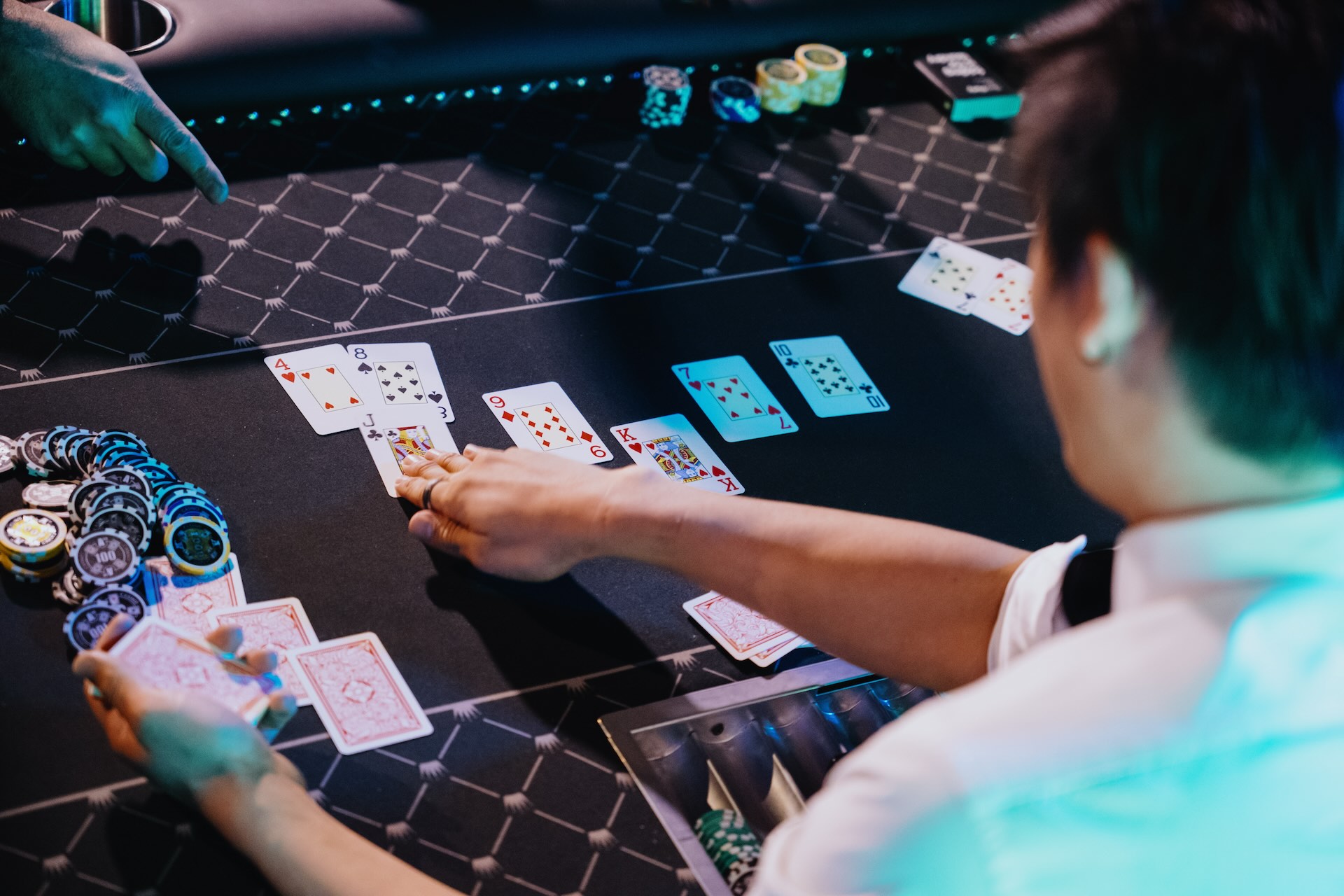
Up against two other players, I match the $200 minimum bet. The dealer flips a 10 of hearts and I raise by $100. One of my opponents drops out. The other ups the bet by another $200. I match it. The dealer reveals the final card, a queen of diamonds, and, pushing my remaining chips into the middle of the table, I go all in. My opponent shows his cards: a full house of three kings and two queens, enough to beat my pairs. Against the odds, I’m out.
Since 2017, the Toronto-based venture arm of the Ontario Municipal Employees Retirement System pension has brought investors, bankers and entrepreneurs together for the biggest poker event in the Canadian tech ecosystem.
It’s a tradition started by the firm’s former head of venture investing, Damien Steel, a fanatic about the game who spends most Julys in Las Vegas playing in the World Series of Poker’s main event, with prize money of over US$10 million. (He’s never come close to winning, he tells me.)
The event began as a more social alternative to the typical corporate charity golf tournament. In the early days, OMERS ginned up interest with side events where Steel had a friend teach people in the community how to play the game. “It just took off,” says Steel, who recently left OMERS to join cleantech startup Deep Sky as CEO. “Every year I get emails from people [asking], ‘When is the next poker tournament?’”
November’s tournament capped a rocky year for many Canadian founders and investors. High interest rates and Silicon Valley Bank’s collapse in early 2023 throttled fundraising in a market already spooked by global instability. By the start of the year’s fourth quarter, venture capital investing had plummeted more than 60 per cent compared to two years earlier. Tech firms and cash-strapped startups had laid off thousands of workers across the country, as they prepared for prolonged austerity.
But on this frigid night, the mood inside The Pearl is jubilant—not with celebration of the year, but with reprieve from it.
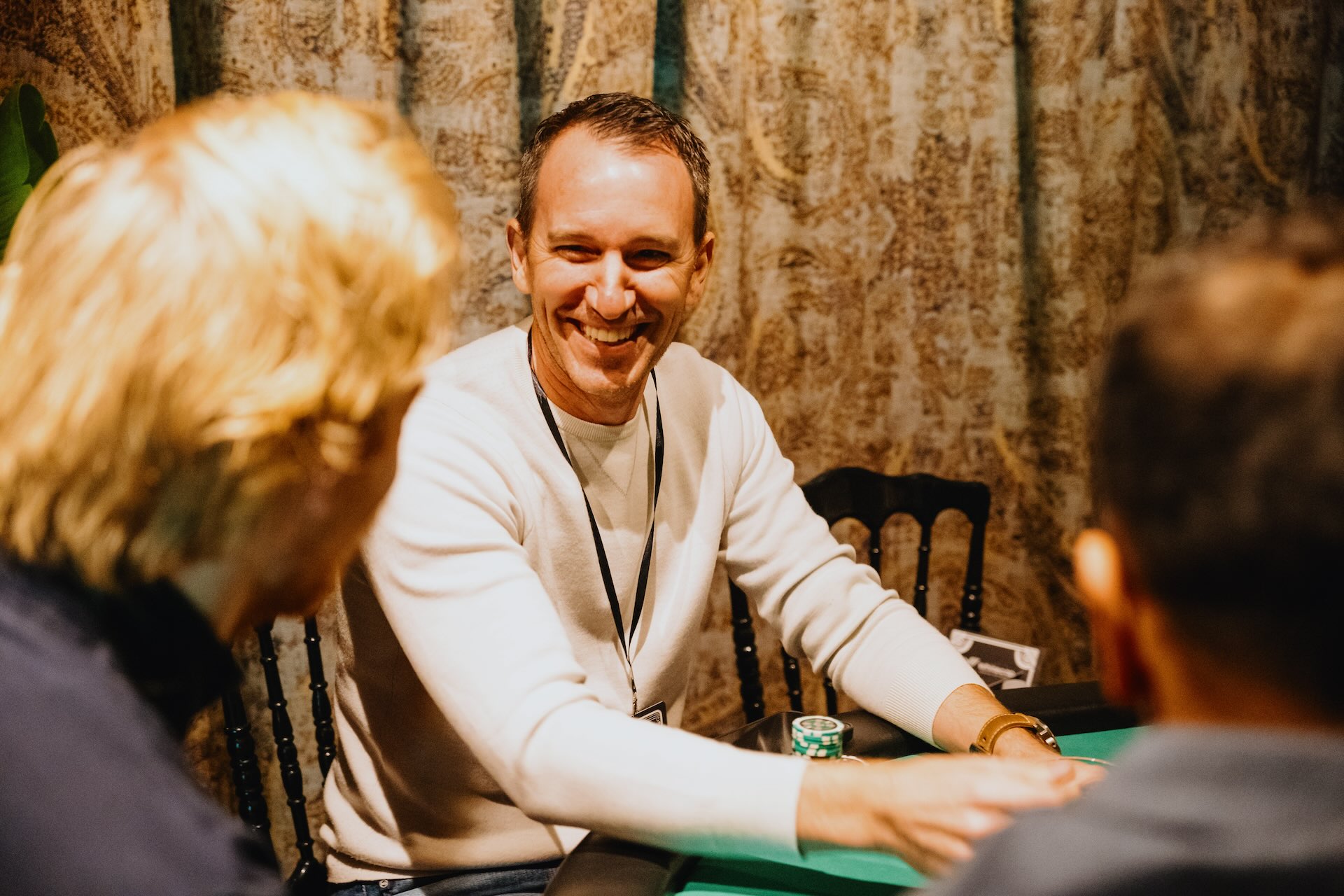
Former head of OMERS Ventures Damien Steel at the 2023 OMERS Ventures charity poker tournament. Photo: Brandon Abiog for OMERS Ventures/Handout
About 150 people have shown up for the tournament. Seventy of us are there to play, the others to observe. The crowd fills the dark bar, rubbing shoulders and sipping drinks between the gaming tables, where dealers in white-collared shirts and suspenders shuffle cards while they wait for players to take their seats.
“I put you at Damien’s table,” says Jennifer Janson, a partner and head of business operations at OMERS Ventures. Seating me next to a sympathetic pro was meant to put me at ease. Instead, I’m intimidated. Steel will know if I’m bluffing, I think—an instinct I assume he’s honed over years of reading people in pitch meetings, and at the poker table.
The stakes are low, I remind myself. We’re playing for charity: the Holland Bloorview Kids Rehabilitation Hospital, an organization that’s deeply important to OMERS Ventures partner and tournament host Laura Lenz, whose son has been a patient at the hospital for over a decade.
“Donate, donate, donate,” Lenz implores, taking the stage to address the room before play begins. She’s wearing a T-shirt that reads, “Folding is for laundry.”
As the players settle at their assigned tables, I get a sense of who I’m up against: a couple of startup founders, financiers at Big Five banks, a venture investor, a corporate lawyer. Many of them are repeat guests. Kate Grant, a business adviser at the law firm Fasken, has been coming to the tournament since its first year, when it was held at the OMERS office and Steel recruited and trained his coworkers—some of whom didn’t know the game—as dealers. (The company has hired professional dealers every year since.)
Scott Penner, a managing director at TD Securities, tells me it’s his fifth year attending. “I made it to the final table five years ago,” says entrepreneur Paul Crowe, who missed the previous year’s event because he was at another poker tournament in Las Vegas. The competition, I realize, is stiff.
There’s a reason, Steel later tells me, that the room is teeming with sharks. Entrepreneurs and investors make great poker players. “If you think of starting a business and running a company, you’re trying to make the best decision possible with limited, imperfect information all the time,” Steel says. “That’s poker.” The same applies to investing, he says, which requires quickly sizing people up to determine how they might behave in unpredictable scenarios. “You can’t control markets, you can’t control competition, you can’t control where a new technology goes. The stage that we play on is changing all the time,” says Steel. “But what you can do is learn about a management team and predict how they’re going to act.”
Between introductions to my opponents, I steal glances at the cheat sheet on the back of my lanyard. The illustrated card combinations jog my memory after a crash course in poker I had arranged for the day before the tournament with OMERS Ventures partner Shawn Chance.
Look for suited flushes, Chance told me at a west-end Toronto coffee shop, as he dealt cards face-up between us. A pair of aces is solid, he said. A royal flush is supreme. If you have a strong hand, don’t scare off your opponent with an extravagant bet, he advised; instead, lure them in with a series of small wagers to grow the pot.
With less than two days to learn the game, though, Chance’s coaching was more about building my confidence than my skills. “The people who end up winning are not necessarily the best poker players,” he said of the charity tournament. With beginners, “You can’t read them. You don’t know if they’re bluffing.” That unpredictability is an asset, Chance insisted. “It makes it fun.”
Photo: Brandon Abiog for OMERS Ventures/Handout
As the tournament begins the following evening, Chance—who’s DJing the event instead of competing—swings by my table to offer words of encouragement. “You got this,” he said. “Just like we practised.”
I’m dealt a five of clubs and seven of clubs. The flop is the seven of hearts, the 10 of hearts and the six of diamonds. I see potential for a straight, so I toss two chips into the pot, matching the starting bet of $50. The dealer flips a 10 of spades, dashing my chance for the straight. With nothing in my hand and little money on the table, I fold.
My hands go like that for a while. My cards are bad, but I try betting anyway to test my bluffing skills. “You kind of just have to fake it till you make it,” says Grant, the Fasken business adviser. I try emulating her casual confidence, not letting on that all I’m holding is a pair of fours. But when the stakes get too high I panic, and fold.
To my right, Penner is cleaning up. Wearing a suit and tie and wire-framed glasses, the banker is an unassuming presence at the table. Steel, who’s more interested in reuniting with old colleagues than flexing his chops, goes all in early and loses everything. He shouts across the table to me, asking if I know who I’m sitting next to—if I know that Penner is a shark. Penner folds often and early—a strategy, I later learn, of only betting on hands he thinks he will win. He makes bigger bets as the game goes on, though he occasionally loses. At one point he’s down to a single chip, but manages to claw his way back to what looks like more money than what he started with.
An hour into the game, Penner needs to head out. He slides his remaining stack of chips my way, and wishes me luck.
I go back to playing conservatively for a while, feeling burned by my earlier losses and pressure to preserve the chips I’ve been gifted.
I learn quickly that I’m not much of a bluffer. Startup founders at the table may be more comfortable with the fake-it-till-you-make-it approach, but I’m not pulling it off. VCs and bankers here are a skeptical bunch—perhaps more so in this particular market than in recent history.
“If you think of starting a business and running a company, you’re trying to make the best decision possible with limited, imperfect information all the time,” Steel says. “That’s poker.”
Good poker, I’m learning, looks more like today’s slow, measured VC market than the caution-to-the-wind startup world circa 2021.
“It’s logic more than emotion,” says Clayton Delaney, co-founder of Atlanta-based fintech startup Finwello, when we chat later in the evening. “As you work through the math in your head, you can make educated decisions around whether or not it’s worthwhile to play with that hand,” he says. “More often than not, that means holding. It’s a game of patience.”
Like other founders and investors I speak to that night, Delaney is practising patience in his work more these days, too. His fundraising is taking more time than he anticipated. He says it’s frustrating, given how easily startups could raise money two years ago. “It’s a numbers game,” he concedes. “It’s about having conversations with as many investors as possible … to get to the ones that will say yes.”
The event, I’m told, is much smaller than the year before. After a two-year hiatus during the pandemic, the tournament returned in 2022 with a bang. OMERS raised $36,000 that night with about 65 more attendees than the latest event—its best turnout to date.
Since then, Canada’s tech ecosystem has deflated somewhat. OMERS Ventures itself hasn’t been immune to the challenges. The firm shuttered its London office in August, just four years after entering Europe with a €300-million fund, laying off two investment staff from the office and relocating the other two to New York. Steel announced his departure later that month. Meanwhile, the firm’s plans to raise its fifth fund, which BetaKit first reported last February, have stalled.
OMERS Ventures partner—and Catherine’s poker coach—Shawn Chance DJs at the 2023 OMERS Ventures charity poker tournament. Photo: Brandon Abiog for OMERS Ventures/Handout
Guests make light of what’s been a difficult year for many of them. They joke about pay cuts and dwindling runway. “People actually welcome opportunities like this to escape the day-to-day reality of a challenging market environment,” says Petar Zelic, head of technology investment banking in Canada for global wealth management firm Stifel and a regular at this tournament.
By 10:30, the crowd has thinned out and the 10 players remaining have moved on to the final table. I’m not among them. The minimum bet has skyrocketed to $1,600, effectively forcing every player to go all in on every hand. Quickly, they start to go bust.
Shortly after 11 p.m., the two remaining players are dealt their last hands. Zelic is one of them, holding an ace of hearts and three of diamonds. The flop—two sevens, two queens and a four in a variety of suits—doesn’t help him, but he wagers all his chips anyway, about $100,000 worth, by the fictional values assigned to the chips. At this point in the game, Zelic tells me later, “it’s like flipping a coin and landing on heads a bunch of times.” Luck, it seems, is on his side tonight. His opponent has a nine of hearts and six of clubs: nothing.
Zelic donated his $1,000 winnings to Holland Bloorview, adding to the $13,400 OMERS raised for the foundation that night.
“What I do for a living hinges on the strength of the markets, especially for technology,” Zelic tells me after the game. “A lot of people are having very tough conversations, but it wasn’t really felt at the event.”
The night was a bright spot in an otherwise dismal year for the industry—and a bright spot for Zelic, a longtime player in the tourney who tonight is celebrating a long-awaited win.
“It’s exciting,” he says. “Eventually, one of these years, I got my turn.”