OTTAWA — Canadian telecom companies are sitting on billions of dollars in copper wires, which could boost their balance sheets as they replace the old technology with fibre-optics. If thieves don’t steal it out from under them first.
Skip to content

News
Telus has $500M in copper ready to be mined—right over your head
Near-record copper prices have telcos looking to cash in on old wires before thieves plunder them
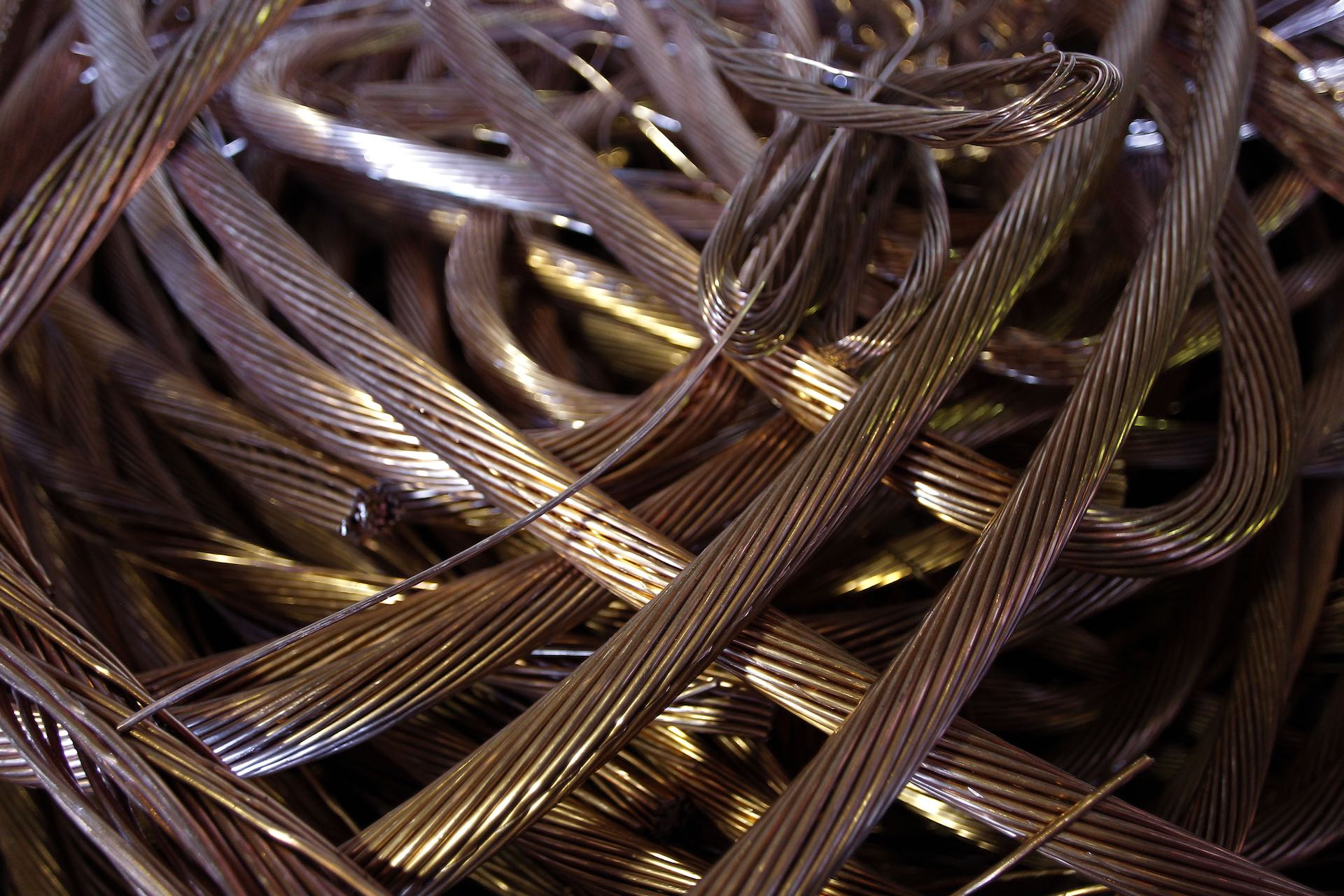
Copper wire awaits recycling at a San Francisco metal dealer; telcos around the world, including in Canada, stand to make billions by recycling it. Photo: San Francisco Chronicle via Getty Images/Michael Macor
OTTAWA — Canadian telecom companies are sitting on billions of dollars in copper wires, which could boost their balance sheets as they replace the old technology with fibre-optics. If thieves don’t steal it out from under them first.
The commodity price of copper began rising sharply in 2005 and although it’s gone up and down with global economic cycles, it’s never been as low since. Now, the price is close to the all-time high it reached in 2024.
Talking Points
- Canadian telecom companies have billions of dollars’ worth of copper wire strung around the country that’s worth ever more to recyclers as the metal’s value rises
- Telus estimates the net value of just the copper it intends to take out over the next five years at $500 million
One estimate has the global telecom industry set to make US$10 billion from recycling copper over the next 15 years. With this country’s vast geography, a significant percentage of that valuable metal is strung in wires by the sides of Canadian roads and coiled inside telcos’ central offices.
Telus noted in a recent filing that the revenue from selling disused copper was a factor in nearly doubling its catch-all category of “other income” between 2023 and 2024.
By the end of 2024, Telus had already taken out more than 4,000 tonnes of copper, spokesperson Tricia Lo said by email. After refining and other costs take bites out of the roughly $1 billion worth of copper it expects to remove, she said Telus estimates its “green copper urban mining initiative” will be worth about $500 million over the next three to five years alone.
Related Articles


Bell isn’t as bullish on the profitability of its reclaimed copper, though it has a lot of the stuff.
“We have almost 637,000 kilometres of copper,” said Michele Austin, Bell’s vice-president of government relations. “It’s a lot to decommission.”
Besides having higher bandwidth, fibre-optic cables use less energy and are more resilient amid climate change, she said. As a policy, Bell wants to swap them in for copper, though CEO Mirko Bibic has said it’s slowing that work down in the face of regulatory decisions it opposes. One of those is a CRTC order saying Bell has to sell wholesale access to its wired networks to rivals, even ones as big as Telus, in the name of competition.
“The increase in copper theft from Bell between November 2023 to November 2024 is 78 per cent. It’s a monstrous problem.”
Regardless, many of Bell’s copper wires, such as those connecting individual customers, are just wisps of metal, practically worthless as scrap. Although Bell does make a “small but steady” amount of money off copper recycling, it reuses much of its decommissioned copper in repairs, Austin said.
Bell has had to do a lot of that because of the value of copper. Thieves cutting out wires and copper-heavy equipment are responsible for 88 per cent of the “physical security incidents” that affect Bell’s network, Austin said.
“The increase in copper theft from November 2023 to November 2024, at Bell, is 78 per cent,” she said. “It’s a monstrous problem.”
The hotspots in Bell’s network, which covers eastern Canada, are rural New Brunswick and the Hamilton and Kingston areas in Ontario.
“I have a gang in Hamilton that had a white truck with a yellow light. They had the reflective vests. They had hard hats and work boots on. They stopped for three nights in a row in front of various places where copper was accessible to them,” she said. “What happened was a Bell employee happened to be going by, went ‘What is that?’ and called the police.”
In that one city, police said, reports of copper thefts climbed from 40 in 2022 to 119 in 2023, then fell just slightly to 105 last year. When the local fire department and police responded to a fire in a condo building in early February, they found evidence it was sparked by an attempt to rip copper out of a transformer in the building’s electrical room.
That’s an example of the disproportionate harm that copper theft can do. Another: In November, thieves cut down wires serving the Miramichi airport in New Brunswick. Repairs cost $30,000, according to Bell.
“The police caught those thieves, and they estimated the amount of copper stolen in Miramichi would have been worth $100,” Austin said.
“I’ve had people say, ‘Well, why can’t you be like the pipelines, and why can’t you put a solar-powered satellite camera on every pole?’ Do you know how many poles we have?” she demanded rhetorically.
Rogers told The Logic the scrap value of its copper is small—”Our wireline network is primarily hybrid fibre coaxial cables which are different than the legacy copper networks operated by others,” spokesperson Zac Carreiro wrote in an email—and it doesn’t expect to make any money selling decommissioned cable.
Nevertheless, its network suffers from vandalism by people trying to get at copper, it said in a brief to a Senate committee that had been studying copper theft before Prime Minister Justin Trudeau prorogued Parliament in January. Rogers, Telus and Bell all want a special Criminal Code provision covering damage to critical infrastructure, because the small value of any individual theft currently means the consequences are slight.
Maybe both of those will change. As industry and transportation electrify, the need for wires, transformers and other copper-intensive gear will keep growing, so demand for copper, and its price, are projected to keep rising.



Loading...
Thanks for sharing!
You have shared 5 articles this month and reached the maximum amount of shares available.
CloseThis account has reached its share limit.
If you would like to purchase a sharing license please contact The Logic support at [email protected].
CloseGift the full article!
You have gifted 0 article(s) this month and have 5 remaining.
Recipients will be able to read the full text of the article after submitting their email address. They will not have access to other articles or subscriber benefits.
Photo: San Francisco Chronicle via Getty Images/Michael Macor
Most Popular This Week




In-depth, agenda-setting reporting
Great journalism delivered straight to your inbox.
Commentary
Carmichael: Being boxed in will help Canada focus on what matters
Briefing
Rio Tinto gets nearly $165M in additional federal funds for Quebec aluminum
U.S. to lift tariffs on some Canadian products crucial to Maine: Collins
Carney warns of tech dependence after Starlink disruptions in Ukraine
Best business newsletter in Canada
Get up to speed in minutes with insights and analysis on the most important stories of the day, every weekday.
Exclusive events
See the bigger picture with reporters and industry experts in subscriber-exclusive events.
Membership in The Logic Council
Membership provides access to our popular Slack channel, participation in subscriber surveys and invitations to exclusive events with our journalists and special guests.






