Listen Now
0:00
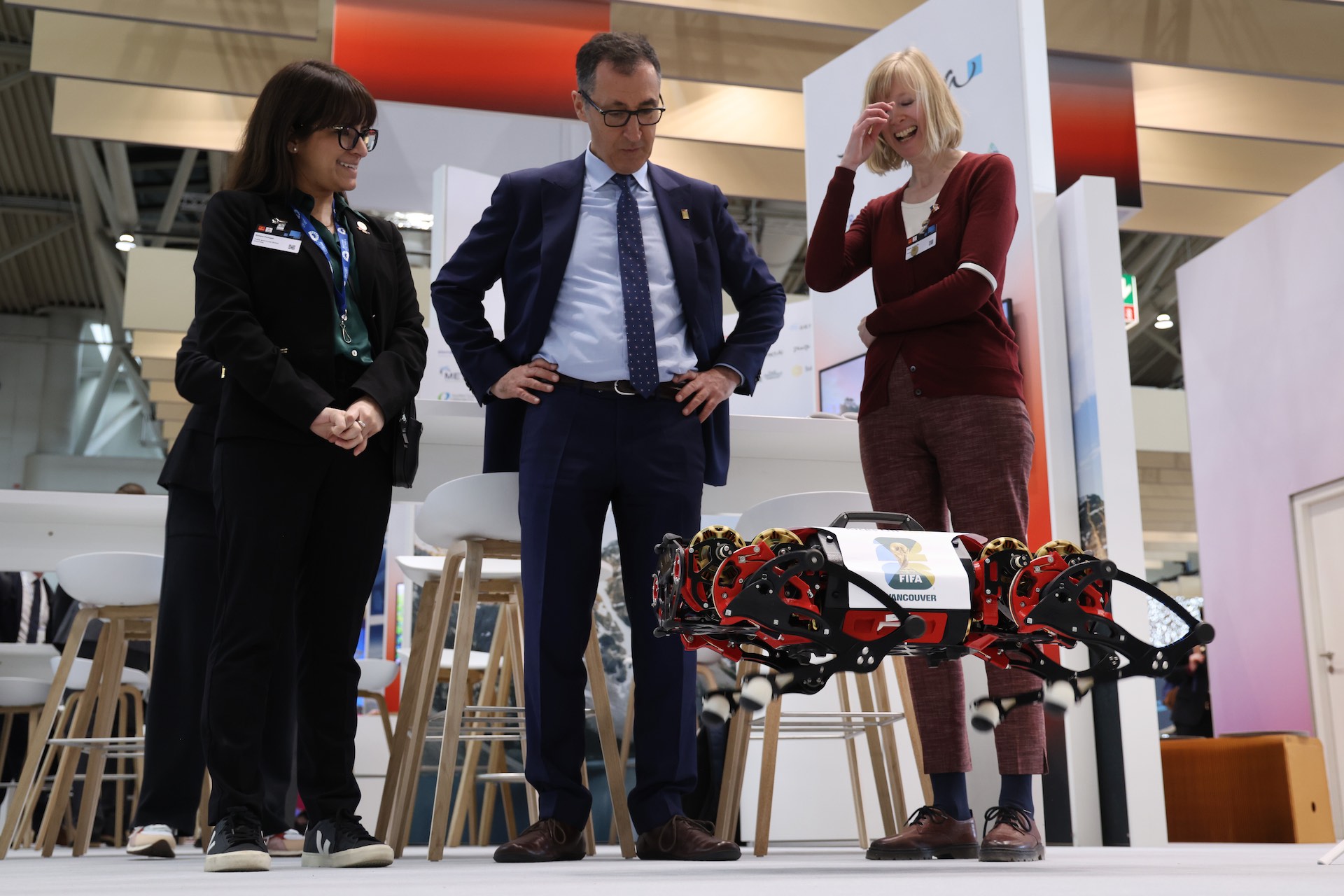
OTTAWA — Nachappa Kalengada knows that a robot roaming one of the biggest industrial technology trade fairs in the world would attract visitors to the booth of Uncharted AI, an early stage startup connected to research at Polytechnique Montréal.
The plan has a problem: the batteries they used are not permitted on a passenger plane.
Talking Points
- Nearly 100 Canadian exhibitors focused on advanced manufacturing are heading to Hannover Messe, a massive international trade fair in northern Germany taking place from April 20 to 24
- Some are startups that want to attract visitors to their booths with eye-catching tech such as autonomous robots, but getting their gear to Germany can be a heavy lift
Kalengada is head of strategy and operations at Uncharted, which develops AI-powered systems, or “brains,” for robots so they can explore challenging terrain in remote areas. They could be used for mine prospecting or potentially in space—even without GPS—and send real-time data to humans sitting comfortably away from danger in an air-conditioned room. The technology is currently at work in a paid pilot program for Hancock Prospecting, a mining company in Australia, and the company is fundraising mainly in India.
The next frontier is Hannover Messe, the massive advanced manufacturing show in northern Germany where thousands of exhibitors from around the world will converge next week with exponentially as many attendees, including potential clients and investors. The international showcase of industrial technology can be an opportunity for startups to drum up business and attract talent, but it is also a big expense and a logistical headache.
Especially if, like Uncharted AI, one is trying to bring a robot on a plane.
Related Articles
“We are trying to figure out how to get just the base body of the robot and then get the batteries locally sourced in Germany,” said Kalengada.
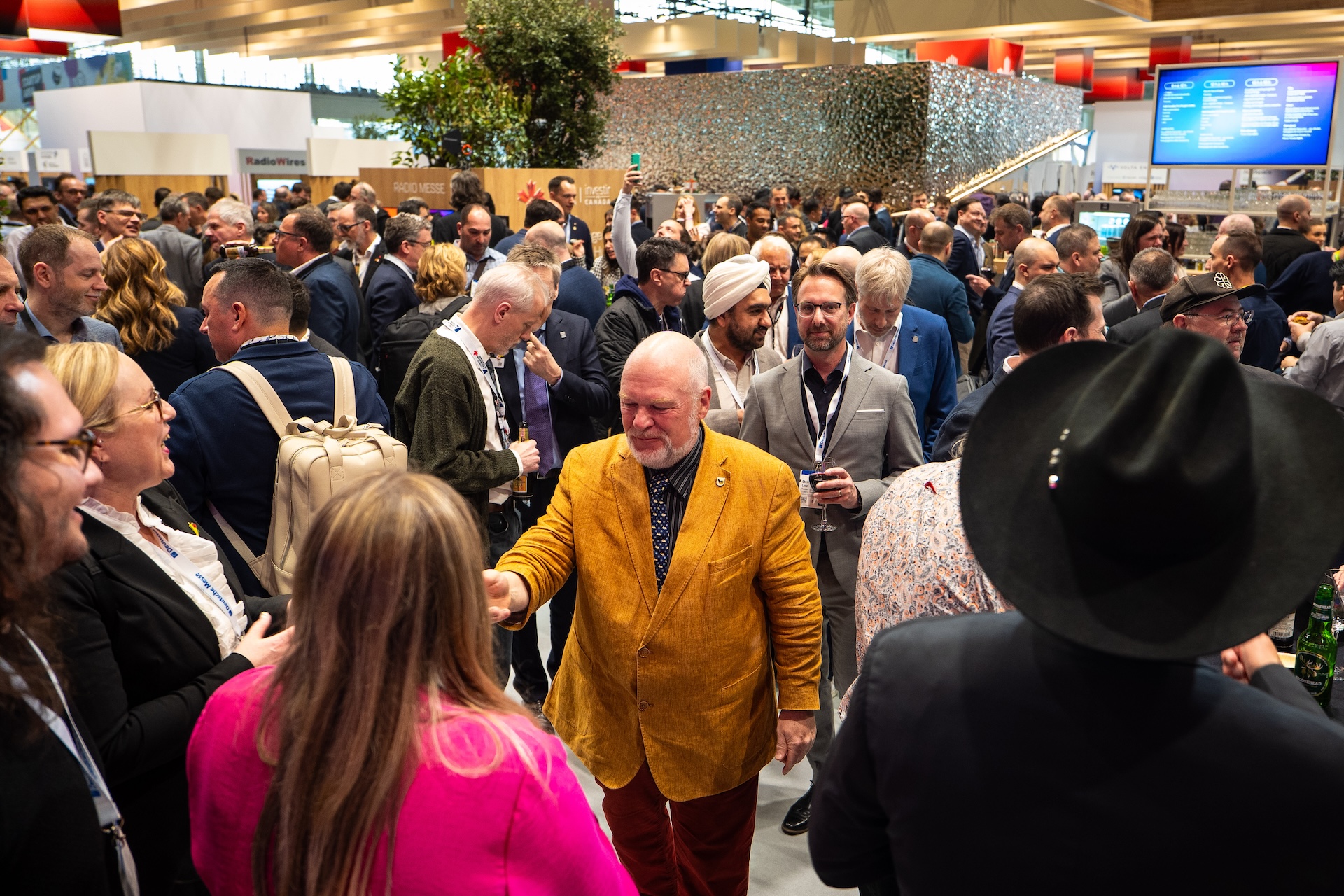
Nearly 100 Canadian exhibitors focused on advanced manufacturing—including AI, defence technologies and robotics—are setting up booths at this year’s fair. The grounds have two dozen exhibition halls and pavilions across enough indoor and outdoor space to cover about 65 professional soccer fields in Germany. Next Generation Manufacturing Canada (NGen), the non-profit leading the country’s advanced manufacturing cluster, is organizing most of the Canadian contingent across three halls.
Toronto-based Cohere, reportedly in talks to merge with Germany’s Aleph Alpha, is part of the group. Industry Minister Mélanie Joly will be there, too, as the Liberal government seeks industrial partnerships and foreign investment to shore up the economy and reduce reliance on the U.S.
Many companies are seeking to enter the competitive European market or secure a spot in its supply chains. There is a lot to do, though, before they get to the handshakes.
“It really is overwhelming there,” NGen CEO Jayson Myers told The Logic. His own team had to scramble last year when they struggled to get Project Arrow—a Canadian EV prototype—through customs after it landed at the Frankfurt airport in a wooden crate. The Canadian Embassy in Berlin had to get involved and then NGen had to transport it to Hannover in a rental truck. The vehicle finally arrived at the fairground at 3 a.m., mere hours before the opening of the Canadian pavilion. “We had to pull out all the stops,” he said.
Rahul Narsimhan, the CEO of HiveRadar, can relate. The Toronto-based firm makes portable, off-grid edge data centres for IT infrastructure in remote locations like film sets or field hospitals.
Getting the equipment to a trade show is a different kind of challenge.
“That is a logistical nightmare right now,” he said. Members of the team learned their lesson last month when heading to a trade fair in Chile. They thought they had cleared the portable data centre for entry through diplomatic channels, but ran into a mix-up about the allowable weight.
“When we arrived at the airport, Air Canada would not let us load the product into the plane,” he said. So they went to the fair without it. For Hannover Messe, they decided to send the product to Germany via air freight, where it will stay with a partner for use in future trade shows overseas. Getting it across the Atlantic that way costs about $1,500. Narsimhan said it is worth the investment to get new clients.
Vention, a Montreal-based robotics company, set up its European headquarters in Germany in 2022, so its demo products are already there. The firm is moving its German operations from Berlin to Munich, where it will occupy a bigger space and hire new employees. Its European expansion is supported by US$110 million raised in a Series D round, including from Investissement Québec, Desjardins Capital and Nvidia’s venture arm. Vention CEO Etienne Lacroix remembers what it was like to visit international trade fairs in the early days. “We were travelling with robots on a plane,” he said, “and I can assure you that it’s not an easy task.”
Being there can make a difference.
Hadley Fox is the co-founder and chief technology officer at TP7 AI Robotics, a Boston-based startup that grew out of research backed by SFU VentureLabs in Vancouver, and by Nvidia. Its robots can learn to perform tasks with human-like dexterity with natural language instructions. A human supervisor can show the robot an object and then prompt it to pack it in a box, which it will do until assigned another task. The factory does not even need to be particularly organized.
Incorporated in 2024, TP7 originally pitched its robots for defence and security, but regulatory hurdles made it hard to catch the interest of companies in that space. At Hannover Messe last year, Fox recalled potential clients asking: “Why are you not using this in the factory?” The question came up again and again, so the company pivoted to manufacturing to ensure its survival. It is working. After Hannover Messe, a Canadian nutraceutical company began using TP7’s autonomous robots to make Kirkland-brand products for Costco.
Getting their robots in front of potential clients in northern Germany is still a heavy lift, and not just financially. TP7’s dual-arm unit weighs nearly 270 kilograms. Fox said they will bring a smaller, single-arm unit and showcase other features on a screen.
NGen provides exhibitors with up to $10,000 in matching funds to offset the costs of going to Hannover Messe. Myers, who played a big role last year when Canada was the partner country for the fair, also shared some wisdom. Bring more than one person, so you do not miss out on potential clients visiting the booth. Have a game plan for whom you want to meet. Collect business cards and follow up before people forget who you are and what you are selling. Also: “Wear comfortable shoes.”