TORONTO — Canadian startup Moonvalley AI has launched a video-generation model for filmmakers and production companies that it claims could help address the copyright crisis currently roiling the entertainment industry.
Skip to content

News
Moonvalley AI reckons Hollywood will actually like its new model
Studios are using Moonvalley AI’s Marey model to produce background footage and B-roll. The startup says licensing deals and pro tools give it an edge in Hollywood.
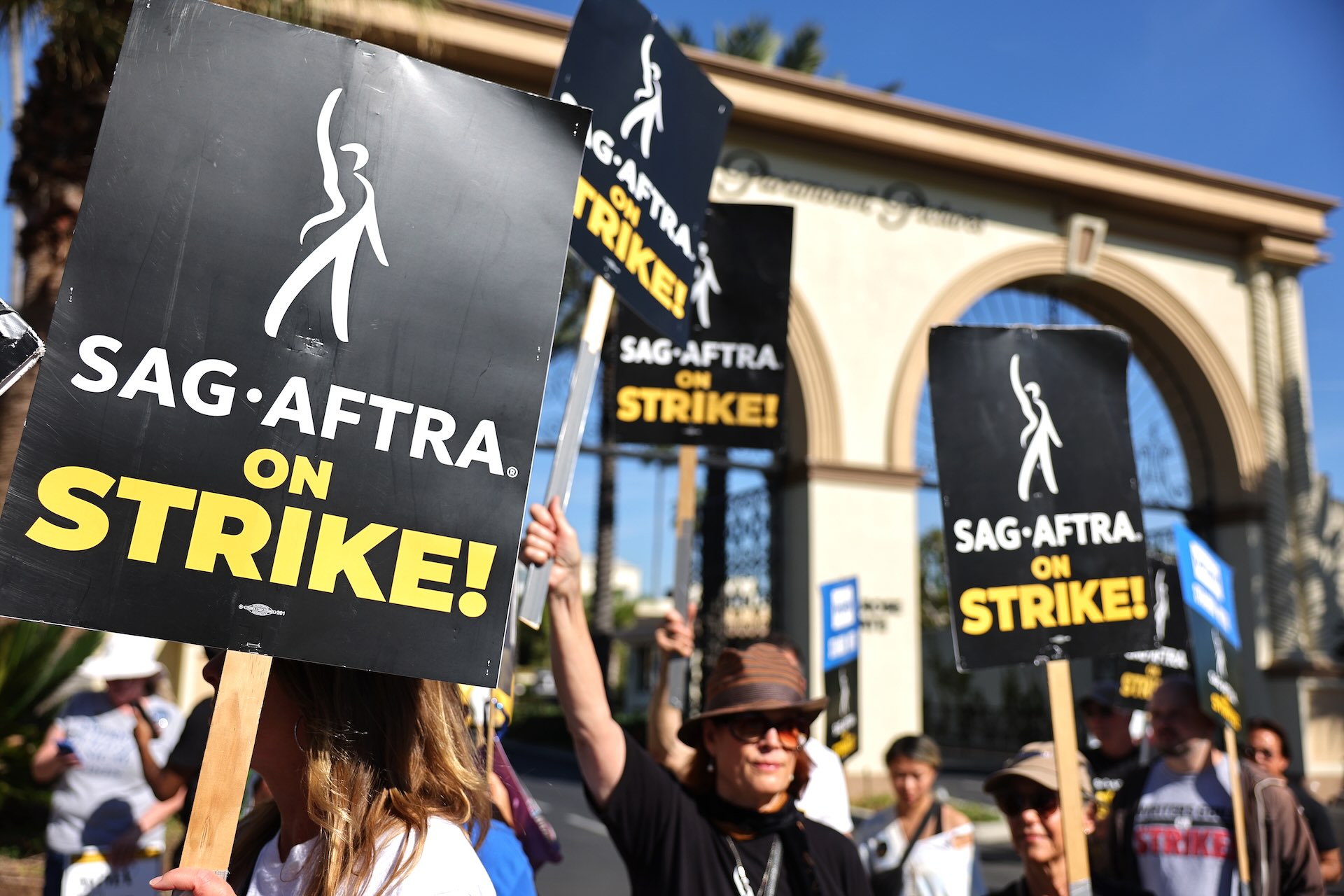
SAG-AFTRA members on strike outside Paramount Studios in November 2023. The incursion of AI into the entertainment industry has led to widespread concerns about job losses. Photo: Mario Tama/Getty Images
TORONTO — Canadian startup Moonvalley AI has launched a video-generation model for filmmakers and production companies that it claims could help address the copyright crisis currently roiling the entertainment industry.
Unlike many big-name AI companies, which rely on scraping the internet to train their models, Toronto-based Moonvalley AI has opted to license the content its model is trained on and combine that with professional editing tools. The result, the company says, is a system that could actually work for Hollywood.
Studios are currently using the model, named Marey, to generate B-roll and background footage for scenes, said Moonvalley CEO Naeem Talukdar. Directors can also use the model to help plot out shots and sequences in the pre-production process.
Major studios have been testing Marey since March. On Tuesday, Toronto-based Moonvalley opened the model up for general use. It also launched new software that lets users direct a scene by moving the virtual camera, modifying the pose of a character or adjusting background objects.
Talking Points
- Toronto-based Moonvalley AI is launching a model and software tools for filmmakers and studios to generate video content. The startup claims Marey can be used for background footage and B-roll, and offers better control than products from competing AI labs
- Workers in Hollywood are worried AI could cost them jobs and projects, but Moonvalley CEO Naeem Talukdar said his firm is trying to offer creators power tools rather than replace them
Moonvalley is betting that studios need more specialist AI tools than the ones on offer from major tech companies. Models like OpenAI’s Sora and Google’s Veo are designed to generate clips from text prompts, and lack the fine controls that professionals need, according to Talukdar. “It’s not very helpful if you’re a director who might reshoot a single shot 150 times to get the perfect lighting.” Marey lets creators make such changes more quickly and cheaply.
The firm will sell subscriptions to Marey. Talukdar said prices will be similar to other video models, which typically work out to about US$1.50 per clip of five to 10 seconds.
Studios are also working with Moonvalley to create fine-tuned versions of Marey with data from individual films or TV shows, so they can produce more content for those specific projects. The model could eventually generate main shots rather than just background footage, according to Talukdar.
Related Articles


Most models are marketed to consumers or social media creators, with the companies behind them promising that “anybody with a phone can be James Cameron,” Talukdar said. “It’s just such a misunderstanding of what artistry is.” Instead of replacing creative professionals with AI, he claimed his firm is providing “power tools” they can use to realize their visions.
Moonvalley is also trying to avoid AI’s copyright crisis by training its models in a different way. Other AI firms feed video tools with data scraped from the internet, much as they do with large language models, according to Talukdar. Moonvalley, by contrast, has made licensing deals for content with Vimeo and YouTube filmmakers, as well as small production companies in North America, West Africa and East Asia.
Moonvalley typically buys permission to train its models on the licensed content for two to three years, but permanently retains the right for users to generate video with the system. Moonvalley also runs its own Los Angeles studio, called Asteria, where it hires performers for clips to help train its model, as well as producing commercial content.
It might be paying to license content, but Moonvalley has still been drawn into the fight over the use of AI in movies and TV playing out in film industries around the world. Indie film and TV icon Natasha Lyonne is set to use Moonvalley’s tools in her feature directorial debut, called Uncanny Valley, about a teenager consumed by an augmented-reality video game. Fans and film workers have criticized the project, claiming it will help popularize a cheaper, inferior way of making movies.
Both actors and writers made the technology a key bargaining issue in recent Hollywood strikes, arguing studios shouldn’t be able to endlessly use their likenesses and work to edit projects or generate new content. Visual effects workers also worry about job losses due to AI.
Talukdar acknowledged there’s a “natural, deep resistance” to AI in the entertainment industry, blaming other tech companies for “playing very fast and loose with data” and launching tools that produce AI slop. He argues the technology will actually help increase filmmaking activity.
Lyonne and co-writer Brit Marling have been shopping Uncanny Valley to studios for some time, but none would commit to the budget of about US$30 million, Talukdar said. Moonvalley’s technology will cut the cost by half or two-thirds, he estimated, making the film financially viable. “You’re going to have a wave of new projects that wouldn’t otherwise be done,” he claimed.
Moonvalley’s AI star power comes from co-founders Mateusz Malinowski and Mikołaj Bińkowski, London-based researchers who previously played lead roles on the video model team at Google’s DeepMind. Talukdar said the firm is headquartered in Toronto because of its AI, sales and marketing talent. It’s also an easy place to work with studios, since Toronto and Vancouver are global hubs for film and TV production and Canada is a global leader in visual effects, he said. The firm currently has 50 employees, with about a dozen based in Canada.
In November, Moonvalley announced US$70 million in seed financing from major Silicon Valley investors including Khosla Ventures, General Catalyst and Bessemer Venture Partners. It’s currently raising another round, Talukdar said.



Loading...
Thanks for sharing!
You have shared 5 articles this month and reached the maximum amount of shares available.
CloseThis account has reached its share limit.
If you would like to purchase a sharing license please contact The Logic support at [email protected].
CloseGift the full article!
You have gifted 0 article(s) this month and have 5 remaining.
Recipients will be able to read the full text of the article after submitting their email address. They will not have access to other articles or subscriber benefits.
Photo: Mario Tama/Getty Images
Most Popular This Week




In-depth, agenda-setting reporting
Great journalism delivered straight to your inbox.
News
Adam Waterous proposes massive crude exports to Asia by rail through northern B.C.
Briefing
Rivals may be ‘horrified’ to realize how exposed their investments are to AI, Aviva CIO warns
Shopify, Sequoia co-lead US$200M investment in online-selling platform Whop
Amid revenue gains, 1Password bets on tools to protect data from AI agents
Best business newsletter in Canada
Get up to speed in minutes with insights and analysis on the most important stories of the day, every weekday.
Exclusive events
See the bigger picture with reporters and industry experts in subscriber-exclusive events.
Membership in The Logic Council
Membership provides access to our popular Slack channel, participation in subscriber surveys and invitations to exclusive events with our journalists and special guests.







