Mark Carney is set to face Donald Trump on Canada’s behalf, leading the Liberals to a stunning re-election months after the party appeared to be dead on its feet.
Skip to content
News
Mark Carney and Liberals hold power with turnaround election win
Leadership reset and threats to Canada by Donald Trump rescued the Liberals from a months-long spiral in polls, but they fell short of a majority
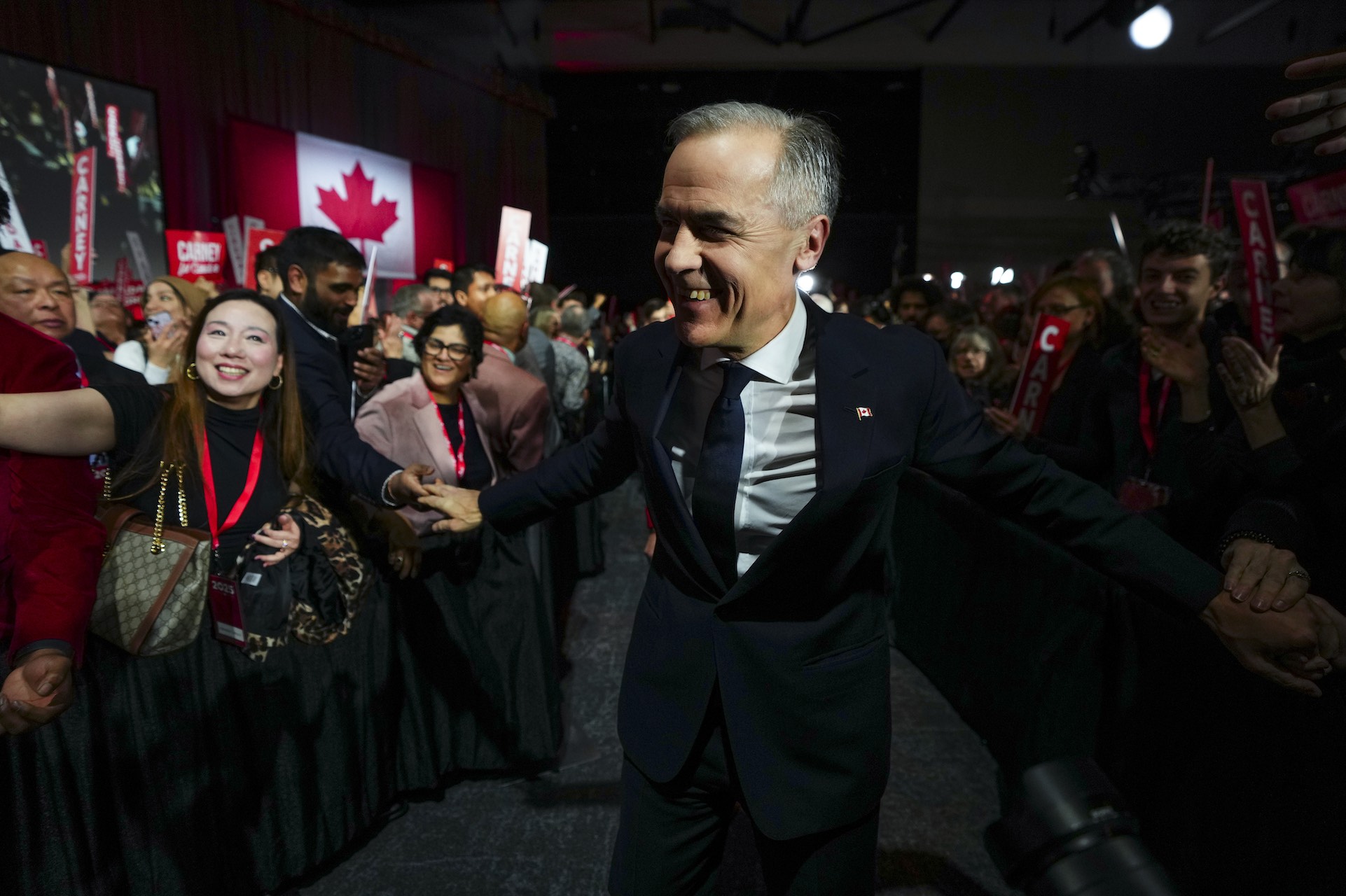
Mark Carney, seen here at the announcement of his Liberal leadership victory, will remain as prime minister after his party won the federal election on Monday. Photo: The Canadian Press/Sean Kilpatrick
Mark Carney is set to face Donald Trump on Canada’s behalf, leading the Liberals to a stunning re-election months after the party appeared to be dead on its feet.
Startling as the turnaround is, though, Carney will not be able to fight a trade war with Washington without turning to check his back. The Liberals’ appeared set to form a minority government, needing at least one other party to support them on confidence votes and to pass key legislation.
Talking Points
- Liberal Leader Mark Carney has led his party to a fourth consecutive win, but his party appeared headed for a minority government, meaning it would need support from an opposition party to govern
- Carney’s campaign focused on his experience as a crisis manager capable of dealing with U.S. President Donald Trump and promises to strengthen Canada’s economy, regardless of what happens south of the border
At 7 a.m. EDT, the Liberals led in 168 seats to 144 for the Conservatives, 23 for the Bloc Québécois, seven for the New Democrats and one for the Greens. Enough votes were still to be counted, however, that some seats were still undecided—leaving a majority still theoretically within the Liberals’ reach.
With a majority vote in the House of Commons needing 172 MPs, those standings give the Liberals the same options for alliances as they had in the last Parliament: either the Bloc or the NDP can supply enough votes to help.
Conservative Leader Pierre Poilievre conceded defeat but vowed to stay on—despite trailing significantly in the count in his own Carleton riding. Though the Tories made huge gains in their number of seats after Monday’s vote, Poilievre trailed Liberal newcomer Bruce Fanjoy by four points.
As Carney has with the Liberals, Poilievre can lead his party without having a seat in the Commons. He can run for one in a byelection, which could come soon if a Conservative MP resigns to clear the way for him.
The Liberals’ return to power is based on the near-collapse of one party, and the abrupt slide of another. The New Democratic Party, the Liberals’ former governing partners, lost their party status in Parliament and NDP Leader Jagmeet Singh resigned after losing his own seat in suburban Vancouver. And Quebecers turned away from the Bloc, handing many of the party’s former seats to the team in the red sweaters.
That helped make up for Liberal losses in Ontario, where many seats shifted to Poilievre’s Conservatives, and the Liberals’ failure to make a breakthrough they had hoped for in urban seats in Saskatchewan and Alberta.
The promises
Related Articles
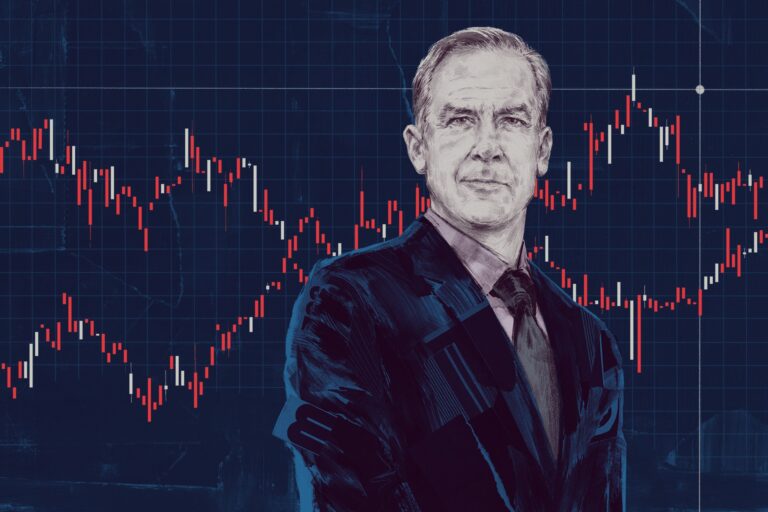
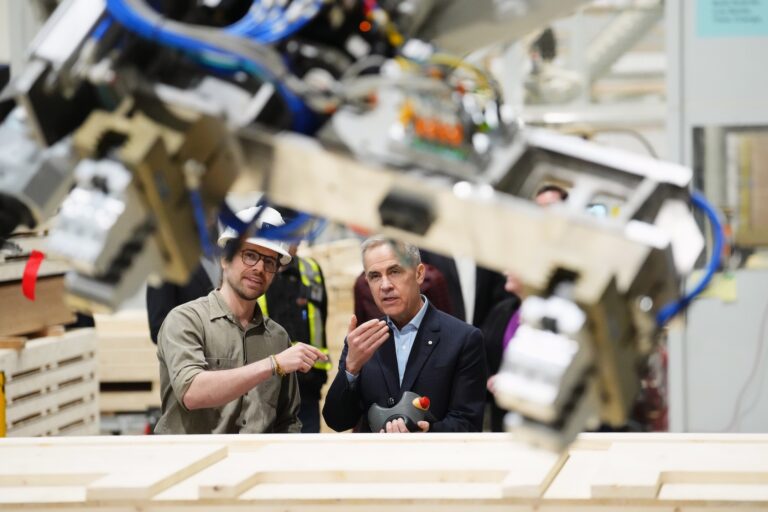
Carney has vowed a stern attitude toward Trump and to focus on strengthening Canada regardless of what happens south of the border. “We can give ourselves far, far more than Donald Trump can ever take away, but it will take extraordinary efforts,” he said in his victory speech when he won the Liberal leadership, and repeated the sentiment often on the campaign trail.
Immediately, however, Carney will have to play active defence against ever-shifting U.S. policy. He’s promised support for tariff-affected workers, especially in the auto sector. More homegrown food. Housing construction at a pace not seen in generations.
The Carney Liberals have said they will run deeper deficits than the Trudeau government intended to, but insist they’ll be doing it to build for Canada’s future rather than redistributing wealth—investing, not spending.
In his brief period as prime minister before he called the election, Carney set the federal consumer carbon tax to zero and formally did away with plans to raise the tax take from capital gains. Some minor paperwork aside, doing those things was as easy as saying so.
Re-equipping the military when Canada isn’t sure how much to trust its traditional suppliers in the U.S. isn’t so straightforward. Pressing Canada’s early lead in artificial intelligence isn’t, either. Speeding up the permitting for new mines without sacrificing environmental considerations and Indigenous Peoples’ rights? Not a new thought. Attacking the interlocking factors that have sapped Canada’s productivity? Tougher still.
The fight
Carney portrayed himself throughout the campaign as best-placed to take on Trump, including with an ad embracing the hockey-inspired “elbows up!” approach to Canadian pride. Days after being sworn in as prime minister, he said he would be ready to speak with Trump when the president was ready to stop threatening Canada’s sovereignty.
“The old relationship we had with the United States, based on deepening integration of our economies and tight security and military cooperation, is over,” Carney declared shortly after Trump announced 25 per cent tariffs on autos.
The next day, Carney and Trump finally spoke. They agreed to start negotiating a new “economic and security relationship” as soon as the election was over. At the time, Carney told reporters Trump had respected Canada’s sovereignty. In the final days of the campaign, a report from Radio-Canada forced Carney to acknowledge he had left out the bit about annexation.
Starting the conversation
Carney has suggested talks with Trump could begin as early as Tuesday. There is a lot to get through. Canada remains under several layers of tariffs: the 25 per cent duties on all goods traded outside United States-Mexico-Canada Agreement (USMCA), with energy and potash subject to 10 per cent tariffs; 25 per cent tariffs on all steel and aluminum; plus the tariffs on autos, which is soon set to also include parts. The USMCA offers only partial protection from both auto-related tariffs.
Canada also has several layers of retaliatory tariffs in place on nearly $60 billion worth of U.S. goods, including $15.6 billion worth of steel and aluminum. There are also 25 per cent counter-tariffs on U.S. autos that do not comply with USMCA, or 25 per cent on the non-Canadian and non-Mexican content for those that do. Companies producing vehicles in Canada can request relief—so long as they keep doing so and complete any planned investments. Ottawa is also ready to grant a six-month relief from counter-tariffs for any U.S. goods used in Canadian manufacturing or processing, packaging food or beverages, as well as for health care, public health, public safety and national security.
Other promised measures to safeguard the Canadian economy: strengthening the Investment Canada Act; speeding up approvals for major projects; diversifying exports; attracting top U.S. scientists and researchers; supporting the innovation economy to keep capital and entrepreneurs in Canada; and a made-in-Canada procurement strategy that includes standards for using domestic steel, aluminum and lumber.
Looking further ahead, USMCA is set to be reviewed by July 2026. Trump’s desire to expand U.S. access to Canada’s tightly controlled dairy market is expected to be a flashpoint. Carney has pledged to keep the supply management system for dairy, poultry and egg sectors off the negotiating table.
The team
Members of the Liberals’ core economic team under both Carney and Justin Trudeau were on track to be re-elected. Finance Minister François-Philippe Champagne, Foreign Minister Mélanie Joly and Trade and Intergovernmental Affairs Minister Dominic LeBlanc had huge majorities in their relatively safe seats.
Transport and Internal Trade Minister Chrystia Freeland led comfortably in Toronto’s University-Rosedale riding. Innovation Minister Anita Anand led in her riding of Oakville East in suburban Toronto. Natural Resources Minister Jonathan Wilkinson was ahead in North Vancouver–Capilano.
Sean Fraser also managed to hold on to his Nova Scotia seat in a close race against Conservative challenger Brycen Jenkins. Fraser was immigration minister and then housing minister under Justin Trudeau—two files on which the Tories hammered the last government relentlessly—and had said he was quitting politics until Carney lured him back.
The party’s resurrection seemed set to bring in some new MPs with chops in finance, business and economics, including: former Goldman Sachs Canada CEO Tim Hodgson, former Quebec finance minister Carlos Leitão and former IBM Canada president Claude Guay. All three were well ahead in their ridings.
Bloc slide
The Bloc Québécois lost seats, falling from 33 when the election was called to perhaps 23 (pending final counts). Yet the new government’s policies are likely to reflect many of the Bloc’s top priorities for federal action—making for a potential partnership, at least for a while.
The Liberals might not pursue those ends precisely the way Yves-François Blanchet would want, but the Bloc and the new government won’t be too much at odds over promoting domestic industries such as lumber, steel and aluminum; protecting workers in those sectors from trade-war damage; developing critical mineral deposits; or defending supply management in agriculture and protections for French language rights in talks for a new U.S. trade deal.
If there’s friction, it might be over potential new pipelines to carry western petroleum to eastern refineries and ports. Carney isn’t four-square behind a new pipeline that would cross Quebec, but he’s evidently keener on the idea than Trudeau was.
No way, said the Bloc during the campaign.
Conservative gains lead to major loss
The Conservatives made major gains in Monday’s vote, coming within striking distance of the Liberals, but not enough to unseat them. The Tories were leading in the most seats they’ve held since the 2011 election, when Stephen Harper led his party to a majority victory.
Poilievre’s focus on affordability had served him well for years, and not long ago polls suggested the Conservatives would’ve easily won a majority government if the election had been held before Trudeau’s resignation.
He ran on promises of major tax reforms, including dramatic tax income cuts and the elimination of the industrial carbon tax. He also hoped to speed up the government’s review process for major resource projects by repealing the Liberal government legislation that requires an assessment of the potential health, social, environmental and First Nations impacts before they can go ahead.
The loss is likely to raise questions about Poilievre’s future as party leader. If he were to relinquish his post, the Tories will head into their fourth leadership race in 10 years.
Poilievre also lost his innovation critic Rick Perkins, a former Business Development Bank of Canada board member, who was defeated in his East Coast riding of South Shore–St. Margarets. The Tories’ critic for competition and internal trade, Ryan Williams, also lost his seat.
NDP collapse
The New Democrats stood poised to lose official party status, while their leader Jagmeet Singh announced he would step down after finishing third in his own riding of Burnaby Central, behind both the Liberal and Conservative challengers.
Still, as the seat counts stood, even diminished the NDP has power in the House of Commons, with enough seats to prop the Liberals up in exchange for progress on New Democrats’ priorities. The two parties signed a formal pact to that effect during the previous session, called the supply and confidence deal, that resulted in a national dental care program, “anti-scab” labour legislation and legislation that provided for a future national pharmacare program.
With files from Joanna Smith


Loading...
Thanks for sharing!
You have shared 5 articles this month and reached the maximum amount of shares available.
CloseThis account has reached its share limit.
If you would like to purchase a sharing license please contact The Logic support at [email protected].
CloseGift the full article!
You have gifted 0 article(s) this month and have 5 remaining.
Recipients will be able to read the full text of the article after submitting their email address. They will not have access to other articles or subscriber benefits.
Photo: The Canadian Press/Sean Kilpatrick
Most Popular This Week


In-depth, agenda-setting reporting
Great journalism delivered straight to your inbox.
News
AI could help invent new materials. First, firms must figure out how to make them
Briefing
Defence Investment Agency to be a Crown corporation so it can get deeper into Canada’s military industry
Mark Carney says he’ll work with Quebec separatist premier-to-be on housing, infrastructure, big projects
Mistral claims its new AI model closes the gap with leading Chinese developers
Best business newsletter in Canada
Get up to speed in minutes with insights and analysis on the most important stories of the day, every weekday.
Exclusive events
See the bigger picture with reporters and industry experts in subscriber-exclusive events.
Membership in The Logic Council
Membership provides access to our popular Slack channel, participation in subscriber surveys and invitations to exclusive events with our journalists and special guests.