TORONTO — Monday’s election result could swing federal funding for AI by several billion dollars, with the Conservatives and Liberals taking significantly different approaches to the technology in their platforms.
Skip to content


News
The Conservatives and Liberals offer totally different visions for AI
Tech executives say any new programs should include Buy Canadian requirements to ensure homegrown firms benefit as the public and private sector chase AI’s productivity benefits
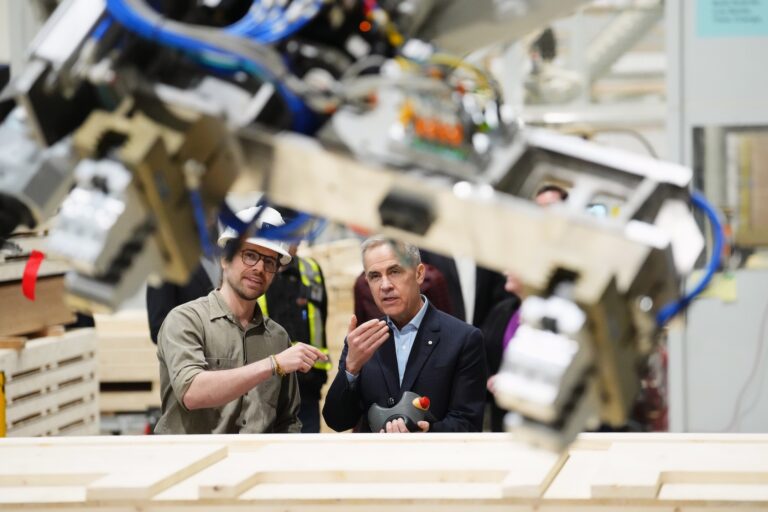
The Conservatives are proposing to cut $2.28 billion from existing AI initiatives, while the Liberals say they will invest billions in new digital infrastructure Photo: The Canadian Press/Christopher Katsarov
TORONTO — Monday’s election result could swing federal funding for AI by several billion dollars, with the Conservatives and Liberals taking significantly different approaches to the technology in their platforms.
Under Prime Minister Justin Trudeau, Ottawa has committed big sums to attract and train AI researchers, finance startups in the sector, and increase the processing power they can access.
Talking Points
- The Liberals are proposing to spend significant sums to build new AI infrastructure and encourage both government departments and businesses to adopt the technology, while the Conservatives plan to cut some existing AI initiatives
- Tech executives say any new AI programs must include Buy Canadian requirements
Mark Carney’s Liberals would extend the spending. The party’s platform pledges $2.5 billion over the next two fiscal years for digital infrastructure like data centres and broadband networks. The new money would supplement Ottawa’s existing $2-billion Canadian Sovereign AI Compute Strategy and $3.23-billion Universal Broadband Fund.
Pierre Poilievre’s Conservatives are proposing to cut $2.28 billion from existing AI initiatives. The platform does not identify which programs it would pare back, and the party did not respond to questions from The Logic. The numbers in the document line up almost exactly with sums the Liberals pledged in the 2024 budget for the compute strategy and other programs.
Poilievre has said other parts of the Conservative’s platform would boost data centre construction. His party has promised to defer taxes on capital gains reinvested in Canadian projects or companies through next year and to create “shovel-ready zones” where firms can get ready-made permits for major projects. The Conservative platform doesn’t include any other policies or incentives specifically targeting the AI sector.
The two approaches to AI are in keeping with the two parties’ broader economic visions, with the Liberals promising to spend more and the Conservatives to spend less and remove regulations to generate growth.
Related Articles

Poilievre’s proposal to reduce AI funding “doesn’t really speak to the moment that we’re in around AI adoption,” said Benjamin Bergen, president of the Council of Canadian Innovators, which represents scale-ups. Support for the technology is not incompatible with Poilievre’s economic focus on developing the country’s natural resources, Bergen argued, because AI could significantly boost productivity in industries like agriculture, mining and energy.
Solon Angel, CEO of Ottawa-based startup Remitian, said he’s not concerned about the Conservative’s proposed cuts to AI programs. A proper sovereign compute strategy would mean that Canada had “control over the chips,” according to Angel. “We do not have that.” Instead, he said, the federal funding proposed by the Liberals will flow to foreign firms whose semiconductors fill the new publicly subsidized data centres.
Ottawa’s compute program has already awarded $240 million to Toronto-based Cohere, which will buy processing power from a new data centre U.S. firm CoreWeave is building in Canada with Nvidia chips. That funding would likely be part of the $2.28 billion the Conservatives would cut. “There is an imperative that Canada further strengthen its leadership position in AI and boost productivity,” said Josh Gartner, Cohere’s head of communications. “We look forward to working closely with the government to achieve this goal after the election.”
Beyond infrastructure, the Liberals are promising to boost the use of AI in both the public and private sectors. The technology “is the key to unlocking productivity, higher paying jobs and new prosperity that will benefit everyone,” the party’s platform states.
The Liberals are proposing to pay small- and medium-sized businesses back 20 per cent of their costs to adopt AI via a tax credit, budgeting $100 million a year for the program. The party is also committing to set up a new Office of Digital Transformation that will buy AI tools and other technology to the government’s delivery of services. But neither proposal includes a Buy Canadian requirement.
Canadian governments and large companies already “don’t buy Canadian,” said Angel. “The problems are structural.” That applies to all kinds of technology and innovation, not just AI, he said. Remitian develops AI tools to help businesses file and pay their taxes; Angel previously founded AI auditing startup MindBridge.
The Liberals’ proposed procurement office and tax credit should require departments and companies to buy from Canadian AI providers wherever possible, Angel and Bergen said. That would create a “double whammy of economic stimulus,” according to Bergen, making government and businesses more efficient and generating revenue for AI developers.
Both tech executives criticized the Liberal governments’ record of implementing business-support programs, arguing funding has often flowed to foreign or undeserving firms.
Canadian startups could benefit from each party’s plans to make capital more readily available, Angel said, citing the Conservatives’ reinvestment tax holiday and the Liberals’ proposal to allow companies to pass on R&D tax writeoffs to investors via flow-through shares. But tech firms won’t get very far unless the next government fixes broader issues of healthcare access and public safety. “Technology, yes, could be part of the solution,” Angel said, but only if “you create the basics.”



Loading...
Thanks for sharing!
You have shared 5 articles this month and reached the maximum amount of shares available.
CloseThis account has reached its share limit.
If you would like to purchase a sharing license please contact The Logic support at [email protected].
CloseGift the full article!
You have gifted 0 article(s) this month and have 5 remaining.
Recipients will be able to read the full text of the article after submitting their email address. They will not have access to other articles or subscriber benefits.
Photo: The Canadian Press/Christopher Katsarov
Most Popular This Week




In-depth, agenda-setting reporting
Great journalism delivered straight to your inbox.
News
Panel decries Canada’s chaotic way of funding world-class science
Briefing
AI is pushing insurers to become asset managers, Canadian CEOs say
Trump administration faces lawsuit over 50% tariffs on Canadian goods
Canada-U.S. trade war to reduce real GDP by 1.4% over 2024 levels after five years: PBO
Best business newsletter in Canada
Get up to speed in minutes with insights and analysis on the most important stories of the day, every weekday.
Exclusive events
See the bigger picture with reporters and industry experts in subscriber-exclusive events.
Membership in The Logic Council
Membership provides access to our popular Slack channel, participation in subscriber surveys and invitations to exclusive events with our journalists and special guests.





