VANCOUVER — UniUni, a Richmond, B.C.-based delivery provider that in four years has grown from a local food and parcel delivery company to a North American force in last-mile service, owes much of its success to a serendipitous encounter.
Skip to content


News
How B.C.’s UniUni went from local concern to last-mile powerhouse
Startup got its break when a chance van-sighting led to relationship with Chinese fast-fashion giant Shein
Kevin Wang, co-founder of UniUni, at the company's offices in Richmond, B.C. in July 2023. Photo: Ben Nelms for The Logic
VANCOUVER — UniUni, a Richmond, B.C.-based delivery provider that in four years has grown from a local food and parcel delivery company to a North American force in last-mile service, owes much of its success to a serendipitous encounter.
It was late 2019 and UniUni had recently launched in the Vancouver area, growing out of a restaurant delivery company with so few drivers you could count them on one hand. Somewhere in the Lower Mainland—to this day UniUni’s founders aren’t sure where—a person with friend-of-a-friend connections to the Chinese fast-fashion giant Shein randomly spotted one of UniUni’s vans emblazoned with its slogan, “We deliver the goods.”
Talking Points
- UniUni, the Richmond, B.C.-based last-mile delivery provider for Shein, Temu and other brands has raised $40 million to date and expects to close a $70-million Series C later this year
- It expects a U.S. or dual listing initial public offering in late 2025 or early 2026 as it focuses on its U.S. expansion plans
Knowing Shein was on the hunt for a delivery partner in Canada, the person wrote down the name and number printed on the vehicle. Soon after, UniUni co-founder Peter Lu received a life-altering call. Would his company be interested in becoming the last-mile hauler for Shein, an e-commerce firm in the midst of global expansion?
UniUni started delivering the retailer’s parcels soon after and threw all of its energies into carrying packages, using a kind of crowdsourcing technology that predicts the ebb and flow of demand and sends jobs to a network of on-call drivers who use their own vehicles.
To call it good timing would be an understatement. UniUni made its big move just before COVID-19 created an unexpected e-commerce boom in Canada. Companies like Shein, which makes clothes on demand as consumers order them online and has no brick-and-mortar stores, thrived during lockdowns. Now based in Singapore, Shein saw its annual sales grow an estimated 150 per cent in 2020, and another triple-digit gain the following year, according to market-research firm Euromonitor International.
Related Articles
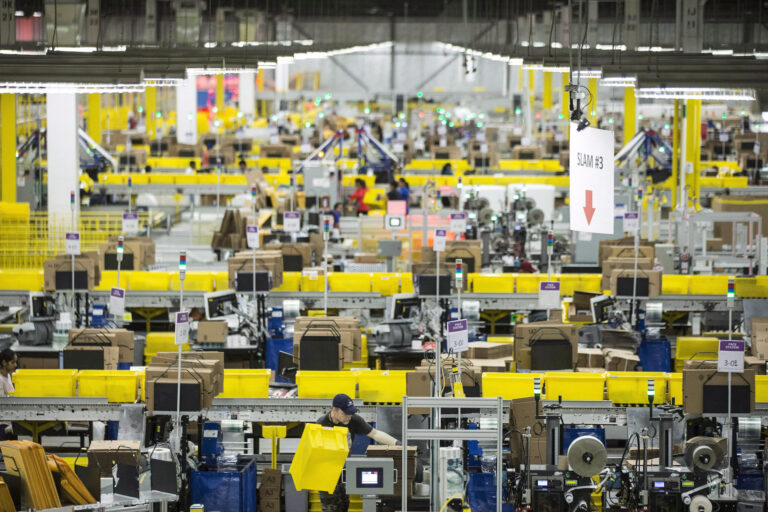

Shein and other e-commerce companies have been seeking out last-mile delivery partners, said UniUni co-founder and general manager Kevin Wang, “because traditional carriers cannot meet their demand.” UniUni started making deliveries for another giant Chinese e-commerce retailer, Temu—a platform offering ultra-cheap goods and referral bonuses that recently beat out Amazon and Walmart for most app downloads in the United States. UniUni has added dozens of others, including PostNL, a postal and parcel service in the Netherlands.
The success of those clients spilled over to UniUni’s balance sheet. In its first year, it delivered more than 300,000 packages and recorded roughly $580,000 in revenue, the company said; it now handles more than 15 million parcels annually. By the end of its last fiscal year, April 30, its revenue totalled some $52 million. It said its operations are profitable in Canada, where it has expanded to nine provinces, and that they will soon be in the U.S., where the company started operating about seven months ago in Los Angeles.
UniUni believes its crowdsourcing delivery model and technology sets it apart from traditional couriers, which it considers more direct competitors than it does Amazon. “They have a lot of extra costs, which we don’t have,” said Wang, adding UniUni’s been able to spend more on developing a platform suited to serving e-commerce companies as a result.
The company has more than 11,000 drivers on call to meet the ebb and flow of demand, which it can predict as it tracks a pool of pending orders to know when to increase capacity.
Some last-mile delivery providers have started to copy the business model typically used by food-delivery companies, said Sheng Liu, assistant professor of operations management and statistics at the University of Toronto’s Rotman School of Management. Ninja Van, founded in 2014, does the same in Southeast Asia. It now has more than 4,400 staff, according to PitchBook, and a valuation of more than US$2 billion.
Lu received a life-altering call. Would his company be interested in becoming the last-mile hauler for Shein, an e-commerce firm in the midst of global expansion?
The model’s main benefit, he said, is that it requires little investment in hard assets—UniUni has its own fleet of trucks, for example, but only to move goods from airports to warehouses. However, scaling the system to meet increased demand can be difficult if routing technology is inefficient and drivers are left to their own devices to navigate cities. Some companies in China have failed because they couldn’t overcome that hurdle, Liu noted.
UniUni’s technology uses AI- and graph-algorithms to optimize routes for drivers, with seemingly minor adjustments that over time can increase efficiency and lower costs. The system ensures, for instance, that drivers make 70 per cent of stops on their right-hand sides, said Wang, which spares them the time and hazard of having to cross streets.
Investors have bought in. The company has raised $40-million to date, including a recent $10-million extension to a $20-million Series B announced in May.
In the meantime, CEO Lu has been abroad fundraising. UniUni aims to close a $70-million Series C this year, with a longer-term goal of raising $300 million in total, and then turning to the public markets. The search so far has been “very promising,” said Wang, despite the venture-capital market downturn. UniUni has been able to attract investors because it proved its model works in Canada, Wang said. As a result, expanding to the U.S. and elsewhere is a kind of “copy-and-paste” exercise that poses relatively low risk for investors, he added.
The company currently operates in more than 250 U.S. cities and plans to invest most of its recent funding growing its presence in the country. It will also invest in its technology and IT department, as well as warehouses and equipment.
Its ultimate ambition, though, is global. It makes the most sense to target other English-speaking countries first, said Wang, who points to Australia and England as likely next targets. French-speaking countries could follow, he said: UniUni already operates in Quebec and has French-language software.
As for prospects of an initial public offering, Wang expects UniUni to debut in late 2025 or early 2026 on the Nasdaq or New York Stock Exchange, though it may consider a dual listing that includes the Toronto Stock Exchange.



Loading...
Thanks for sharing!
You have shared 5 articles this month and reached the maximum amount of shares available.
CloseThis account has reached its share limit.
If you would like to purchase a sharing license please contact The Logic support at [email protected].
CloseGift the full article!
You have gifted 0 article(s) this month and have 5 remaining.
Recipients will be able to read the full text of the article after submitting their email address. They will not have access to other articles or subscriber benefits.
Photo: Ben Nelms for The Logic
Most Popular This Week




In-depth, agenda-setting reporting
Great journalism delivered straight to your inbox.
News
Adam Waterous proposes massive crude exports to Asia by rail through northern B.C.
Briefing
Rivals may be ‘horrified’ to realize how exposed their investments are to AI, Aviva CIO warns
Shopify, Sequoia co-lead US$200M investment in online-selling platform Whop
Amid revenue gains, 1Password bets on tools to protect data from AI agents
Best business newsletter in Canada
Get up to speed in minutes with insights and analysis on the most important stories of the day, every weekday.
Exclusive events
See the bigger picture with reporters and industry experts in subscriber-exclusive events.
Membership in The Logic Council
Membership provides access to our popular Slack channel, participation in subscriber surveys and invitations to exclusive events with our journalists and special guests.







