Skip to content

Canada's Business and Tech Newsroom

  • Professional Subscription
  • Partnerships & Advertising
  • Licensing & Syndication
Log In Subscribe
Welcome,
  • My Account
  • Log Out
  • Business
  • Tech
  • National
  • The Big Read
  • Briefings
  • Commentary
Search
Log In Subscribe
Welcome,
  • My Account
  • Log Out
News

Canada’s plan for new Candu reactors depends on heavy water it no longer makes

Listen Now
0:00
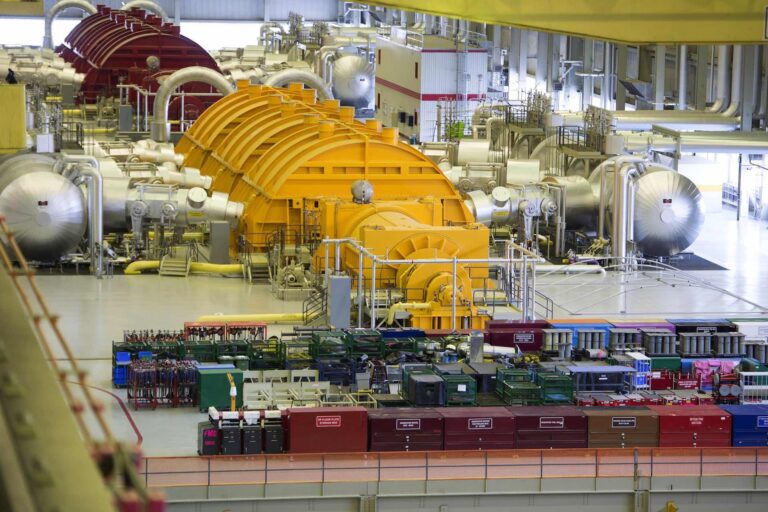
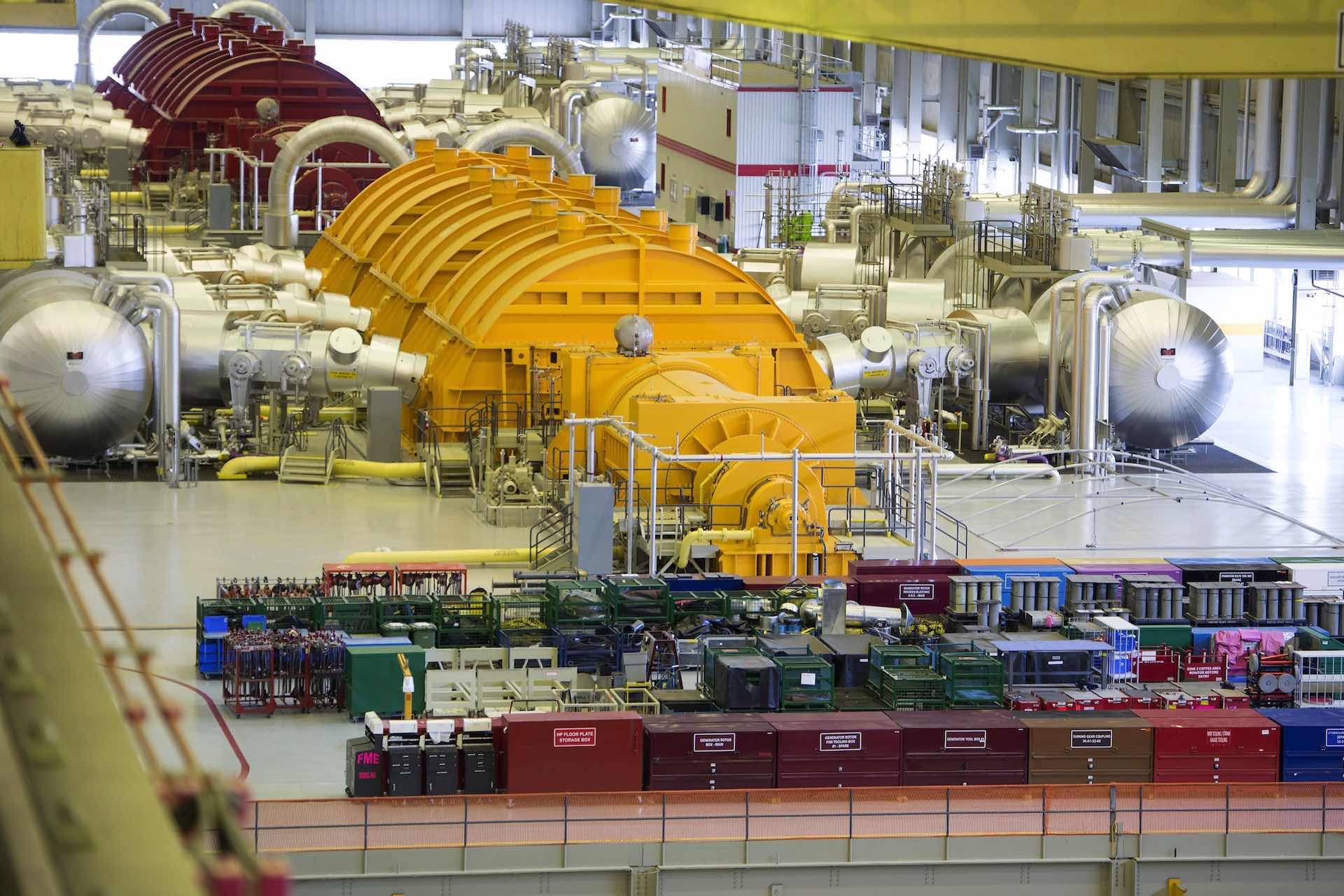
A wide, high-angle shot of steel-clad turbines in cavernous but well-lit industrial space. There are tanks and pipe networks all around the turbine housings, one of which is painted red; the other yellow.
News

Canada’s plan for new Candu reactors depends on heavy water it no longer makes

Canada stopped producing heavy water after its previous nuclear dream fizzled, but even one new Candu will need hundreds of tonnes of the stuff

By David Reevely
Heavy water is required to run steam turbines like the ones at the Darlington nuclear station near Courtice, Ont. Photo: The Canadian Press/Frank Gunn
Nov 20, 2026 | 5:45 AM ET
A A
A Small A Medium A Large
Share

Gift

Share

Listen Now
0:00

OTTAWA — If Canada wants to build new Candu nuclear power reactors of its own, let alone sell any abroad, it’s going to need hundreds upon hundreds of tonnes of heavy water that it now has no way of producing. 

“If new Candu reactors are to be deployed, new domestic heavy-water facilities are almost certainly required,” read a presentation that Natural Resources Canada prepared earlier this year for its minister, Tim Hodgson, detailing the challenge. The Logic obtained a copy through an access-to-information request.

Talking Points

  • Canada’s homegrown Candu nuclear power reactors need hundreds of tonnes of heavy water each, and the country doesn’t produce any
  • The country was once the world’s premier heavy-water maker—at huge expense—but gave it up when there were no new Candus to fill for decades

“Significant amounts” of heavy water will be needed by the mid-2030s to support new Candu reactors, the document said. That nuclear power technology is based on Canadian uranium that doesn’t need enriching, but does need a big supply of special fluid that Canada lacks.

Canada used to be the world leader in making heavy water, a non-radioactive substance needed for the reactors that were the pride of the country’s nuclear engineering industry. The country built several heavy water production facilities in the 1960s and 1970s, anticipating a Candu construction spree that never happened.

The last of those plants was razed 20 years ago. No meaningful quantities are available on the open market, either, according to the government presentation. Only India makes it in any quantity now, all for its own use.

Related Articles
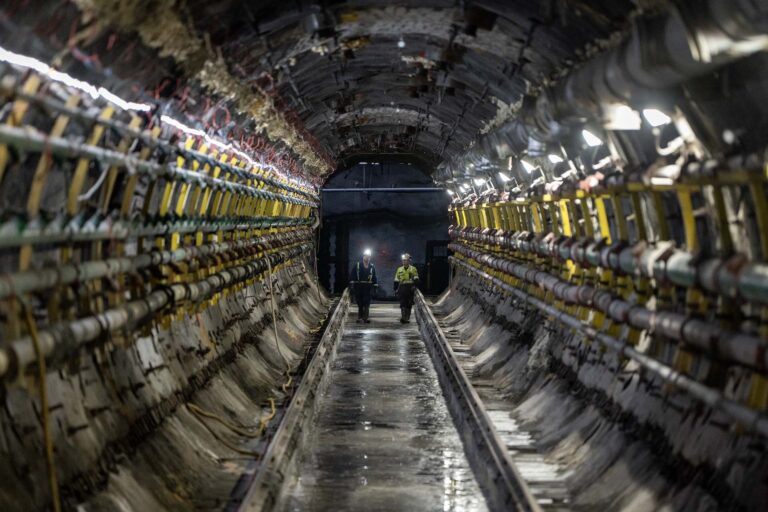
A shot looking down the length of a tunnel with conduits along its sides and railroad-style tracks on its floor. There are two workers in the distance wearing hardhats and headlights and walking toward the camera.

Cameco’s high-stakes bid to be Canada’s next nuclear champion

By Joanna Smith
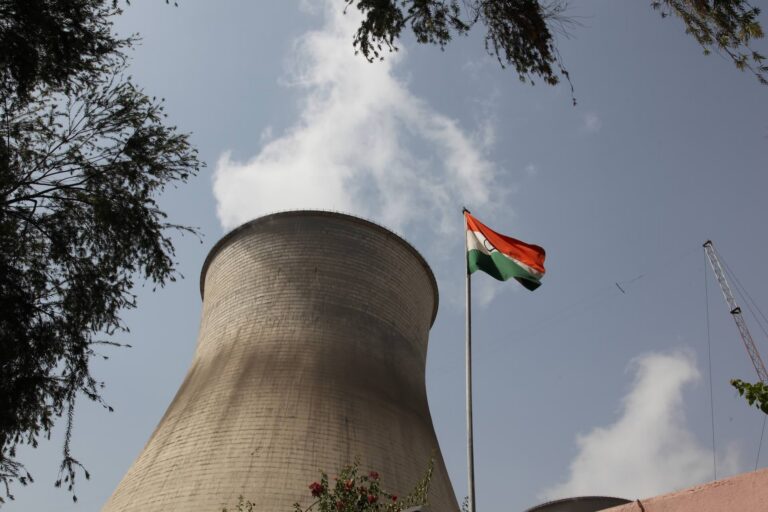
A low-angle photo of the cooling tower of a nuclear power station. There are tree fronds and an Indian flag in the foreground.

India wants to buy less Canadian uranium. Canada’s nuclear lab is helping

By David Reevely

Heavy water is found amid natural H2O, but in very low concentrations—about one molecule in 20 million. Its hydrogen atoms are weird: instead of a nucleus with a single proton, each also has a neutron (technically, such atoms are called “deuterium” and heavy water’s chemical formula is D2O). That makes heavy water denser than ordinary water and able to hold more energy before it boils.

In Candu nuclear reactors, heavy water’s qualities make it useful for slowing down other neutrons that fly out of the reactors’ fission reactions. Separate heavy-water coolant lines transfer heat from the fission to where it can boil regular water into steam, and the steam spins turbines to generate electricity.

A little bit can leak during maintenance, but mostly the heavy water in a Candu recirculates endlessly, like the coolant in a very big air conditioner. 

The importance of deuterium and heavy water in Candu reactors is right in the Candu name, a portmanteau of “Canada Deuterium Uranium.” The generic term for the things is “pressurized heavy-water reactors.” No heavy water, no Candu.

A single Candu reactor of the type Ontario currently operates needs about 600 tonnes of heavy water. Newer designs need less but still a lot: around 450 to 500 tonnes.

AtkinsRéalis, which controls the Candu technology and hopes to supply hundreds of reactors in Canada and around the world in the coming years, is working on a new and higher-output Candu model, assisted by federal funding. Its heavy-water needs “are broadly consistent with previous large Candu designs,” spokesperson Daniela Pizzuto told The Logic.

Before it closed in 2017, the biggest heavy water plant in the world could produce 200 tonnes a year—a fraction of what’s needed for a single reactor. 


The shortage has AtkinsRéalis working to restart a mothballed heavy-water plant in Argentina. Before that one closed in 2017, it was the biggest in the world, capable of producing 200 tonnes of heavy water a year. That is, a fraction of what’s needed for a single reactor.

AtkinsRéalis knows it needs a heavy-water supply chain and is working on it, Pizzuto wrote.

Canada has been through a version of this before and it was not fun.

To support its own Candu build-out in the 1960s, Canada had multiple heavy-water plants, including one on the grounds of Ontario’s Bruce Nuclear Generating Station and others in Port Hawkesbury and Glace Bay, N.S. 

The last of those was badly corroded by the seawater it processed and was an expensive fiasco, costing an estimated $100 million in 1960s dollars. It did eventually get going, though.

In 1980, the three sites produced more than 1,200 tonnes of heavy water between them, according to a triumphant paper published by scientists at the government-run Atomic Energy of Canada Ltd. (AECL).

The task had been tough, but the paper declared the result “a major success in the Canadian chemical process industry that has established a supporting infrastructure for one of the world’s most successful nuclear power generation systems—Candu.”
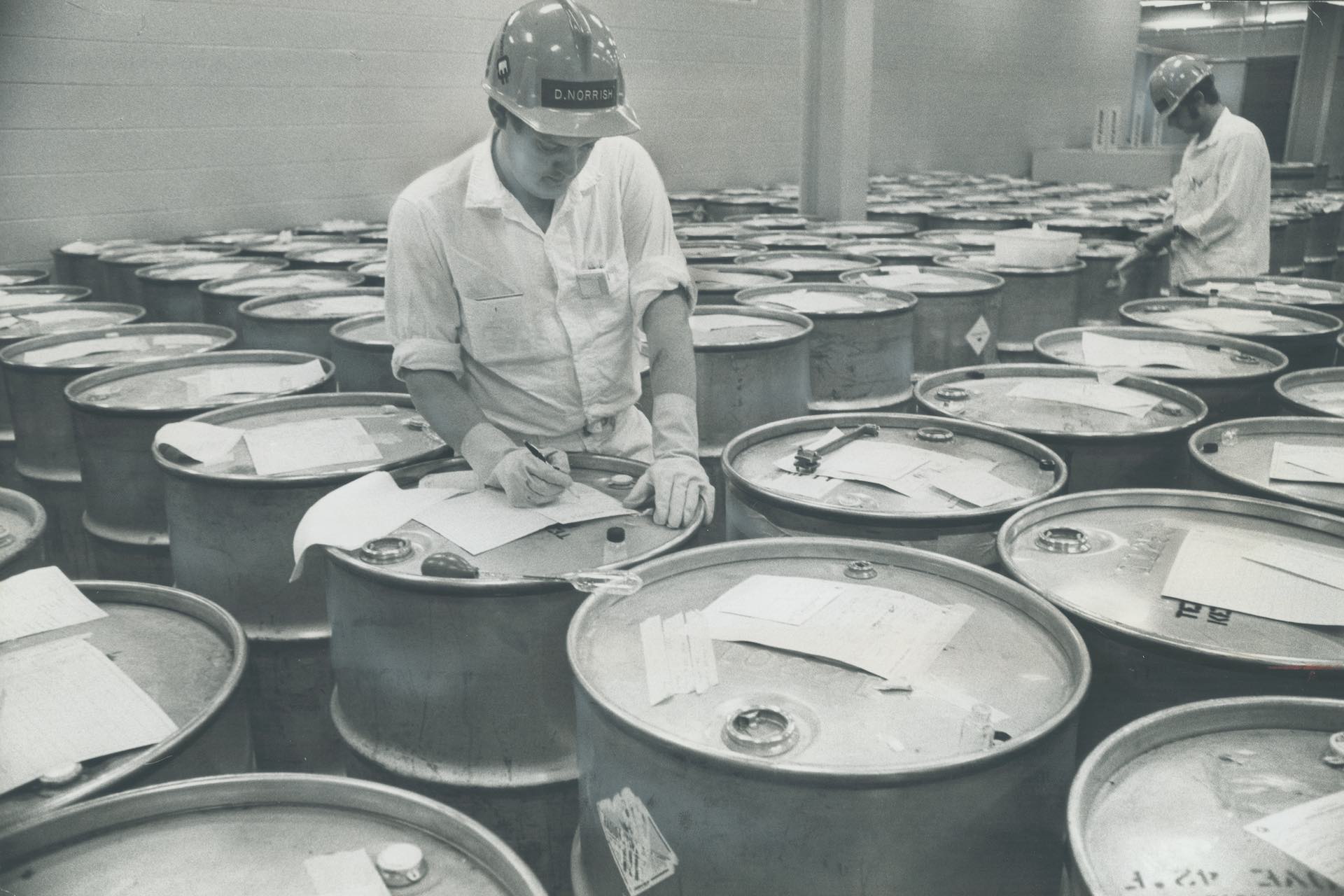
A black-and-white photo of two workers in hardhats writing out forms and taping the paperwork to the tops of 45-gallon drums.
Workers labelling barrels of heavy water in July 1971 at the nuclear generating plant in Pickering, Ont. Photo: Toronto Star via Getty Images/Bob Olsen

Demand had already peaked. Before another plant in Bécancour, Que., was even finished, the heavy-water market began drying up. Canada stopped planning new nuclear plants and global Candu sales never took off as hoped.

That Quebec plant never entered service. The Nova Scotia plants both closed in 1985. The one in Ontario, by then operated by the provincial power utility, closed in 1998 and was demolished in 2006.

All these facilities used the same basic chemistry to pull heavy water out of regular H2O, which involved precise heating and cooling the natural water while exposing it to hydrogen sulfide gas. Hydrogen sulfide is better known as swamp gas. It’s flammable, corrosive and toxic. The process also takes a lot of energy. Another AECL science paper called Canada’s successful use of it “a triumph of engineering stubbornness.”

There are other methods. AECL worked on a cleaner and more efficient one that got as far as a prototype plant in Hamilton, Ont. Capable of producing about one tonne of heavy water a year, it opened in 2000 for a two-year trial—just as the whole sector was shutting down.

AECL and AtkinsRéalis agreed in 2024 to look for ways to co-operate on new production.

Heavy water has other uses, in comparatively small quantities, for specialized manufacturing like semiconductors and pharmaceuticals. (AECL once lent an exceptionally large quantity, 1,000 tonnes, to the Sudbury Neutrino Observatory, a science facility way down an Ontario mineshaft that looked for rare cosmic particles.) Canada had a leftover heavy-water inventory that it gradually sold off until 2012.

Nevertheless, Pizzuto wrote, “Canada retains world-leading expertise in heavy-water production, management and conditioning, positioning the country well to support future demand.”

The trouble is that, according to the material prepared for Hodgson, large-scale heavy-water production is only needed as long as there are new Candu reactors to supply. Without them, it said, “there is effectively no (or a very limited) market.”

As for who might pay for it, AtkinsRéalis isn’t sure.

“There are a range of delivery and financing models/structures being evaluated at this time to support the production of heavy water,” Pizzuto wrote. “The appropriate model will depend on the scale, timing and certainty of future reactor demand.”

Pizzuto also wrote that because heavy water has other customers, “the market today is different,” contrary to Natural Resources Canada’s warning. 

Hodgson had no comment about Canada’s potential heavy-water needs or who should take the risk of financing a new round of production, his spokesperson Carolyn Svonkin said.

Gift the full article

In Ontario, the provincial government is actively planning new large reactors again at the Bruce Nuclear Generating Station, where the country’s last heavy-water plant is now only a memory. Candus aren’t guaranteed to be the province’s choice, but they are in the mix.

Energy Minister Stephen Lecce’s spokesperson Noah Mawji replied to a question about restarting heavy-water production with a promise that Ontario will “select a technology that serves Canada’s national interest by maximizing Canadian jobs and economic value for Ontario’s supply chain, while keeping costs down for ratepayers.”


#economy #National #nuclear energy #Tim Hodgson

Sponsored Content

The road to risk-smart regulation

By Deborah Aarts

Why cybersecurity needs to match pace with AI

By Jessica Aftimus Rosa

How to shift your workforce from AI experimentation to adoption

By Jessica Aftimus Rosa
Paid promotional content

Loading...

Thanks for sharing!

You have shared 5 articles this month and reached the maximum amount of shares available.

Close
This account has reached its share limit.

If you would like to purchase a sharing license please contact The Logic support at [email protected].

Close
Want to share this article?

Upgrade to all-access now

Close
Gift the full article!

You have gifted 0 article(s) this month and have 5 remaining.

Copy link and gift
Copy Link
Email to a friend
Send Email
Gift on Social Media

Recipients will be able to read the full text of the article after submitting their email address. They will not have access to other articles or subscriber benefits.

A wide, high-angle shot of steel-clad turbines in cavernous but well-lit industrial space. There are tanks and pipe networks all around the turbine housings, one of which is painted red; the other yellow.

Photo: The Canadian Press/Frank Gunn

A black-and-white photo of two workers in hardhats writing out forms and taping the paperwork to the tops of 45-gallon drums.

Workers labelling barrels of heavy water in July 1971 at the nuclear generating plant in Pickering, Ont.

Most Popular This Week

A man uses a computer keyboard in Toronto in this Sunday, Oct. 9, 2023 photo illustration.
News

Scammers are infiltrating Bay Street with social engineering

By Anita Balakrishnan
An image of a man sitting in an armchair in a dimly-lit room. He is wearing glasses and a dark-blue suit and patterned tie. He is clasping his hands in front of him, while looking away from the camera with a serious facial expression.
Commentary

Carmichael: Macklem is stepping aside after a career of consummate public service

By Kevin Carmichael
An image of a man wearing dark clothing, standing on a stage and speaking. He is wearing a mic and gesturing. Behind him is a white and black background with text.
News

Securities regulators just gave a Wealthsimple-backed stablecoin a major leg up

By Claire Brownell
A man with grey hair stands against a black background, wearing a black leather jacket and gesturing as he speaks.
News

Nvidia CEO Jensen Huang’s resignation sends shockwaves through Canadian business and tech

By Catherine McIntyre

In-depth, agenda-setting reporting

Great journalism delivered straight to your inbox.

A wide, high-angle shot of steel-clad turbines in cavernous but well-lit industrial space. There are tanks and pipe networks all around the turbine housings, one of which is painted red; the other yellow.
News

Canada’s plan for new Candu reactors depends on heavy water it no longer makes

By David Reevely

Briefing

Dominion Dynamics touts 12-company alliance behind its military drone plans

By David Reevely   |   Nov 20, 2026 | 6:00 AM ET

OSFI proposes looser capital rules to boost banking competition

By Chaimae Chouiekh   |   Nov 19, 2026 | 3:26 PM ET

Video game giant Ubisoft cuts 166 staff at Quebec studios

By Brendan Sinclair   |   Nov 19, 2026 | 2:56 PM ET

Best business newsletter in Canada

Get up to speed in minutes with insights and analysis on the most important stories of the day, every weekday.

Exclusive events

See the bigger picture with reporters and industry experts in subscriber-exclusive events.

Membership in The Logic Council

Membership provides access to our popular Slack channel, participation in subscriber surveys and invitations to exclusive events with our journalists and special guests.

Recent Popular Stories

Exclusive

Another giant data centre is in the works for northern Alberta—right next to Meta’s

By Meghan Potkins   |   Nov 11, 2026
An aerial-style rendering of a massive data centre on a prairie landscape of farm fields and trees.
News

Koho says it’s going after fraudsters who used a tech glitch to falsely credit accounts

By Claire Brownell   |   Nov 17, 2026
An image of a man with dark hair and a beard, wearing a blue-grey suit jacket and a white shirt. He is standing with his hands in his pockets while leaning against a glass railing.
Exclusive

Alberta is bringing in rules to block frivolous data-centre proposals

By Meghan Potkins   |   Nov 14, 2026
A head-on shot of Nate Glubish seated and speaking into a microphone he's holding in his right hand. He's wearing a blue patterned blazer.
Exclusive

Tenstorrent is lobbying Ottawa for data-centre funding and sovereign AI contracts

By Catherine McIntyre   |   Nov 11, 2026
A close-up of computer equipment with the Tenstorrent logo on the casing.
News

Securities regulators just gave a Wealthsimple-backed stablecoin a major leg up

By Claire Brownell   |   Nov 16, 2026
An image of a man wearing dark clothing, standing on a stage and speaking. He is wearing a mic and gesturing. Behind him is a white and black background with text.
News

Nvidia CEO Jensen Huang’s resignation sends shockwaves through Canadian business and tech

By Catherine McIntyre   |   Nov 12, 2026
A man with grey hair stands against a black background, wearing a black leather jacket and gesturing as he speaks.

Canada's most influential executives and policymakers are reading The Logic

  • CPP Investments
  • Sun Life Financial
  • C100
  • Amazon
  • Telus
  • Mastercard
  • bdc
  • Shopify
  • Rogers
  • RBC
  • General Motors
  • MaRS
  • Government of Canada
  • Uber
  • Loblaw Companies Limited
logic-logo

Canada's Business and Tech Newsroom

100% human-crafted journalism

Newsroom

  • News Tips
  • AI Policy
  • Editorial Disclosures
  • Story Pitches

Company

  • About Us
  • Terms of Service
  • Privacy Statement
  • Corporate Information

Contact

  • Contact Us
  • Advertise
  • FAQs
  • Work at The Logic

© 2026 The Logic Inc. All Rights Reserved.

Trusted by leaders

Error

Account creation failed.

Please email us at [email protected].

Create Account

[wppb-register form_name=”cozmo-registration-form-for-modal”]

I do have an account
Login
or

[wppb-login]

I don’t have an account