The federal government unveiled a $5-billion program in its budget on Tuesday to backstop loans to Indigenous communities, part of a broader effort to streamline major projects like natural gas plants and critical-mineral mines that have languished under years-long delays.
Skip to content


News
Federal budget features $5B Indigenous loan guarantee program amid concerns over major project delays
Government also proposing ambitious five-year permitting processes for commercial developments like wind farms and concrete plants
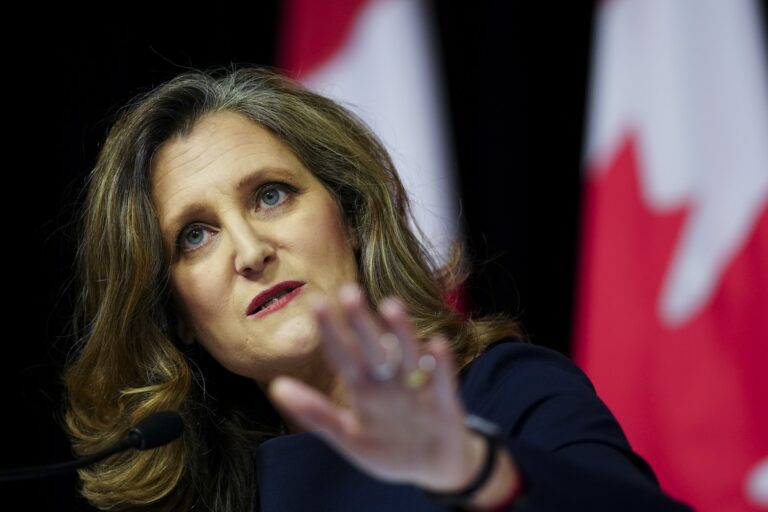
The Indigenous loan program is “sector agnostic,” meaning the loans could go toward fossil fuel projects, and won’t be restricted to renewables or low-carbon technology. Photo: The Canadian Press/Larry MacDougal
The federal government unveiled a $5-billion program in its budget on Tuesday to backstop loans to Indigenous communities, part of a broader effort to streamline major projects like natural gas plants and critical-mineral mines that have languished under years-long delays.
First Nations have long struggled to take equity positions in major projects in Canada, largely because they lack the collateral required to assume large debts. Some of the country’s biggest energy players, from renewable developers to oil and gas companies, have long called for Indigenous loan guarantees as a way to let Indigenous Peoples take financial stakes in projects that could generate cash flows for their communities.
Talking Points
- This year’s federal budget includes $5 billion in potential loan guarantees to help First Nations take equity stakes in major projects
- Supporters of the policy say it would go a long way toward helping Indigenous people benefit from the commercial development that occurs on their lands
Collectively, the country’s Indigenous people could acquire equity stakes in natural resource projects worth $60 billion over the next 10 years, according to an estimate from the Vancouver-based First Nations Major Projects Coalition.
The federal Natural Resources Department will oversee the program. The Canada Development Investment Corporation (CDEV), a Crown corporation under the Department of Finance, will administer the lending through a new subsidiary.
The program is “sector agnostic,” meaning that First Nations could conceivably put the loans toward fossil fuel projects, and won’t be restricted to renewables or low-carbon technology. That puts those Indigenous loans at odds with the broader net-zero ambitions conveyed in other parts of Tuesday’s budget, whose new initiatives include a tax break for EV manufacturers and direct funding for biofuels producers.
The Liberal government has meanwhile proposed stringent new clean electricity regulations that, despite a recently proposed loosening of the rules, restrict development of natural gas power plants. It has also put forward an oilsands emissions cap to drive down CO2 output.
Read more from Federal Budget 2024


Proposals to support Indigenous loans also come amid general concerns over the glacial pace of major project development in Canada. A single mine takes between five and 25 years to bring online, according to the federal government’s own estimates—a timeline Conservative Leader Pierre Poilievre has used to criticize the Liberal government’s ability to get infrastructure built. Major projects including the Trans Mountain pipeline expansion are years past schedule and billions over budget.
In its latest budget, the government said it would set a “target” of five years for all projects in the federal review system. It also aims to complete nuclear project assessments within a three-year window. The document provides few details on how Ottawa would do so, though it cites a “Federal Permitting Dashboard” to track projects, and $9 million in Privy Council funding to “reduce interdepartmental inefficiencies.”
Companies and lobby groups including the Business Council of Canada have lamented that the time it takes to build projects has hampered Canadian competitiveness at a time when the U.S. and other rivals are pressing forward with major decarbonization investment.
Related Articles
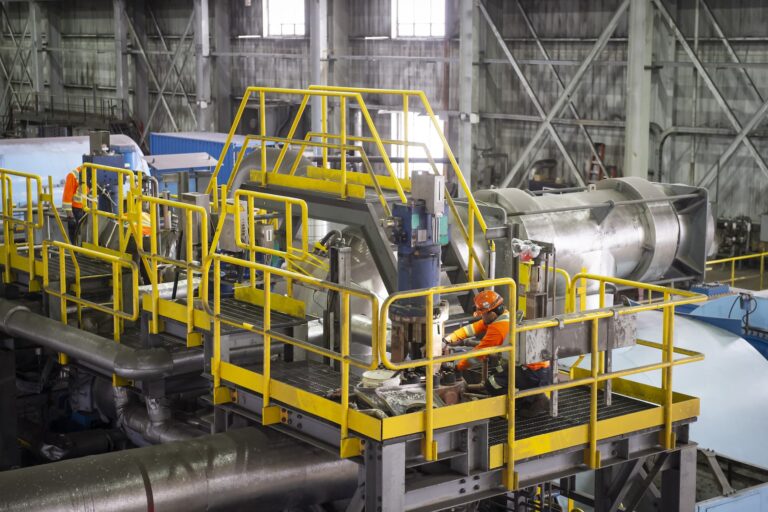

In Tuesday’s budget, the government also outlined new subsidies for low-carbon technologies including an EV supply-chain incentive that will provide a 10 per cent tax credit to companies manufacturing electric vehicles, batteries and battery materials. The credit is a new layer of support available to firms already eligible for the government’s Clean Technology Manufacturing tax credit, which lets them claim up to 30 per cent of machinery and equipment costs. Many have also received major direct investments from Canadian governments.
Separately, the government announced it would redirect up to $500 million a year from its Clean Fuel Regulations system towards biofuels producers. It will also extend the Clean Fuels Fund for another four years until fiscal 2029-30, bringing total biofuel funding to $776.3 million between now and then.
Carbon contracts for difference (CCFDs) could also see an expansion. The federal policy, distributed through Ottawa’s $15-billion Canada Growth Fund, essentially guarantees the per-tonne price that companies can receive for the CO2 they successfully capture or remove from the atmosphere. The budget said the feds are considering a “backstop” for CCFDs to “enhance the Canada Growth Fund’s capacity.”



Loading...
Thanks for sharing!
You have shared 5 articles this month and reached the maximum amount of shares available.
CloseThis account has reached its share limit.
If you would like to purchase a sharing license please contact The Logic support at [email protected].
CloseGift the full article!
You have gifted 0 article(s) this month and have 5 remaining.
Recipients will be able to read the full text of the article after submitting their email address. They will not have access to other articles or subscriber benefits.
Photo: The Canadian Press/Larry MacDougal
Most Popular This Week




In-depth, agenda-setting reporting
Great journalism delivered straight to your inbox.
The Big Read
Beacon is building an AI empire by fixing Main Street’s software
Briefing
Inovia raises US$200M for new VC fund as it eyes AI’s impact
43% of eligible Albertans voted ahead of Monday’s referendum
AI chip company Tenstorrent raises US$1.5B, valuing it at US$6.2B
Best business newsletter in Canada
Get up to speed in minutes with insights and analysis on the most important stories of the day, every weekday.
Exclusive events
See the bigger picture with reporters and industry experts in subscriber-exclusive events.
Membership in The Logic Council
Membership provides access to our popular Slack channel, participation in subscriber surveys and invitations to exclusive events with our journalists and special guests.