
Listen Now
0:00
Doubling Canada’s electricity capacity by 2050 is “the cornerstone of the government’s agenda to Build Canada Strong,” the federal Liberals said in their new budget, and they’re proposing to spend $52 billion more to do it.
That will take spending on electrification to $115 billion by the 2041-42 fiscal year, the budget said.
Electrification is part of the federal plan to combat climate change, and now part of its plan to goose the Canadian economy. “An electricity strategy is also an industrial strategy,” says the document laying that plan out, which the Liberals presented separately from a main budget book that already topped 500 pages (and featured transmission towers on the cover).
Talking Points
- Doubling Canada’s electricity capacity is an economic necessity, according to the Liberal government, and they’re trying to find a way to do it without putting all the costs on consumers’ power bills
- The 2026 federal budget promises to spend $52 billion more on the effort by 2042, including an extension for tax credits to encourage investments in generation and transmission that’s estimated to cost $38.5 billion
The plan includes technology development, major new generation projects, transmission lines, connections between provinces, factories to make components and training for the skilled people needed to do all this work.
Much of the $52 billion in new spending is accounted for by a promise to extend tax credits for investments in clean electricity and cleantech. Introduced in the 2023 budget, both are due to expire in 2034; the government now wants to extend them until 2040 and to broaden them to cover transmission projects, estimated to cost the treasury $38.5 billion.
The original deadline was meant to kick industry into gear quickly. But power-sector players called for extensions—Hydro-Québec asked for precisely those changes—to support big projects that couldn’t get done quite so fast.
Related Articles

The government also plans to enrich those tax credits when they’re applied to projects that use Canadian-sourced components: consultations are promised to figure out the terms of a “domestic content bonus” of up to 10 percentage points for the cleantech investment credit and up to five percentage points for the clean electricity credit.
The plan goes well beyond those tax credits, though.
The Liberals promise to spend $6 billion, to be spent over six years starting in 2028, to support deployments of new energy generation technologies. The budget specifically cites solid oxide fuel cells, which can run on a range of inputs that include hydrogen and natural gas, as an appealing one.
There’s also $518.5 million promised over five years for nuclear energy research and supply chains, spread across Natural Resources Canada, Atomic Energy of Canada Ltd. science facilities and the Canadian Nuclear Safety Commission (to help it regulate new technologies).
Read more of our federal budget coverage

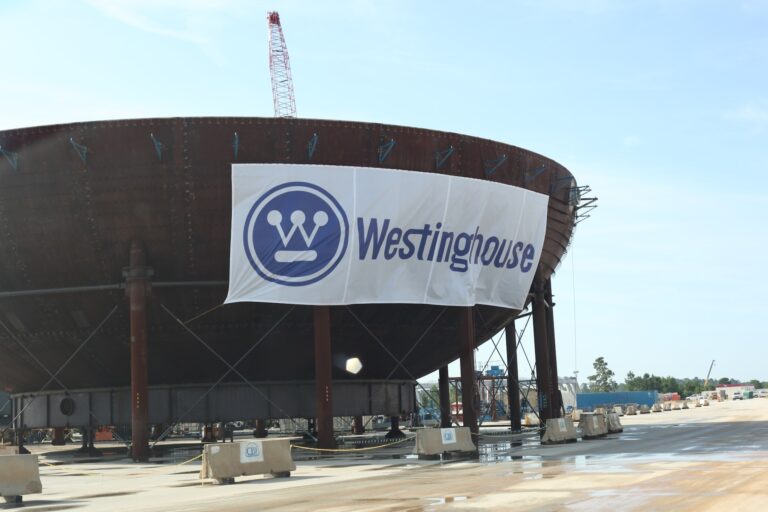
Global Affairs Canada is to get $14.4 million over five years to promote Canadian nuclear exports. The budget doesn’t overtly name a favourite between the country’s two big nuclear-energy players, AtkinsRéalis and its Candu reactors versus Brookfield- and Cameco-owned Westinghouse, but it does note Candu technology’s longtime value to Canada and says the government is “committed to keeping this Canadian technology market-ready for use at home and in international markets.”
The Strategic Response Fund run by Innovation, Science and Economic Development Canada will also keep looking for ways to subsidize companies working on electricity system equipment and goods like batteries, the plan says.
Skilled workers will be needed in the sector, the plan says—28,000 of them by 2028, with electricity industry companies citing labour shortages as their biggest problem—though it includes no new measures to train them. It points to the $8-billion Team Canada Strong apprenticeships program announced in September as the key action to build up the workforce.
The core problem the Liberal government is trying to solve is that electricity infrastructure is very expensive and funding it through consumers’ power bills is unpopular. Government-run consultations pegged the biggest problem with electricity system investments: “Unsustainable electricity rate increases add to cost-of-living concerns and make it harder for businesses to compete.”
The new federal plan acknowledges that electricity bills will still go up, maybe by a lot, but promises that increase will be more than cancelled out by lower costs for things like gasoline, natural gas and propane. It urges consumers to think of electricity as just one drain on their “energy wallets.”
Instead of putting all the costs on power bills, however, the federal government’s solution is to put them on tax bills.
In Ontario, Premier Doug Ford used electricity bills and repealing green-energy measures as wrecking balls against the then-Liberal government in the 2018 election campaign that brought him a majority and reduced the Liberals to a rump in the legislature.
Now, Ontario—like much of the rest of the country—is struggling to meet projected power demand from industries switching away from fossil fuels, new data centres, electric cars and transit systems, and ordinary population growth.
The federal government is already backing hydro and wind power developments in Labrador, centred on the Churchill Falls dam complex, with $10 billion. It’s put more than $3.5 billion, through various programs, toward Ontario Power Generation’s project to build small modular nuclear reactors at the Darlington power station east of Toronto.
Read all our Federal Budget 2026 coverage here.