Listen Now
0:00
OTTAWA — Higher oil prices have given the Liberal government more fiscal room, and it used almost all of it in delivering a federal budget that includes about $142 billion in planned new spending through to fiscal 2030-31, a bet on productivity gains to boost growth.
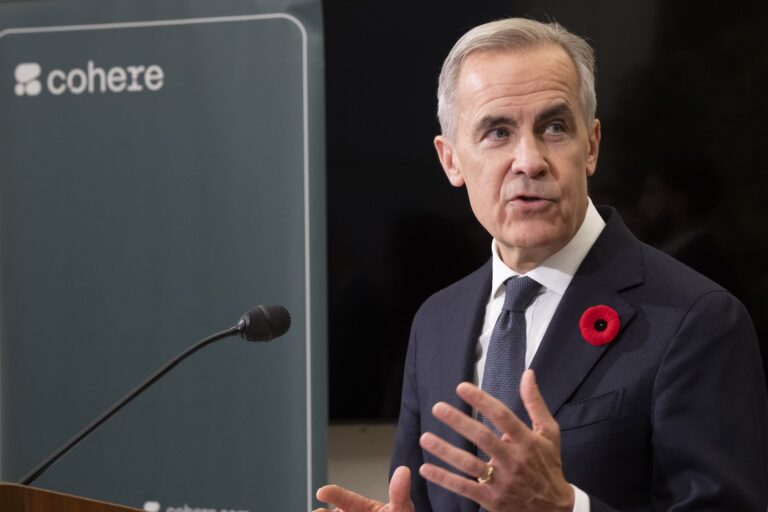
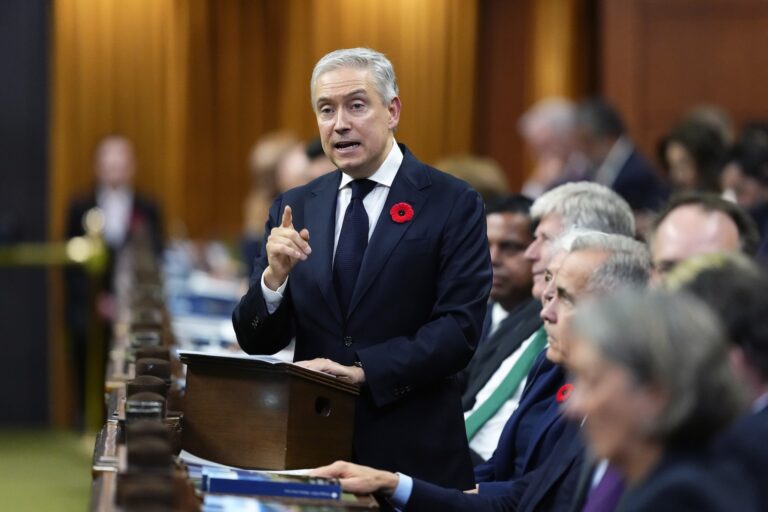
“The world around us is changing. We must change to lead with purpose and ambition,” said an advance copy of the budget speech Finance Minister François-Philippe Champagne delivered in the House of Commons Thursday. “We must have confidence in what Canada can become.”
Talking Points
- Ottawa has booked an extra $21.5 billion in revenues and savings since the spring economic update, thanks mostly thanks to higher oil and commodity prices
- The government is spending 85 per cent of that, part of its $603 billion in planned new spending
- The budget establishes new immigration targets as Canada’s population ages, part of the Liberals’ push for economic growth
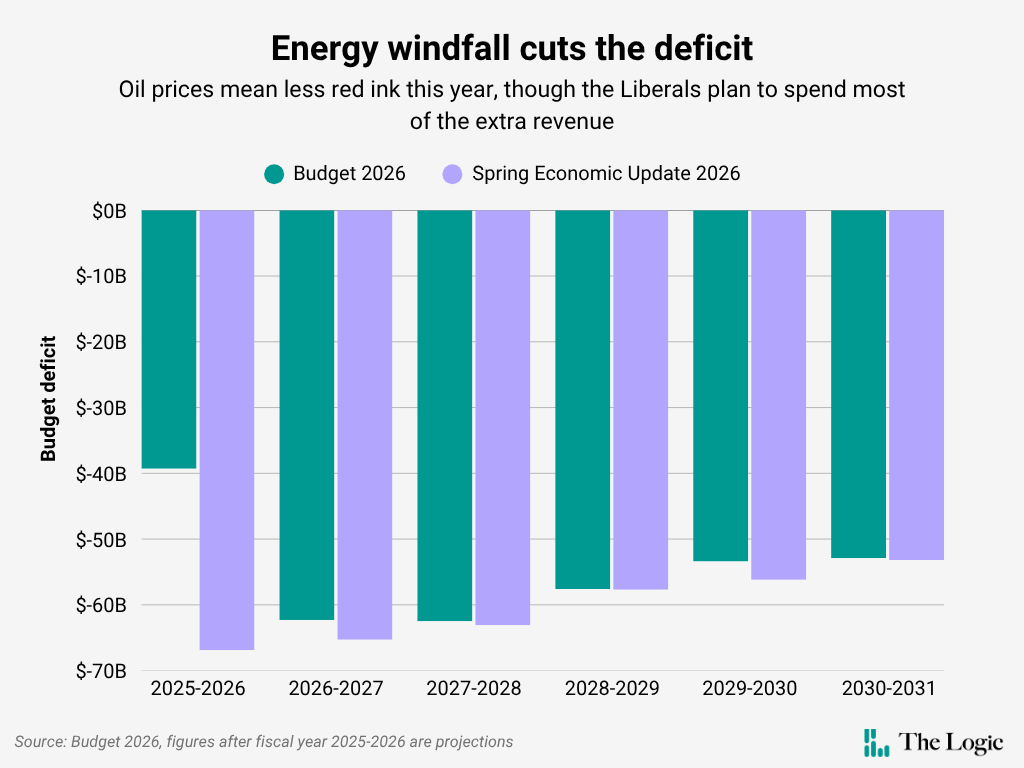
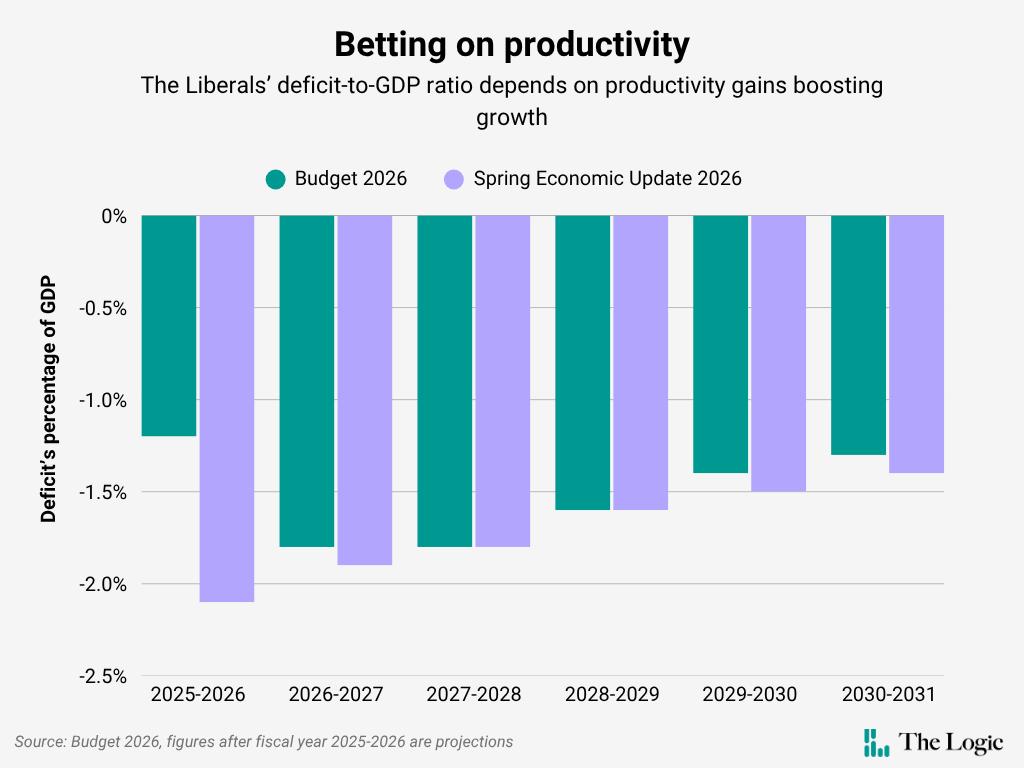
The budget projects a federal deficit of $62.3 billion for fiscal 2026-27, accounting for 1.8 per cent of Canada’s gross domestic product. That is only slightly smaller than the $65.3 billion forecast in the spring economic update in April, despite an improvement in the economic outlook.
The government has booked an extra $21.5 billion in revenues and savings since the spring economic update, which Charles St-Arnaud, chief economist at Edmonton-based Servus Credit Union, said is mostly thanks to higher oil and commodity prices. The budget shows that the government has committed 85 per cent of it—some $18.4 billion—to new spending.
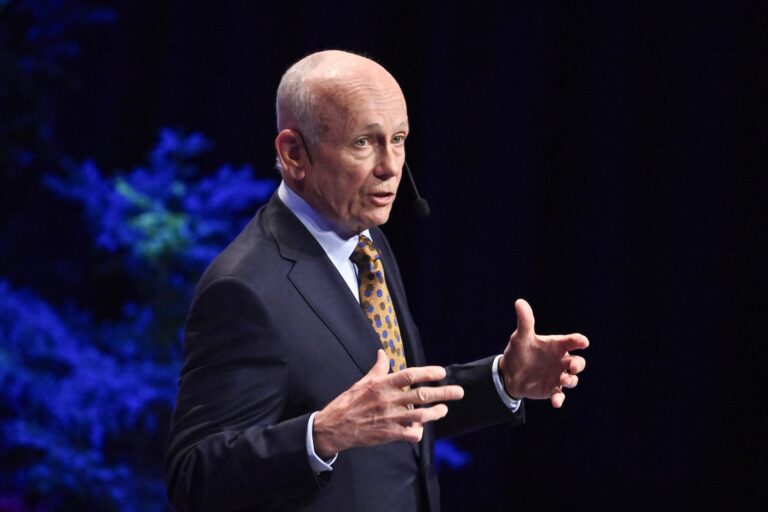
“All that improvement in the deficit is being spent,” said St-Arnaud. “The actual deficit levels are unchanged in the budget compared to what we had in the spring.”
Related Articles
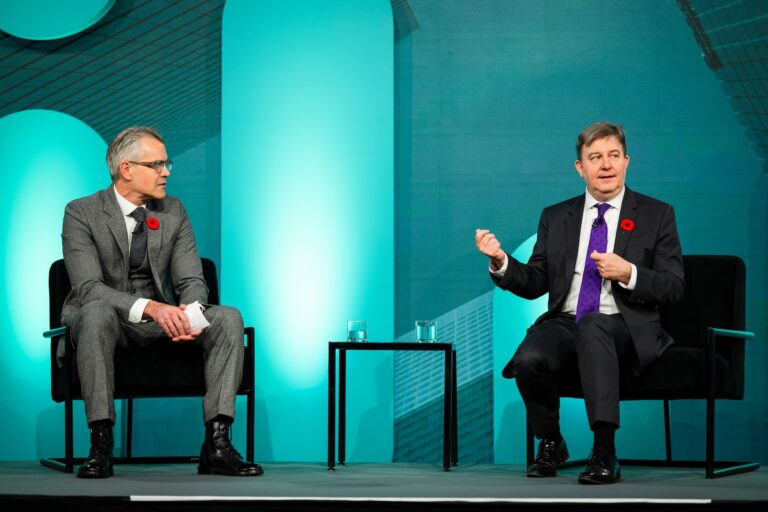

However, St-Arnaud said he thinks the government avoided excess. “They didn’t want to go too far in terms of spending. They want to still be cautious,” he said.
The government expects the deficit to grow slightly to $62.5 billion next year, before declining steadily to reach $52.9 billion in 2030-31. Still, St-Arnaud said that raises another question: “How many of the measures we have this year wouldn’t have happened without the boost in oil prices and GDP?” They might have still been there, he said, with a “significantly bigger deficit.”
Under Prime Minister Mark Carney, the Liberals have started distinguishing between the day-to-day costs of running the government and what they call capital investments meant to stimulate growth in the economy. According to this new way of doing math, Thursday’s federal budget says Ottawa expects to balance its operating budget in fiscal 2027-28—a year ahead of schedule, partly thanks to savings from trimming the public service. “We’re only going to borrow to grow the economy to make capital investment,” Champagne told reporters Thursday.
At the same time, Champagne said it was important to devote some of its fiscal room to help Canadians with their household budgets, and to help industries adapt. “If we have the fiscal capacity to grow, we also need to be there and support Canadians at the time of need.”
The federal debt is expected to reach $1.36 trillion this fiscal year, which, as a share of Canada’s GDP, is 39.9 per cent. The debt-to-GDP ratio is forecast to increase to 40.2 per cent in 2027-28, but remain stable for the remainder of the decade. The public debt charge—the amount the government is paying just to service its debt load—is $60.2 billion for this fiscal year and is forecast to grow to $85.5 billion by 2030-31.
“That’s a bit of a yellow flag,” St-Arnaud said.
Read more of our federal budget coverage
The budget’s answer to those numbers comes in its many measures aimed at boosting productivity to spur economic growth and reduce reliance on the United States amid the trade war launched by President Donald Trump. Carney already announced the biggest one at the Canada Investment Summit in Toronto: the Productivity Mega Deduction, which expands accelerated tax writeoffs for eligible capital investments. That business tax cut is set to cost a total of $36.1 billion between now and fiscal 2030-31, according to the budget.
The budget also announced a new Canada Growth Incentive, which would encourage early investment in high-protential Canadian firms by exempting capital gains on taxes. A group of more than 100 Canadian investors, entrepreneurs and CEOs had asked for such a measure, which is similar to the Qualified Small Business Stock exclusion in the U.S. that might come under greater scrutiny from the newly elected Democrat majority in Congress.
Thursday’s budget includes an early glimpse of how the Liberals plan to fit population growth into the economy. The government is setting a target of 380,000 permanent resident admissions in each of the three years from 2027 to 2029. That is a 21 per cent reduction over the number of actual arrivals in 2024, but higher than the 365,000 the Liberal government had set for 2027 when it began slashing its original targets under Justin Trudeau. The target for temporary residents is set at 370,000 annually over that period, a 46 per cent drop from 2024.
The budget also contains clues about how Canada’s aging population will increase expenses over time. The budget shows that Old Age Security payouts will cost $89.4 billion in fiscal 2026-27 and rise steadily over the fiscal horizon to hit $109.5 billion by fiscal 2030-31.
St-Arnaud said that underscores the importance of Canada getting serious about productivity.
“You need economic growth and for that in an aging population, it’s your productivity,” he said. “You need people that are actually working to be adding more value to the economy. That doesn’t mean working harder. It just means working smarter.”
Read all our Federal Budget 2026 coverage here.
Correction: The federal budget includes $142.1 billion in new spending over five years. This story has been updated.