Listen Now
0:00
Ontario’s capital markets watchdog doesn’t want a single provincial regulator to be able to make binding decisions about cutting-edge technology without input from the others, as it negotiates its entry into a national system it has stayed out of for nearly two decades.
The so-called passport system lets companies register with one provincial securities regulator and operate across participating provinces without having to clear the same regulatory hurdles multiple times. Ontario’s absence has left a gap in the national system. Now, as the province prepares to join, it has a chance to reshape the rules.
Talking Points
- Ontario Securities Commission (OSC) CEO Grant Vingoe said its negotiations for entering the national passport system—in which participating provincial watchdogs agree to accept the decisions made by a company’s home regulator—are going well, and that formally joining is “not a too-distant prospect”
- Other provincial regulators stand to benefit from the OSC joining, which gives the regulator leverage to ask for changes. Vingoe said the OSC wants more co-ordination on decisions that involve cutting-edge technology and clearer rules for determining a company’s home regulator.
In an interview with The Logic, CEO Grant Vingoe said the Ontario Securities Commission (OSC) sees its upcoming entry into the system as an opportunity to “update the passport processes and make them more efficient.” Vingoe said he also wants clearer rules for determining who a company’s principal provincial regulator is and how the regulators will share expertise.
Vingoe said he’s confident the negotiations will be successful and the OSC will join the passport system. “It’s just a matter of time,” he said.
In July, Ontario Finance Minister Peter Bethlenfalvy directed the OSC to work toward fully joining the passport system. Under the framework, participating provincial watchdogs agree to accept the decisions made by a company’s home regulator, sparing firms from having to fill out the same paperwork 13 times.
Related Articles
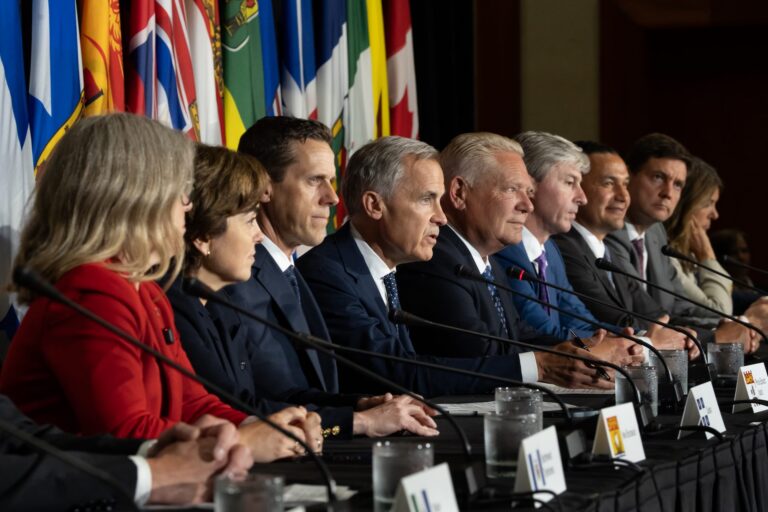

Speaking onstage at the Alberta Securities Commission (ASC)’s annual conference, ASC CEO Stan Magidson said being the lone holdout meant the OSC benefited by getting its own rulings automatically greenlighted by the other provinces, while holding veto power when another regulator made a decision it didn’t like. “Practically speaking, it kind of worked, but it was an extra burden on the market,” he said.
Other provincial regulators want Ontario to join the system, giving the OSC leverage to negotiate the terms of its entry. Vingoe’s comments provide insight into what the watchdog wants before agreeing to join.
Vingoe cited crypto as an example of a cutting-edge area where the OSC would like national regulators to co-ordinate, rather than simply accepting the decision of a company’s home oversight body. “It shouldn’t be one jurisdiction that gets to make those calls. That could be anti-competitive, and it ends up being binding on all of us,” he said.
Vingoe also wants clearer rules to prevent companies from choosing the watchdog they believe will be the friendliest as their home regulator. “It was always based on a concept of where the head office was, but it wasn’t very vigorously enforced, and there was an element of issuer selection rather than regulatory choice,” he said.
The OSC is already collaborating with its provincial peers on Project Tokenization, an initiative to understand and support the development of financial products that use blockchain technology. Vingoe said the OSC is ready to review proposals from Canadian companies that want to launch products like BlackRock’s BUIDL, a tokenized money-market fund that trades on public blockchains like Ethereum, or tokenized equities and bonds. “We’d be very open to that type of development,” he said.
Enforcement, however, is likely to remain the responsibility of individual securities regulators once the OSC joins the passport system, Vingoe said. This has sometimes led to uneven application of enforcement decisions. For example, the OSC has sanctioned prediction markets giant Polymarket, which banned users in Alberta, British Columbia, Ontario and Quebec—but not the rest of Canada.
Still, Vingoe said he’s open to working more closely with regulators in other provinces on enforcement. “I think we can be better at collaborating and joining our forces together,” he said.
Vingoe declined to provide a timeline for joining the passport system, saying the OSC wants time to “get it right.”
“The negotiations are proceeding very, very well,” he said. “It’s not a too-distant prospect at all.”