Listen Now
0:00
Amazon monitors potential union activity across its warehouses and other sites by tracking everything from card campaigns to negative messages sent by employees on the company’s feedback platform, and trains managers on how to spot and address possible union activity, confidential internal documents reviewed by The Logic reveal.
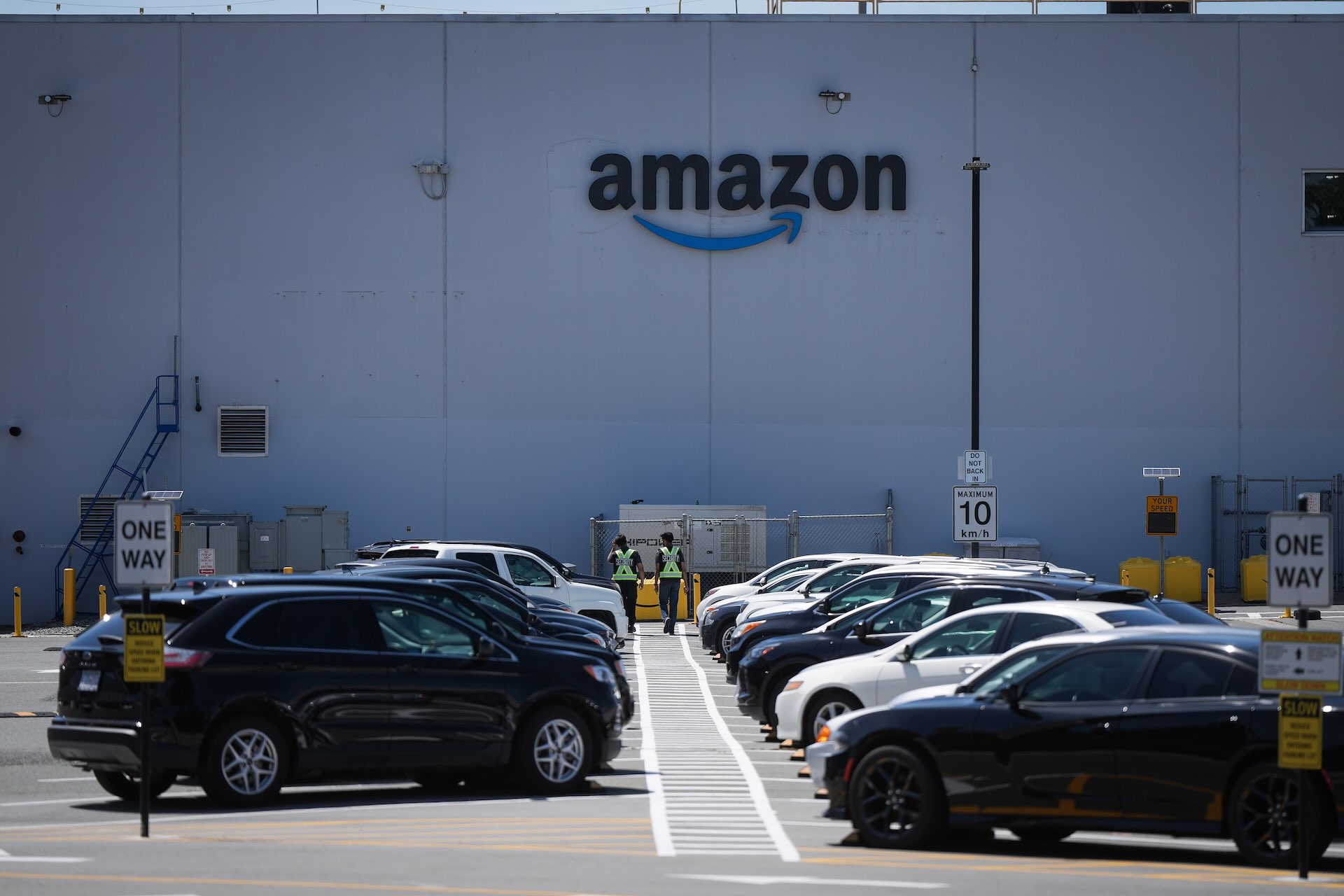
The documents, which appear to have been created to help train managers in B.C. and elsewhere in Canada, are at the centre of a dispute between the tech giant and Unifor, which won the right to represent hundreds of workers at Amazon’s YVR2 fulfillment centre in Delta, B.C., nearly a year ago. Last month, the British Columbia Labour Relations Board (BCLRB) ruled the union could not use the documents in its cases against Amazon as it did not address training in its original complaints.
Talking Points
- The British Columbia Labour Relations Board ruled Unifor, which now represents hundreds of Amazon warehouse workers in Delta, B.C., can’t use the company’s training documents to prove allegations of unfair labour practices
- The union and Amazon have been trying to reach a collective agreement since last October. A mediator is now trying to break the deadlock.
The ruling is “concerning,” said Justin Gniposky, director of organizing for Unifor Canada, adding that the union may apply for a reconsideration of the decision. “They’re training folks on how to manipulate, harass workers into making a specific choice, which is that you don’t need a union,” he claimed.
Amazon “has followed the law” and will continue to do so, spokesperson Brad Glasser told The Logic. He pointed to the company’s culture and benefits, and said Amazon believes “working directly together is the best answer for our employees.” Glasser said that decisions about being represented by a union or not should be “equally protected” and that it was “a perfectly legal practice to talk openly, candidly and respectfully about these topics.”
Related Articles
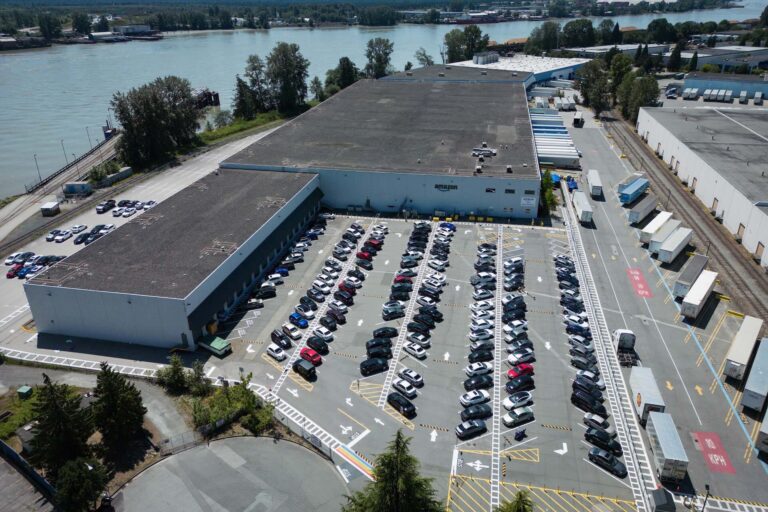
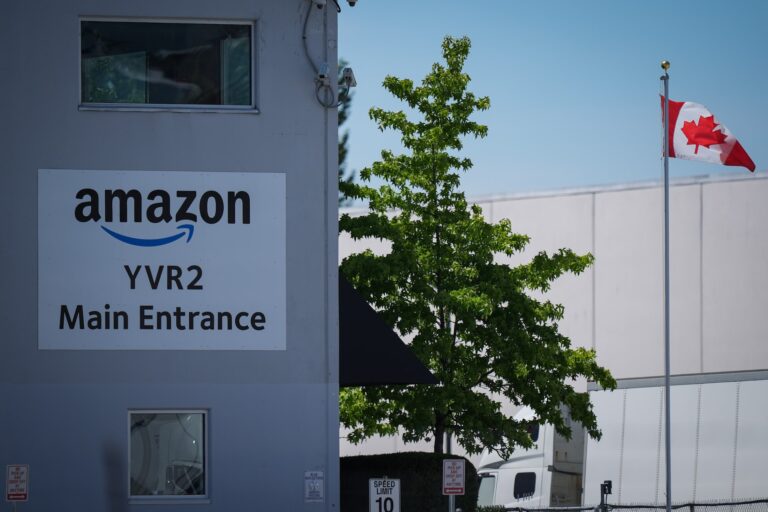
Unifor Local 114 and Amazon have been at loggerheads since a July 2025 decision by the BCLRB that allowed workers in Delta to unionize without a vote. That ruling followed a successful complaint by Unifor that Amazon had subverted its earlier attempts to form a union in Delta. Amazon is challenging that decision in the Supreme Court of British Columbia. Meanwhile Unifor has accused Amazon of multiple unfair labour practices in subsequent complaints filed with the BCLRB.
Unifor’s complaints allege Amazon has not adhered to the board’s orders, displayed anti-union messaging on internal systems and denied workers in Delta an annual wage increase that was awarded to employees elsewhere in the province. Amazon has denied the union’s claims. In February, a BCLRB ruling on the wage issue sided with Unifor, and Amazon has since increased the Delta workers’ pay.
In hearings for its other complaints, Unifor asked the BCLRB to consider four internal Amazon documents used, in part, to train managers on how to respond to union activity, and to question an Amazon witness about them. Amazon objected, arguing the documents were “legally irrelevant” as they don’t relate to any issues raised in the complaints. The union disagreed, saying the documents could help assess whether any of Amazon’s “alleged conduct was motivated by anti-union animus.” The BCLRB ultimately ruled in Amazon’s favour.
The documents show that Amazon tracks which of its warehouses and other sites are at risk of union activity. They include charts of “tier 1 sites” where union activity is seemingly well underway and “tier 2 sites” where the company has noticed possible precursors to unionization attempts, such as a spike in negative chatter on the company’s employee feedback platform and Reddit forums. Delta was categorized as a tier 1 site.
Gniposky claimed the documents show “fear mongering” by Amazon, pointing to instances where, in a presentation under a section titled “Facts to Utilize,” the company provided examples of how a union could use an employee’s personal information from a membership card or form. A union can “contact you while you are home or off work,” according to the documents. “This can include people who may not even work at Amazon showing up at your home.” Gniposky said that such activity was “not part” of Unifor’s unionization efforts.
Elsewhere the documents remind managers that “associates will be required to pay dues” if the union succeeds, even if they did not sign a card or vote in favour of representation. The documents also describe unions as “potentially disruptive” and ask staff to find so-called “informal leaders,” employees who can influence co-workers, and frequently interact with them in the hope they volunteer useful information. “This group can also be leveraged to share facts about the union, organizing and the company with their co-workers,” the documents read.
In the documents, Amazon highlights that employers in Alberta and Ontario are allowed to share their opinions about unions and unionization more readily. In those provinces, Amazon claims in the documents, “you are expected to share the opinion that Amazon does not think unions are the best choice for Amazon employees.”
Glasser did not respond to questions about these specific sections of the document, but said “employees have a legally protected right to discuss the union with each other and share facts.” The documents also outline what managers can’t do, including make threats, interrogate staff, promise changes or spy on workers.
As hearings before the BCLRB and Supreme Court of British Columbia continue, Amazon and Unifor have yet to reach a collective agreement for the unionized workers, despite beginning the bargaining process last October. The two parties have been working with a mediator to help them come to a consensus. Unifor applied for the mediation in February. “It shouldn’t take close to a year or more than a year to get a first collective agreement,” said Gniposky, adding that it wouldn’t take so long with “most employers.”
Glasser claimed that roughly eight months was “not an unusual length of time to work through the complexities of agreeing to a first contract.”
The mediator recently asked both parties what next step they want him to recommend to the board: more bargaining, more work with a mediator with binding recommendations made or interest arbitration—a process where a third party ultimately decides the terms of the collective agreement on behalf of the employer and the union.
Unifor chose arbitration, while Glasser said Amazon wants to return to bargaining. “It’s not unusual for mediation to conclude without a full agreement,” Glasser added. The BCLRB will decide what happens next.