VANCOUVER — Amazon has turned to the Supreme Court of British Columbia to try and fight a ruling that has allowed some of its warehouse workers in the province to unionize. The court battle comes as the union forges ahead to secure a collective bargaining agreement with the online retail giant.
Skip to content


News
Amazon goes to court to fight landmark B.C. union ruling
As efforts to form the first union of Amazon workers in B.C. forge ahead, the online retail giant has asked the province’s Supreme Court to weigh in
Amazon's YVR2 fulfillment centre, in Delta, B.C. Unifor has been attempting to organize workers at the facility since June 2023. Photo: The Canadian Press/Darryl Dyck
VANCOUVER — Amazon has turned to the Supreme Court of British Columbia to try and fight a ruling that has allowed some of its warehouse workers in the province to unionize. The court battle comes as the union forges ahead to secure a collective bargaining agreement with the online retail giant.
“Amazon seems to be trying to fight us every step of the way,” said Gavin McGarrigle, Unifor’s western regional director, of Amazon’s tactics. The latest legal move follows a July ruling by the British Columbia Labour Relations Board (BCLRB), which found that Unifor Local 114 could represent hundreds of warehouse workers at Amazon’s YVR2 facility in Delta, B.C. without a successful unionization vote.
Talking Points
- Amazon has asked the B.C. courts to review a British Columbia Labour Relations Board decision that allowed its Delta warehouse workers to unionize without a vote
- Unifor Local 114, meanwhile, has met with the warehouse workers and and helped them elect a bargaining committee that will soon draft proposals, despite what it alleges are continued unfair labour practices by the online retail firm
In a Sept. 5 filing to the Supreme Court of British Columbia, Amazon asked that the court put a pause on the BCLRB’s demands that the company allow its workers to unionize and stop breaching the labour code.
Amazon spokesperson Steve Kelly claimed the BCLRB’s decision was “wrong on the facts and the law,” adding that warehouse employees had not had the opportunity to make an informed decision.
Lawyers for Amazon claimed the BCLRB ruling was “extraordinary.” They alleged that beginning collective bargaining before a judicial review was heard would cause “irreparable harm,” creating a frayed relationship between the employees and Amazon, as well as requiring the company to pay “significant costs”—for a union that ultimately may be dissolved. Amazon’s case has yet to be heard in court.
Related Articles
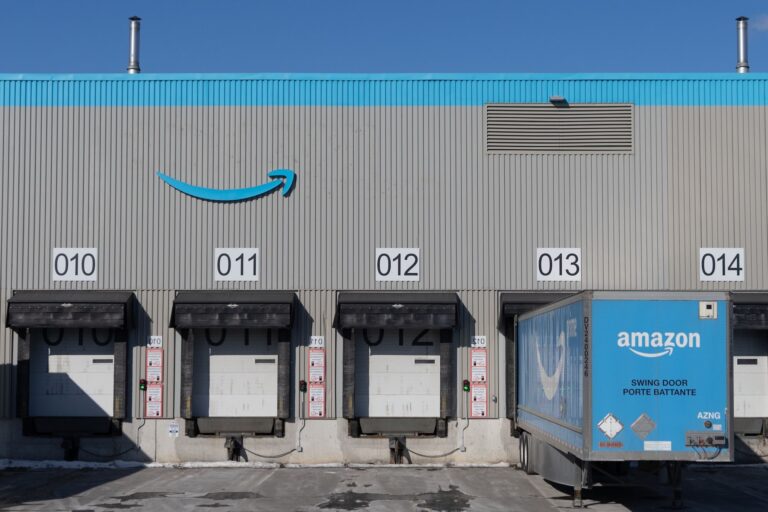

Unifor has been attempting to organize workers at the Delta facility since June 2023. In May 2024, Unifor filed a complaint with the BCLRB alleging Amazon had hired an unnecessary number of staff during the drive to thwart unionization efforts. Unifor also alleged that Amazon had engaged in intimidation and coercion of potential union members. Amazon has denied the allegations.
The BCLRB sided with the union and ordered Amazon to stop “committing further breaches” of the Labour Relations Code. It also ruled that the firm let Unifor meet with warehouse staff on paid time and during work hours.
McGarrigle, who held those meetings with workers last month, called them “historic.” Ten union representatives presented Amazon’s workers with information on how the process works and started collecting details about what changes they would like to see. Amazon’s workers want what most warehouse workers do, he said—a reasonable work pace, better health and safety measures, and benefits.
Judicial review is always available, but rarely successful. – Colin Gusikoski, Unifor Local 114 lawyer
Amazon workers have long complained about working conditions, but most unionization efforts have been futile. In January, the firm announced it would close all seven of its fulfillment and sorting centres in Quebec following the unionization of a facility in Laval—the first and, at the time, only successful union drive at an Amazon warehouse in Canada. Amazon said its withdrawal from the province was unrelated to the unionization.
In the case of the Delta warehouse in B.C., Amazon asked the BCLRB to reconsider its decision, but lost its appeal in August. Colin Gusikoski, a lawyer for Unifor Local 114, argued that Amazon’s attempt to get a judicial review in the Supreme Court of B.C. was unlikely to succeed. “Judicial review is always available, but rarely successful,” Gusikoski said.
Amazon’s legal challenge hasn’t deterred Unifor or the Delta warehouse workers. They recently elected their bargaining committee, which will start drafting proposals early next week. The union will also soon serve its notice to begin bargaining, which will compel Amazon to come to the table and schedule meetings. Amazon’s Kelly said the company “will comply with the law” as it pursues its appeal.
“We’ve had some hiccups along the way,” said McGarrigle of working with Amazon, which he noted has been sharing information with the union as required.
Meanwhile, Unifor has filed two new unfair labour practice complaints against Amazon to the BCLRB. It alleges witness intimidation and increased discipline of employees supporting the union. It also claims that Amazon has been withholding an annual wage increase from its Delta warehouse employees, despite giving a pay bump to other staff in the area. Amazon denies claims it has intimidated witnesses, said Kelly, and the company is subject to a statutory freeze on employment terms at the warehouse. He did not respond to questions about the freeze.
As Amazon’s legal challenge and the union’s complaints work their way through the system, and the parties enter into negotiations, McGarrigle expects momentum behind the union drive in B.C. to snowball. The Delta win has sparked interest from other Amazon warehouse workers not only in B.C., but across Canada, he said. Unifor has deployed more organizers to B.C. warehouses, specifically in the Lower Mainland, to galvanize support.
Still, Amazon’s withdrawal from Quebec weighs on his mind. “You have to be concerned when any company shows that they’re going to go to that length or extreme,” he said, but noted Unifor expects the full support of the BCLRB, government, workers and the public should Amazon consider shutting down its logistics operations in B.C.
“We’re going to throw everything we have at this to get that agreement,” he said. “And, of course, if Amazon continues to violate the law, we’re going to use every tool in the toolbox to hold them accountable.”



Loading...
Thanks for sharing!
You have shared 5 articles this month and reached the maximum amount of shares available.
CloseThis account has reached its share limit.
If you would like to purchase a sharing license please contact The Logic support at [email protected].
CloseGift the full article!
You have gifted 0 article(s) this month and have 5 remaining.
Recipients will be able to read the full text of the article after submitting their email address. They will not have access to other articles or subscriber benefits.
Photo: The Canadian Press/Darryl Dyck
Most Popular This Week



In-depth, agenda-setting reporting
Great journalism delivered straight to your inbox.
News
Cohere plans to acquire cyber startup Aisle and set up a new security division
Briefing
Banks should have kill switches, IDs for AI agents, says global finance watchdog
B.C. First Nations decry rushed consultations as Major Projects Office CEO promises to do better
Feds pledge $100M to back Nova Scotia’s plans for offshore wind farms
Best business newsletter in Canada
Get up to speed in minutes with insights and analysis on the most important stories of the day, every weekday.
Exclusive events
See the bigger picture with reporters and industry experts in subscriber-exclusive events.
Membership in The Logic Council
Membership provides access to our popular Slack channel, participation in subscriber surveys and invitations to exclusive events with our journalists and special guests.