
Listen Now
0:00
OTTAWA — The federal government will spend nearly $6 billion over five years to get as many as 100,000 more tradespeople qualified to build housing and nation-building projects by 2030-31.
The plan, announced by Finance Minister François-Philippe Champagne as part of the government’s spring economic update Tuesday, also includes tax measures to give investors more certainty about what they can expect to pay for major projects and workers the ability to claim more of the expenses they incur when they move around the country for jobs.
Talking Points
- The federal government hopes to address the labour shortages that stand in the way of Prime Minister Mark Carney’s building agenda with a $6-billion plan to train as many as 100,000 Red Seal tradespeople
- The economic update tabled in Parliament Tuesday also includes tax measures to make it easier for workers to move around the country, and for investors looking for certainty about how much they’ll have to pay for major projects
The CRA will start prioritizing requests for advanced income tax rulings related to large-scale projects such as housing, infrastructure and “projects of national importance,” the government said. Workers will be able to deduct as much as $10,000 per year under the Labour Mobility Deduction for Tradespeople, compared with the current limit of $4,000. The expanded labour mobility deductions are expected to cost the government $5 million over five years.
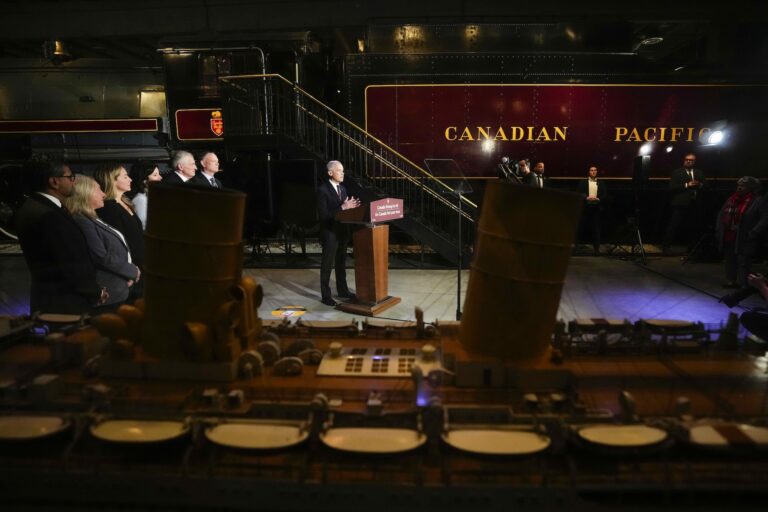
“I think this is really a step change in terms of how we’re going to approach skilled workers, tradespeople, to make sure that they see this future and can contribute to its objectives,” Champagne said at a press conference Tuesday.
Prime Minister Mark Carney has pitched “generational investments” in major projects as a way to build up Canada’s economy in the face of trade threats from the United States. Until now, his plan has focused on attracting investment and shuttling projects through the government’s regulatory processes more quickly. The new Major Projects Office has already taken on 15 projects and six early-stage initiatives for regulatory fast tracking. Those projects, as well as the government’s promise to double the rate of homebuilding, are expected to exacerbate existing labour shortages.
Related Articles
As it stands, Canada will already need more than 1.4 million additional tradespeople by 2033, according to the statement. In 2024, more than 100,000 people registered as new apprentices, but only 34,000 actually finished the process, according to government figures. If nothing changes, Canada will have a gap of more than 20,000 skilled tradespeople per year, it added.
The government plans to pay people to stick out the training to the end, and offer wage incentives to businesses willing to take on apprentices. Those apprentices will also get a $400-per-week wage top up and a completion bonus of $5,000. Ottawa also aims to cut the time investment in half.
If it works, the plan could also put a dent in youth unemployment, which rose to 14.1 per cent in February, more than double the national average, and has become a political sore spot for the Liberals.
As part of the Team Canada Strong Program, workers as young as 15 will be able to start paid, entry-level trades jobs that lead to apprenticeships. The government is also looking to create new pathways to trade certifications through the Armed Forces, Cadets and Junior Canadian Rangers programs.
On the housing front, the government plans to spend $41.9 million to encourage more builders to use modern and efficient building methods like prefabrication to lower the cost and labour requirements for new construction. The government said that will include eliminating “redundant factory and site inspections,” speeding up the review and approval process for prefabricated building projects, and taking a look at the costs associated with building code and standard changes.