The Competition Bureau has recommended that foreign ownership restrictions be removed to help make Canada’s air travel industry more competitive.
Skip to content


News
Canada should open up airline industry to foreign owners, Competition Bureau says
The competition watchdog says up to 100 per cent foreign ownership should be allowed for airlines that only operate within Canada
Air Canada and WestJet account for up to 78 per cent of domestic air passenger traffic in Canada. Photo: The Canadian Press/Nathan Denette
The Competition Bureau has recommended that foreign ownership restrictions be removed to help make Canada’s air travel industry more competitive.
The recommendation is one of several in a new report, published Thursday, into the state of Canada’s airline industry. The report also suggests breaking up the high levels of concentration in the industry, where Air Canada and WestJet account for up to 78 per cent of domestic air passenger traffic.
The bureau says one of the ways to challenge the duopoly would be to further loosen current foreign ownership rules under the Canada Transportation Act, including creating a new class of licensee that would allow up to 100 per cent foreign ownership for airlines that only fly within Canada. “This may attract more foreign capital and expertise to increase competition,” the bureau said.
Talking Points
- Air Canada and WestJet account for up to 78 per cent of domestic air passenger traffic, and competition to challenge them is stiff
- In a new report, the Competition Bureau recommends measures including increased foreign ownership, price transparency and better merger scrutiny in the airline industry
The bureau also suggests increasing the foreign ownership limit for any one investor—including foreign airlines—to 49 per cent from 25 per cent. Similar increases have shown a degree of success in Australia, the report says, with airlines like U.K.-based Virgin entering the market.
“Sheltering companies from competition does not create national champions,” said Brad Callaghan, associate deputy commissioner of the bureau’s policy, planning and advocacy directorate. “For trusted partner countries, Canada should relax its restrictions.”
Some industry sources say that Canada’s 25 per cent foreign ownership cap has made it nearly impossible to get financing for an upstart airline in the country. The international ownership push may be complicated by the federal government’s increased scrutiny of foreign investment, as well as a cultural focus on domestic ownership and goods in the face of the U.S.-Canada trade war. Labour groups consulted for the report also strongly opposed any foreign ownership of more than 49 per cent.
Related Articles
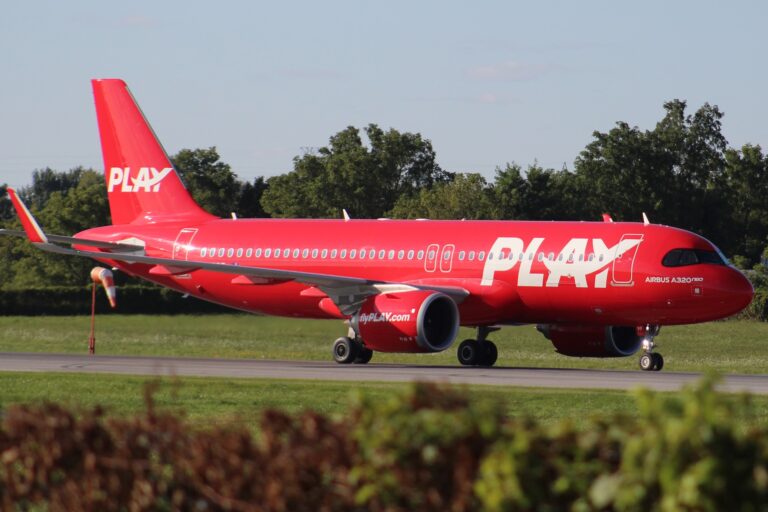

“You’ve got to be careful what you wish for,” said Geraint Harvey, aviation employment researcher and professor at Western University. Strikes from pilots to maintenance workers have dominated headlines in recent years, and, Harvey argued, airlines are always likely to cut labour costs to try and stay competitive.
In a statement, Porter Airlines communications director Brad Cicero said that the airline supports the bureau’s recommendation to increase the foreign ownership limit to 49 per cent, but any other changes—like 100 per cent foreign ownership of domestic-only carriers—will require “much greater scrutiny” as “allowing foreign airlines to operate domestic routes will further disadvantage smaller carriers.”
The bureau’s study also calls for the removal of the transport minister’s ability to override competition review processes for airline mergers. The last three airline mergers—WestJet and Sunwing, First Air and Canadian North, as well as Air Canada and Air Transat, the latter of which was called off—were approved despite the bureau’s “competition concerns.”
Market concentration remains high, but decreased by 10 per cent between 2019 and 2023 due to the increasing presence of airlines like Porter and Flair. The study also found that Air Canada, WestJet and Porter lower their ticket prices by an average of nine per cent when faced with a competitor on a route.
Ticket prices themselves are also increasingly murky, the study found. Fees make up 30 cents of every dollar that passengers pay traditional airlines—a percentage that only goes up for budget carriers.
Maciej Wilk, interim CEO of Flair, said the airline commends the bureau’s report, and encourages the government to begin implementing its key recommendations immediately. Air Canada and WestJet did not respond to requests to comment before deadline.
Add-ons to base fare, including carry-on baggage and seat selection, also muddy final prices and consumers’ ability to accurately compare costs, according to the study. To address this, the bureau recommends standardizing airfares, as well as more upfront disclosure of extra fees and options.
Update: This article has been updated with comments from the Competition Bureau, airlines and an aviation industry expert.



Loading...
Thanks for sharing!
You have shared 5 articles this month and reached the maximum amount of shares available.
CloseThis account has reached its share limit.
If you would like to purchase a sharing license please contact The Logic support at [email protected].
CloseGift the full article!
You have gifted 0 article(s) this month and have 5 remaining.
Recipients will be able to read the full text of the article after submitting their email address. They will not have access to other articles or subscriber benefits.
Photo: The Canadian Press/Nathan Denette
Most Popular This Week



In-depth, agenda-setting reporting
Great journalism delivered straight to your inbox.
News
Willie Gagnon is tired. So is Canada’s shareholder activism movement
Briefing
Mila and Mozilla launch project to make it easier to use open source AI
Alberta will revise its oil royalty regime to encourage new production
Toronto-based AI health firm Altis Labs raises US$25M
Best business newsletter in Canada
Get up to speed in minutes with insights and analysis on the most important stories of the day, every weekday.
Exclusive events
See the bigger picture with reporters and industry experts in subscriber-exclusive events.
Membership in The Logic Council
Membership provides access to our popular Slack channel, participation in subscriber surveys and invitations to exclusive events with our journalists and special guests.