CALGARY — At least six cleantech projects in Alberta—including projects proposed by Brookfield Renewable and Calgary’s Westbridge Renewable Energy—will be ensnared in the province’s newly imposed restrictions on wind and solar developments, The Logic has learned.
Skip to content

 Photo: Semantic Scholar | Handout
News
Brookfield, Westbridge solar projects likely hit by Alberta’s restrictions on renewables
Six of 26 renewable energy projects under review in the province will be subject to new agricultural land limits, regulator says
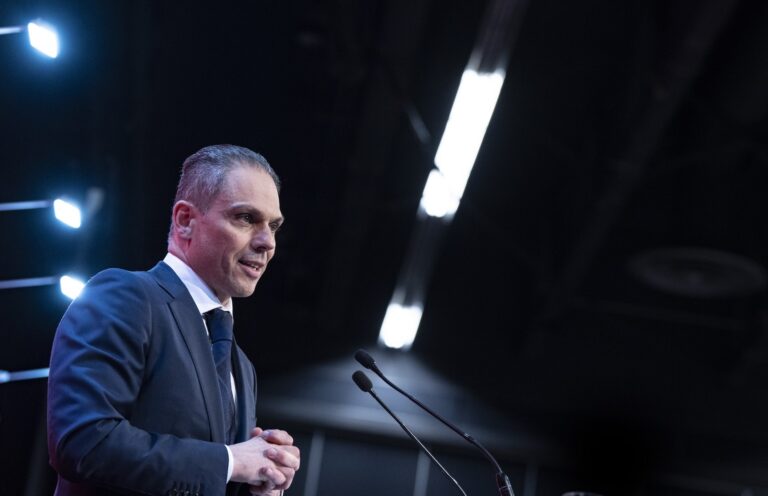
Alberta Premier Danielle Smith’s government has introduced new restrictions on renewable energy projects in the province after a seven-month pause on approving new projects. Photo: The Canadian Press/Sean Kilpatrick
CALGARY — At least six cleantech projects in Alberta—including projects proposed by Brookfield Renewable and Calgary’s Westbridge Renewable Energy—will be ensnared in the province’s newly imposed restrictions on wind and solar developments, The Logic has learned.
Alberta Premier Danielle Smith’s government last week announced sweeping new rules restricting renewable energy development in the province after a seven-month pause on approving new projects. Among the new restrictions, developers can no longer build on lands with the highest-quality soils, a move that limits companies from building on sizable swathes of land in central and southern Alberta.
Talking Points
- The Alberta government has introduced new restrictions on renewable energy projects in the province, including limits to development on certain irrigable lands
- Those rules will be subject to roughly a quarter of the proposals currently in front of the province’s energy regulator, including projects from Brookfield Renewable and Calgary’s Westbridge Renewable Energy
In an email to The Logic, the Alberta Utilities Commission confirmed that six of the 26 renewables projects currently seeking approval from the provincial energy regulator would be built in places the government considers to have highly irrigable lands.
Among them are Brookfield Renewable’s Sunrise Solar project, a 75-megawatt solar field planned for development near Pincher Creek, less than 100 kilometres from the Montana border. Others include Westbridge’s Dolcy project, a 300-megawatt solar facility with an associated 100-megawatt battery storage system, and the company’s 300-megawatt Eastervale development near the Saskatchewan border, which would also include storage capabilities.
Westbridge did not immediately respond to a request for comment.
Mike Peters, a spokesperson for Evolugen, a unit of Brookfield, said the company is “committed to advancing [Sunrise] amid a period of considerable policy and regulatory uncertainty for the renewable sector.” He said Brookfield is awaiting further clarification from the AUC, and said it has been assessing ways to include agricultural practices into Sunrise, like allowing for sheep grazing, for example, to meet the tighter requirements.
Related Articles
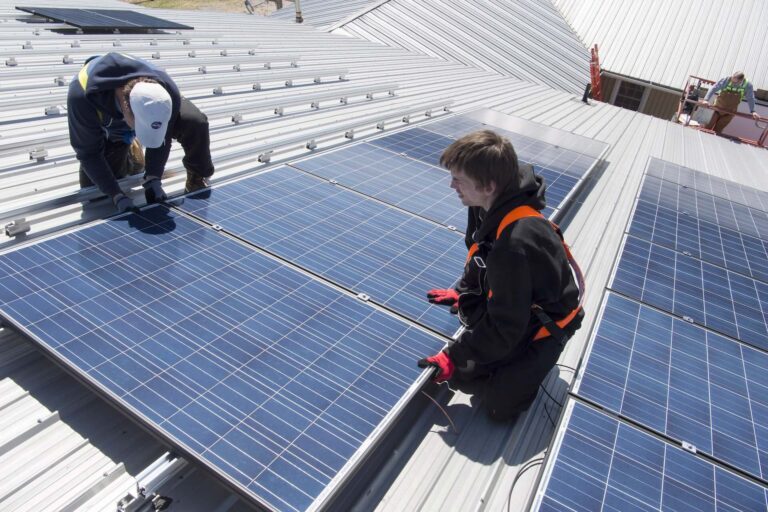
In southern Alberta in particular, the rapid development of renewables—especially wind power—has prompted a spirited backlash from some landowners that have, it seems, caught the eye of policymakers.
The regulator emphasized that it remains unclear to what extent the new regulations will hinder the projects’ development. Soil classifications depend on granular measurements that will have to be compared next to detailed project designs. Renewable energy developers can still build on the province’s more irrigable lands if they can “demonstrate the ability for both crops and/or livestock to coexist with the renewable generation project,” the new rules say.
The 26 solar and wind projects currently seeking approval would amount to 3,450 megawatts of power generation and 460 megawatts of storage. By comparison, Alberta’s entire electricity grid generates 21,191 megawatts of power at full capacity. All but one of the 26 are solar, the regulator said in an email.
The tighter restrictions come as a renewable energy boom takes root in the province. Alberta was responsible for upward of 90 per cent of Canada’s new wind, solar and power-storage capacity additions last year. At the same time, the growth of renewable energy has underscored the instability of Alberta’s electricity grid in recent years, as unreliable output from wind and solar sources have sometimes deepened supply shortages during times of elevated demand.
Here are the six projects subject to the agricultural lands regulation:
- Dolcy Solar: Calgary-based Westbridge Renewable Energy is building a 300-megawatt solar facility with 100 megawatts of storage capacity over a 1,300-acre plot of land. It would be near Wainwright, east of Edmonton.
- Sunrise Solar: Brookfield Renewable is building a 75-megawatt solar farm near Pincher Creek, close to the Montana border.
- Eastervale Solar: Westbridge also plans to build a 300-megawatt solar facility, with 200 megawatts of storage, close to Provost, Alta., near the Saskatchewan border.
- Airport City Solar: A 120-megawatt solar facility proposed near the Edmonton airport over 627 acres of land. Alpin Sun, a German company, is building the project.
- Three Hills Solar: Abacus Power is proposing to build a small 18-megawatt solar plant near the small Alberta town.
- Ponoka Solar Project and Interconnection: A solar facility planned for development north of Red Deer, Alta.
The Alberta government’s new regulations around wind and solar development take what it calls an “agriculture first” approach to renewables. That included limits on development on lands with the highest-quality soils, as well as the creation of 35-kilometre “buffer zones” letting development be shut down around areas with “‘pristine viewscapes’ as designated by the province.” The rules will force project builders to post estimated reclamation costs to the government or landowners in the form of bond or security. And they suggest developers may have to shoulder a greater share of the costs associated with electricity transmission.
Ashley Stevenson, spokesperson for Alberta Utilities Minister Nathan Neudorf, did not provide specific estimates as to how the proposed rules might influence renewables development, and instead pointed to some of the minister’s previous public comments.
Following the announcement of the new rules, the Calgary Chamber of Commerce said they raised “serious questions about the future investment climate for renewable energy projects in the province.” The Canadian Climate Institute, an environmental research group funded in part by the federal government, said the changes would “throttle” the cleantech industry.
When the Alberta government first announced the moratorium on renewables, the Pembina Institute, an environmental think tank, estimated the pause would put 118 projects worth $33 billion at risk. The tally included projects both under review and those that could soon submit an application.
The government at the time clarified that only 13 projects were before the AUC when the moratorium was put in place. That number has since doubled to 26, the AUC said.



Loading...
Thanks for sharing!
You have shared 5 articles this month and reached the maximum amount of shares available.
CloseThis account has reached its share limit.
If you would like to purchase a sharing license please contact The Logic support at [email protected].
CloseGift the full article!
You have gifted 0 article(s) this month and have 5 remaining.
Recipients will be able to read the full text of the article after submitting their email address. They will not have access to other articles or subscriber benefits.
Photo: The Canadian Press/Sean Kilpatrick
Most Popular This Week




In-depth, agenda-setting reporting
Great journalism delivered straight to your inbox.
News
National Bank CEO warns AI alone won’t give banks a lasting edge
Briefing
Canada and Ontario commit over $5B to support tariff-hit steel sector
Hackers will see cars as major targets in next 3 years, 83% of car-tech workers say
EA shutting down Edmonton studio BioWare
Best business newsletter in Canada
Get up to speed in minutes with insights and analysis on the most important stories of the day, every weekday.
Exclusive events
See the bigger picture with reporters and industry experts in subscriber-exclusive events.
Membership in The Logic Council
Membership provides access to our popular Slack channel, participation in subscriber surveys and invitations to exclusive events with our journalists and special guests.





