The Bank of Canada cut interest rates a quarter point, dropping the benchmark rate to 2.75 per cent, citing a spike in anxiety over tit-for-tat tariffs that already is causing consumers and businesses to retrench. However, governor Tiff Macklem warned against assuming the central bank would continue cutting rates, emphasizing that containing inflation will be his primary concern.
Skip to content

News
The Bank of Canada cuts its key interest rate by a quarter point
With a trade war clouding Canada’s future, the bank’s seventh straight cut drops the rate to 2.75 per cent
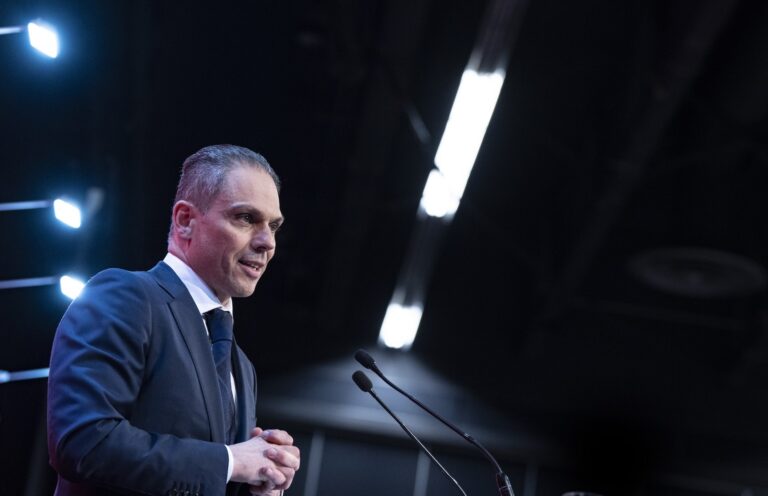
Bank of Canada governor Tiff Macklem at a news conference on the bank's interest rate announcement in Ottawa, in Jan. 2025. Photo: The Canadian Press/Justin Tang
The Bank of Canada cut interest rates a quarter point, dropping the benchmark rate to 2.75 per cent, citing a spike in anxiety over tit-for-tat tariffs that already is causing consumers and businesses to retrench. However, governor Tiff Macklem warned against assuming the central bank would continue cutting rates, emphasizing that containing inflation will be his primary concern.
Rear-view mirror: If not for U.S. President Donald Trump’s belligerence, Macklem and the Bank of Canada would be enjoying a victory over their struggle with inflation. Policymakers observed that inflation is at target, if maybe a touch hot, and that the jobless rate has declined. “Past cuts to interest rates have boosted economic activity, particularly consumption and housing,” officials said in a statement, noting that economic growth in the fourth quarter was faster than they were expecting.
That was then. Preliminary data from surveys of consumers and businesses throughout February suggest many have been rattled by Trump’s economic warfare. Individuals are worried about their jobs and plan to increase precautionary savings. Businesses report that it has become harder to secure credit and that they have become less inclined to invest. About half of companies said they would respond to tariffs by raising prices, a threat to the Bank of Canada’s mission to contain price pressures.
“We ended 2024 on a solid economic footing,” Macklem said in a statement. “But we’re now facing a new crisis. Depending on the extent and duration of new U.S. tariffs, the economic impact could be severe. The uncertainty alone is already causing harm.”
Related Articles



Front window: Interest rate changes take months to ripple through the economy, so central banks must anticipate where things are headed. Unfortunately, there’s not much in Canada’s contemporary history that informs policymakers on how the economy might respond to broad-based U.S. tariffs and constant trolling about making Canada the 51st American state.
The new survey data and intuition are enough to conclude that whatever momentum the economy had at the end of 2024 would be crushed by a trade war. The central bank said that growth in the first quarter “will likely slow as the intensifying trade conflict weighs on sentiment and activity,” adding that there already are “warning signs that heightened trade tensions could disrupt the recovery on the jobs market.”
But disinflationary forces from slower growth will be at least partially offset by inflation that the central bank described as “slightly firmer” than officials were expecting. That limited policymakers room to maneuver. At 2.75 per cent, the benchmark rate now sits comfortably in the “neutral” range of borrowing costs that the Bank of Canada says represents a theoretical zone in which interest rates have no effect on behaviour. “The governing council thinks of us in that neutral range,” Macklem said at a press conference.
Around the corner: The neutral rate of interest is a concept, not a target. But it’s a helpful way of framing the scope for additional rate cuts. Macklem again went out of his way to say that economic war with the U.S. will be different than previous crises because he must contend with both inflationary and deflationary forces. He said during the press conference that policymakers “did not seriously consider” a larger half-point cut, emphasizing that containing prices must come first for a central bank with a mandate to keep inflation at two per cent.
“Monetary policy cannot offset the impacts of a trade war,” Macklem said. “What it can and must do is ensure that higher prices do not lead to ongoing inflation.”



Loading...
Thanks for sharing!
You have shared 5 articles this month and reached the maximum amount of shares available.
CloseThis account has reached its share limit.
If you would like to purchase a sharing license please contact The Logic support at [email protected].
CloseGift the full article!
You have gifted 0 article(s) this month and have 5 remaining.
Recipients will be able to read the full text of the article after submitting their email address. They will not have access to other articles or subscriber benefits.
Photo: The Canadian Press/Justin Tang
Most Popular This Week




In-depth, agenda-setting reporting
Great journalism delivered straight to your inbox.
News
National Bank CEO warns AI alone won’t give banks a lasting edge
Briefing
Canada and Ontario commit over $5B to support tariff-hit steel sector
Hackers will see cars as major targets in next 3 years, 83% of car-tech workers say
EA shutting down Edmonton studio BioWare
Best business newsletter in Canada
Get up to speed in minutes with insights and analysis on the most important stories of the day, every weekday.
Exclusive events
See the bigger picture with reporters and industry experts in subscriber-exclusive events.
Membership in The Logic Council
Membership provides access to our popular Slack channel, participation in subscriber surveys and invitations to exclusive events with our journalists and special guests.





