Listen Now
0:00
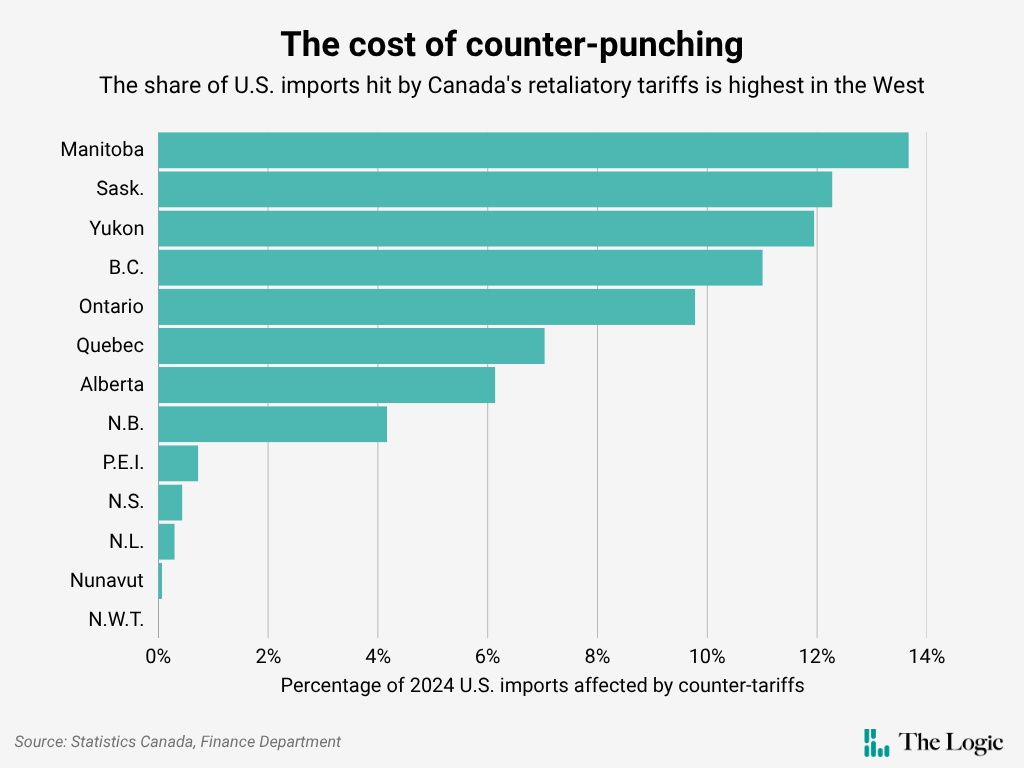
OTTAWA — Canada’s new retaliatory tariffs will affect nearly 14 per cent of the value of U.S. imports to Manitoba, according to data analysis by The Logic, which is the highest share of any province and a sign the next step of the trade war will be felt unevenly across the country.
In announcing Canada’s counter-tariffs on nearly $28 billion worth of U.S. goods on Tuesday, Finance Minister François-Philippe Champagne stressed the duties “are designed primarily to provide protection for Canadian industry impacted by U.S. tariffs and allow them to compete against U.S. products in the Canadian market.”
Talking Points
- The share of imports subject to Canada’s new or increased retaliatory tariffs on $28 billion worth of U.S. goods is distributed unevenly across the country
- According to an analysis by The Logic, Manitoba would see 14 per cent of the value of its U.S. imports affected, which is the biggest share of any province and more than double that of Alberta
The cost of tariffs, however, are borne by importers—no matter who started it. The Logic’s analysis suggests Canada’s latest salvo in the escalating trade war distributes that burden across the country in a manner that diverges from the impact of the new 50 per cent tariffs that President Donald Trump slapped on about $28 billion of Canadian goods.
Those duties, which went into effect after Prime Minister Mark Carney called off trade talks, are expected to hit exports from Quebec, Ontario and British Columbia the hardest, producing an economic double-whammy. Previous analysis by The Logic showed those provinces are also most vulnerable to the earlier sector-specific tariffs on autos, steel, aluminum and lumber.
Under Canada’s new counter-tariffs taking effect Sept. 8, however, Quebec will see just over seven per cent of its U.S. imports covered by the new duties. That is not much more than the six per cent of affected imports in Alberta, which has so far been spared the worst of the trade war.
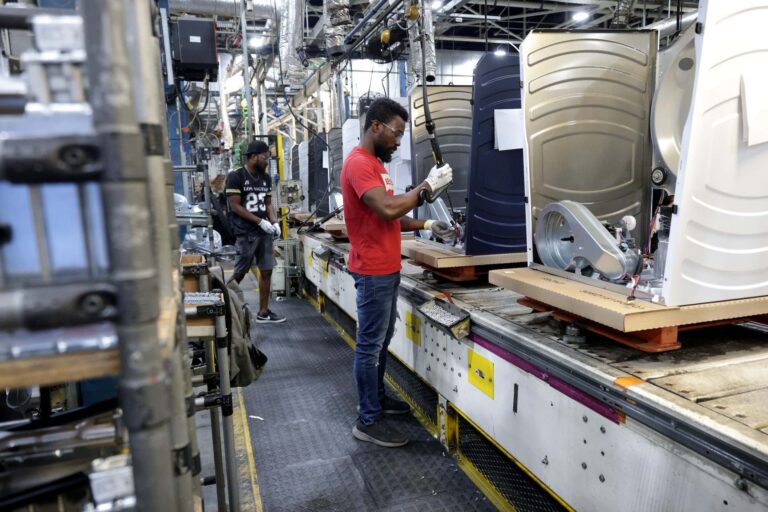
The list of U.S. products to be hit with counter-tariffs as high as 50 per cent, beginning Sept. 8, includes cheese, cosmetics, video game consoles, home appliances, motorcycles and even toilet paper. It was designed to match the value of the Section 338 tariffs “dollar for dollar,” and to support Canadian industries struggling the most. The federal government is also increasing its existing counter-tariffs on many U.S. steel and aluminum products to 50 per cent—double the rate that has been in place since March 2025.
The Logic analyzed provincial import data from 2024, which is the year that federal government officials said they used to calculate the approximate value of the new counter-tariffs. It was also the last full year before Trump returned to the White House and unleashed his “America First Trade Policy,” which disrupted normal trade patterns between the longtime allies. Those ongoing shifts make it tough to predict how much federal revenue the counter-tariffs will generate, especially since importers can ask for refunds or relief in exceptional circumstances, or how much they will raise prices for consumers. The federal government hopes the counter-tariffs will also persuade Canadian importers to switch to domestic sources.
Related Articles
Canada’s new or increased counter-tariffs would affect nearly $3.2 billion worth of the total customs value of $23.2 billion in U.S. goods that Manitoba imported in 2024. The most affected commodities for that province are parts used in agricultural and construction machinery. Motorcycles are also a significant U.S. import to the Prairie province, with more than $52 million worth entering that year from Pennsylvania, home to a Harley-Davidson factory.
Saskatchewan would have the second-highest share of U.S. imports covered by the new retaliatory duties, affecting about 12 per cent of the 2024 total of $13.4 billion. As with Manitoba, both agricultural and industrial equipment parts are among the most affected goods including components used in centrifugal pumps.
In B.C., the retaliatory tariffs would hit 11 per cent of the $25.8 billion in U.S. goods that province imported in 2024. Boxes or cartons made with corrugated cardboard led the pack, with most of that product coming from neighbouring Washington.
Ontario imported $243 billion worth of goods from the U.S. in 2024, which was more than any other province or territory by far. Yet the roughly $23.8 billion that would be subject to counter-tariffs in this analysis, which notably does not include Canada’s existing counter-tariffs on U.S. autos, is just under 10 per cent. That puts Canada’s most populous province in line with the national average. The top commodities were various aluminum and steel products, as well as electronics, but Ontario also imported about $307 million in miscellaneous hair care products, especially from Ohio and California.
In Quebec, $2.4 billion worth of U.S. goods shipped in 2024 would be covered by the new counter-tariffs, representing about seven per cent of the total. The most valuable import consisted of $220 million worth of passenger railway cars from California. In 2018, Montreal-based Via Rail awarded Siemens Mobility, which has a factory in Sacramento, Calif., a $989-million contract to replace its fleet along the Quebec City-Windsor corridor.
Late Wednesday night, the Finance Department announced it had removed seafood from the list of U.S. goods covered by retaliatory tariffs. “We are continually working with Canadian industries to assess the effectiveness of these measures, with a primary focus on industries that have been targeted by U.S. tariffs,” the department wrote in a statement. To ensure Canada’s counter-tariffs still matched “dollar for dollar” the value of the new U.S. tariffs, the federal government added nine new commodities to the list, including charcoal, printed photographs and copper wiring.
That upped the burden slightly for Quebec, which in 2024 imported $208 million worth of copper wiring that is now on the updated list. The changes, however, also provided major relief to Atlantic Canada, lowering the region’s share of U.S. imports covered by the counter-tariffs from nearly eight per cent to just under four per cent. It made the biggest difference in Yukon. That is because seafood accounted for a huge part of the almost $62 million worth of U.S. goods the northern territory imported in 2024. Some 73 per cent of its U.S. imports were covered by the counter-tariffs when seafood was on the list; now that it is off, the burden is closer to 12 per cent.