Listen Now
0:00
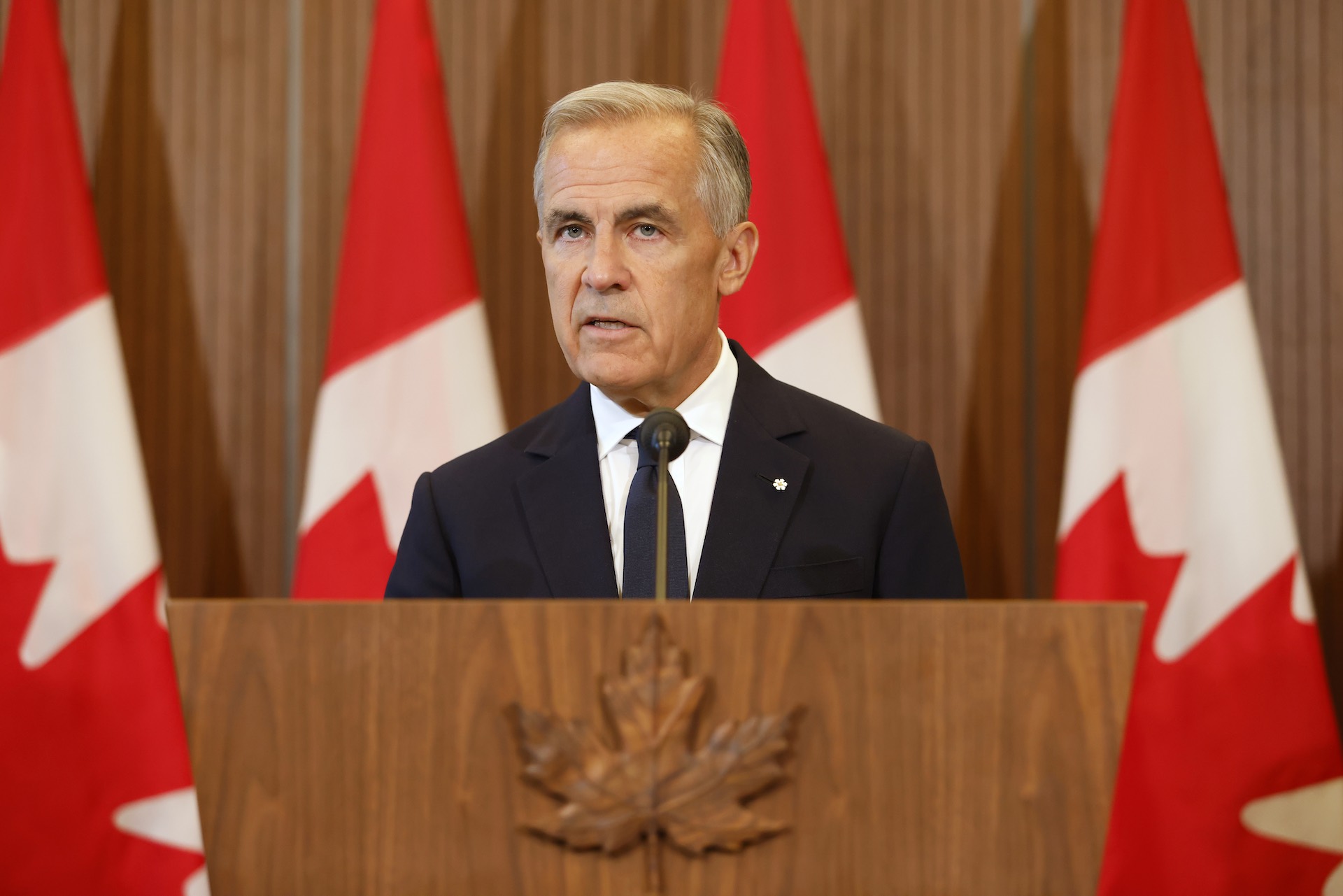
OTTAWA — Prime Minister Mark Carney laid out his revised plan of attack against U.S. trade aggression Saturday, kicking off a new phase of the tariff war between the two countries that could be painful for many Canadians.
“You’re at war when you get attacked. We got attacked,” Carney said Saturday at a press conference on Parliament Hill, flanked by Canada-U.S. Trade Minister Dominic LeBlanc and Canada’s chief negotiator, Janice Charette. “We’ve got the reserves. We’ve got the resilience. We’ve got the plan. We’ve got the focus. We’ll respond.”
Talking Points
- Prime Minister Mark Carney kicked off a new phase of Canada’s trade war Saturday with the United States by announcing retaliatory tariffs on sectors targeted by U.S. trade aggression
- Carney said a proposed deal between the two sides fell apart late Friday night after U.S. negotiators attempted to change the terms of the deal and, among other things, put limits on Canada’s ability to make trade deals with other countries
Carney was speaking after talks between Canadian and American negotiators collapsed on Friday night, leading the White House to slap new 50 per cent tariffs on roughly US$20 billion worth of Canadian goods.
Those tariffs, levelled under provisions of Depression-era U.S. legislation, affect an array of products representing about five per cent of Canada’s exports to the United States, from plastics to plywood to electrical equipment. Economists have estimated the duties could knock more than a half point off Canada’s economic growth and cost this country as many as 90,000 jobs
Carney said the Canadian government will fire back with dollar-for-dollar tariffs on American steel, dairy, appliances, agricultural equipment, pulp and paper and electronics. Other product categories that are subject to Trump’s tariffs will also be targeted, he said.
Related Articles
“This is a focused response to protect and defend our industries and allow them to compete with U.S. products in the Canadian market,” the prime minister said.
Canada’s tariffs will come into effect on Sept. 8, and Carney said the government will release more details in the next few days.
He is retaliating reluctantly, he added, because Canadian families and businesses will face higher prices and less consumer choice as a result.
Even so, Carney did not rule out the possibility of further action. He did not reject out of hand a question about restricting or taxing energy exports to the U.S.—something he’s previously said he’d been unwilling to do—but said the government would start with protection for industries that have been disadvantaged by American tariffs.
At the same time, he said, Canada is working toward diversifying its trade partnerships for key exports like oil, gas and critical minerals: “It makes us less dependent on the United States.”
This is the first time Carney has directly retaliated against Trump’s trade aggression. He previously offered concessions to the White House, including eliminating the government’s $1-billion plan for a digital sales tax on large online companies, in an attempt to secure a deal that would lift American tariffs on Canadian goods. He also pulled back on retaliatory tariffs issued under former prime minister Justin Trudeau by exempting goods covered under the Canada-United States-Mexico Agreement (CUSMA).
The impact of the tariff tit-for-tat could actually be limited, depending on which items Ottawa levies in retaliation, according to analysis from RBC Economics. Canada is “actually a net importer” of products on the U.S. list, bringing in US$23 billion worth of those goods versus US$20 billion in exports. If Canadian firms and consumers just buy those items from domestic suppliers instead, it “could actually fully replace lost U.S. exports,” the bank said, although it noted that integrated supply chains mean firms will still face costs. Still, there’s “potential for trade flows to reorient within North America to avoid increased tariff costs.”
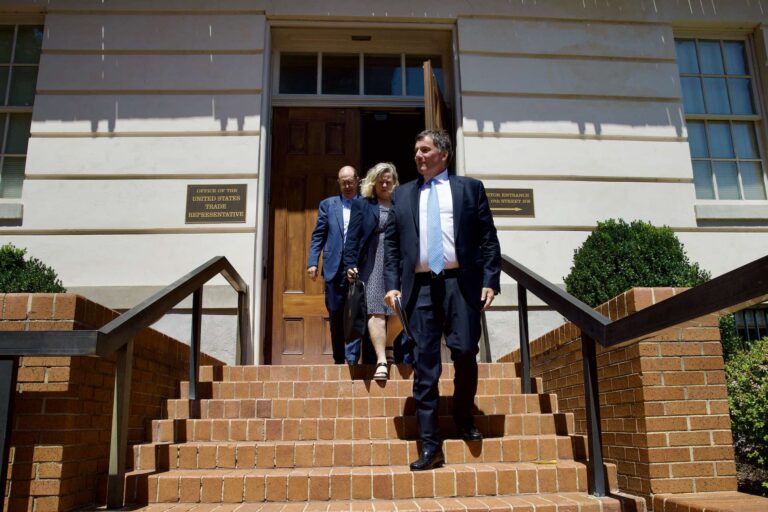
U.S. Trade Representative Jamieson Greer blamed Canada for pulling out of the talks at the last minute, and had previously signalled that the U.S. would not take retaliation from Canada lightly. “If a country retaliates against us, we’re obviously not going to tolerate that. We’ll take action,” he said last week, during a press conference at a factory in Iowa. As of midday Saturday, neither Greer nor the White House had addressed Carney’s plan.
Ontario Premier Doug Ford cheered Carney’s new, more aggressive approach, and called on Canada’s governments to use “every single asset” the country has to wage a battle. “We never started this fight, but I can assure you, we’re going to win this fight,” he told reporters. “We have to use every tool in our toolbox to make sure, as Donald Trump is trying to inflict pain on every Canadian, that we inflict pain right back until he realizes that we’re his number-one customer in the world.”
Saskatchewan Premier Scott Moe also backed Ottawa’s response, saying in a statement that Washington’s new tariffs are proof that “the current U.S. administration cannot be trusted to live up to its own trade deals.” Alberta Premier Danielle Smith struck a more cautious tone, warning in a social media post that “livelihoods are at risk from these new tariffs and counter-tariffs.” She’s pushing the federal government to resume negotiations with the U.S. “as soon as possible.”
Smith’s chief of staff, Rob Anderson, directly questioned the strategy. Retaliatory tariffs “will hurt—not help—Canada right now,” he said in an X post, citing further U.S. escalation, cost increases for domestic businesses and inflation. “Why would we punch our own Canadian businesses, workers and consumers in the face just because the U.S. is doing so to their own.”
Team Canada’s united front could be further tested by divide and conquer tactics from the U.S., said Carlo Dade, director of the New North America Initiative at the University of Calgary’s School of Public Policy. The rules governing the new tariffs let the Trump administration tailor them to specific provinces. Washington could, for example, offer to lift the duty on Nova Scotia wine if it restores U.S. liquor back on store shelves, while leaving it in place on Ontario and B.C. imports.
“That’s the second hammer,” Dade said. He claimed Ottawa should have headed off potential divisions by telling Canadians about it in advance, citing studies his team has done showing respondents were more willing to stick together, even at a cost to their own province, if they understood how the U.S. tactic worked.
Until late Friday night, Carney said, negotiators had an agreement in sight that would have spared Canada from this latest round. Ottawa had agreed to lay down any remaining retaliatory measures instituted under Trudeau in exchange for lower, more economically viable Section 232 sectoral tariffs on the steel, aluminum, lumber and auto sectors. Canada was also willing to ask provinces to return American liquor to Canadian shelves, and make administrative changes to the supply managed dairy sector.
Carney said the talks fell apart when the U.S. brought in late demands that would have effectively changed the terms of the agreement, or eroded Canada’s economic and political sovereignty. For one, he said, Trump’s trade envoys wanted to exempt certain vehicles from tariff relief under the deal, including heavy-duty F-Series trucks manufactured at Ford’s Oakville, Ont., plant.
“We clarified what was on offer, and were continually disappointed by the answers,” Carney said.
The White House also tried to put limits on Canada’s ability to make trade deals with other countries in the final hours of the talks, the prime minister said, while pushing Canada to relax French-language requirements on U.S. companies selling products to Canada.
“In short, they asked too much, and they offered too little,” he said. “More fundamentally, the cumulative effect of U.S. demands revealed the limits of their commitment to a true economic partnership.”
Those limits call the future of a sustainable renewal of Canada’s trade pact with the U.S. and Mexico into question. Carney said the development isn’t good news for the CUSMA, but that at least the situation has become more clear. “We have a new perspective on that because of these negotiations,” he said.
Editor’s note: This story was updated to include additional reaction and comment.