Listen Now
0:00
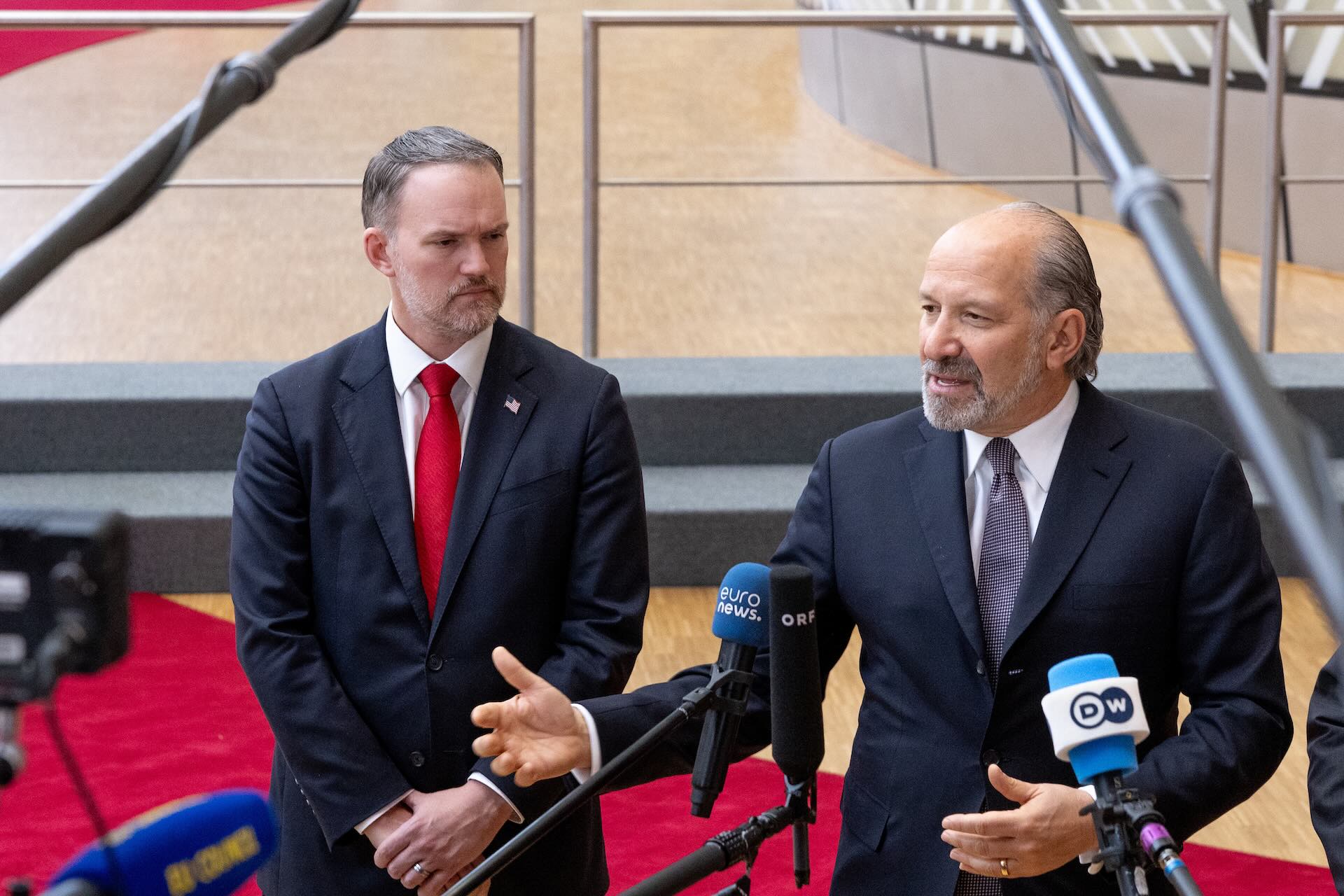
OTTAWA — U.S. Secretary of Commerce Howard Lutnick was characteristically blunt this spring when reacting to the idea that Canada could afford to rag the puck on securing a trade deal with his country.
“That is, like, the worst strategy I’ve ever heard,” Lutnick said after Canada’s former chief trade negotiator, Steve Verheul, suggested that Ottawa has time on its side during the trade talks because of growing pressure over the state of the U.S. economy.
Talking Points
- The U.S. has yet to invite Canada to begin official negotiations for the review of the North American trade pact, while Mexico is moving ahead with bilateral talks
- Matthew Holmes of the Canadian Chamber of Commerce sees little upside in Ottawa making any more concessions to get to the table, while the Trump administration is facing uncertainty in the November midterm elections over the rising cost of living
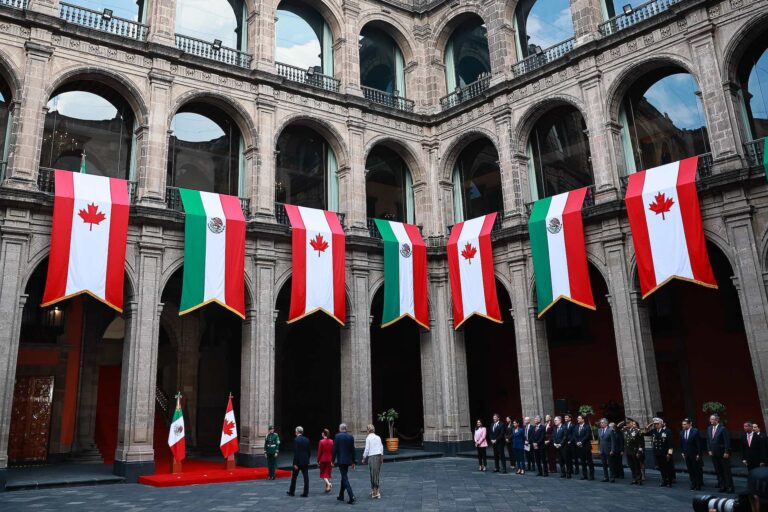
Yet Lutnick’s tongue-lashing did nothing to pick up the pace. While American and Mexican representatives began bilateral negotiations last Thursday for the joint review of the Canada-United States-Mexico Agreement (CUSMA), U.S. Trade Representative Jamieson Greer has not yet invited Canada to begin formal talks.
The way that U.S. President Donald Trump operates—sometimes with all-caps decrees via social media late at night—can make it hard to separate the pros and cons of any strategy into tidy columns. There is a growing sense, however, that rising inflation and the looming midterm elections will make it harder for Trump to sustain the current tariffs-on-everything chaos. And that Canada, with a surprisingly resilient economy and open pursuit of policies that could one day make it less reliant on the U.S., can afford to wait a little longer for a better deal.
Canada-U.S. Trade Minister Dominic LeBlanc, who spoke with Greer last Monday, has denied that Ottawa is deliberately slowing things down. “The Americans don’t think that we’re dragging our feet,” he said May 8 in Montreal. “They know we’re ready.”
Related Articles


There is a difference between expecting an invitation and paying an exorbitant, fluctuating price to get on the guest list. Matthew Holmes, executive vice-president and chief of public policy at the Canadian Chamber of Commerce, said his conversations with both domestic industry and the federal government suggest neither has the appetite to make any more concessions in exchange for resuming talks. Canada, after all, has tried that before. Last June, Ottawa agreed to cancel the long-planned digital services tax to get Trump back to the table, only to have Trump halt talks again in October, blaming Ontario’s anti-tariff ad campaign. “There’s a sense that as soon as something is granted, there’s a new list right behind it that follows,” Holmes said.
John Weekes, Ottawa’s chief negotiator for the original North American Free Trade Agreement, said Canada already has a deal meant to secure preferential access to the U.S. market. “It’s called the CUSMA,” he said last week at the Senate foreign affairs committee. “Does it really make sense to enter a new deal with less favourable terms of access than the CUSMA in the hope that this time Trump might keep his word?” The results of a recent online survey by Innovative Research Group suggested Canadians in general are just as wary. Just 14 per cent of respondents said they believe both that Ottawa will reach a deal and that Trump will honour it.
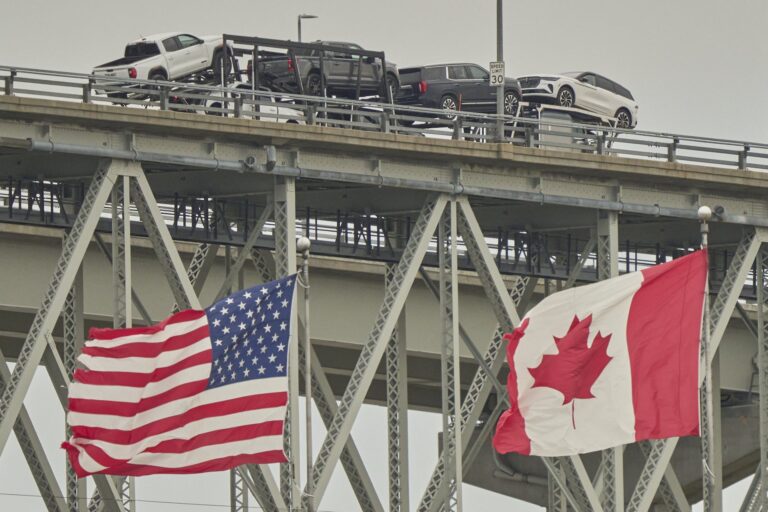
Waiting is not without risk. In recent weeks, the Canada-U.S. relationship has been looking worse. The Pentagon paused its participation in a longtime advisory body on North American defence. U.S. Ambassador Pete Hoekstra slammed a new order for online streaming services to triple the amount of their Canadian revenue they spend on Canadian content. The Gordie Howe International Bridge has yet to open. The Americans are still angry about most provinces banning the sale of U.S. alcohol. There are even new duties on mushrooms.
“There’s a sense that as soon as something is granted, there’s a new list right behind it.”
The list of issues the Trump administration wants resolved before agreeing to renew CUSMA, also known as the USMCA, was already long. In Canada’s case, it includes barriers to the supply-managed dairy market, as well as the impact that the Online Streaming Act and Online News Act have on U.S. digital giants. The three countries have until July 1 to decide whether to extend the deal. Greer has already said wrapping up negotiations by then is unlikely, but that the U.S. would keep talking. There could be another review next year, and every year, before it expires in 2036.
With the U.S. still weighing tariffs on more Canadian goods, this is far from a normal review, said Penny Naas, a senior vice-president at the German Marshall Fund in Washington, D.C., who is also an adviser for Trade Experettes, an international organization of women who specialize in global commerce. “This is about using trade to extract maximum leverage in negotiations between the United States and Canada on every issue that might be out there,” Naas said last month at a conference in Ottawa. She thinks Trump wants annual reviews. “Every year they [will] have a tool to use against Canada to try to extract more concessions.”
On the other hand, a lot has changed since early 2025, when Trump first used emergency powers to impose universal tariffs on Canadian goods. The U.S. Supreme Court has since struck them down. Refunds owed to companies that paid the tariffs could reach US$166 billion—a major chunk of the roughly US$264 billion the U.S. received in customs duties revenues last year. The U.S. Court of International Trade has since ruled against the temporary 10 per cent tariffs Trump brought in under Section 122 of the Trade Act to replace the earlier duties.

Trump is also under scrutiny for the rising cost of living. The U.S.-Israel war on Iran shut down the Strait of Hormuz, a transit point for about 20 per cent of the global supply of crude oil and liquefied natural gas. The annual U.S. inflation accelerated to 3.8 per cent in April, which was the biggest uptick in nearly three years. Energy prices accounted for 40 per cent of the increase. The Budget Lab at Yale estimates that even if the Section 122 tariffs are not extended past their July 24 expiration date, they will add US$940 to average American household costs this year.
All that could spell trouble for the Republicans in the November midterm elections. Trump will be looking to bring consumer costs down, but he has conflicting goals, said Jamie Tronnes, executive director of the Washington-based Center for North American Prosperity and Security. “The president has been very clear that he wants tariffs,” she said, so it is unknown “whether or not the cost of living or his love of tariffs will win at the end of the day.”
Meredith Lilly, a Carleton University professor who advised former prime minister Stephen Harper on trade, reminded Canadian senators on the foreign affairs committee last week that Democrats are also tough on Canada. It was the Biden administration that opposed both the digital services tax and the Online Streaming Act, and fought the way Canada allocates access to its dairy market. “A different balance of power in the U.S. Congress after the midterms will not change the political calculus for Canada on resolving our bilateral irritants,” she said.
In early 2025, economists warned of a recession if the tariffs stayed long. Last week, Statistics Canada reported the economy had entered a technical recession, as GDP declined at an annual rate of 0.1 per cent in the first quarter of the year. Still, the Canadian economy has fared better than expected, largely thanks to Trump’s tariff carve-out for CUSMA-compliant goods. By December 2025, enough Canadian businesses had done the paperwork to prove compliance that about 90 per cent of goods entered the U.S. duty-free. Despite several sectors being hit especially hard by Section 232 tariffs, including autos, steel, aluminum and lumber, Canada has one of the lowest effective U.S. tariff rates in the world.
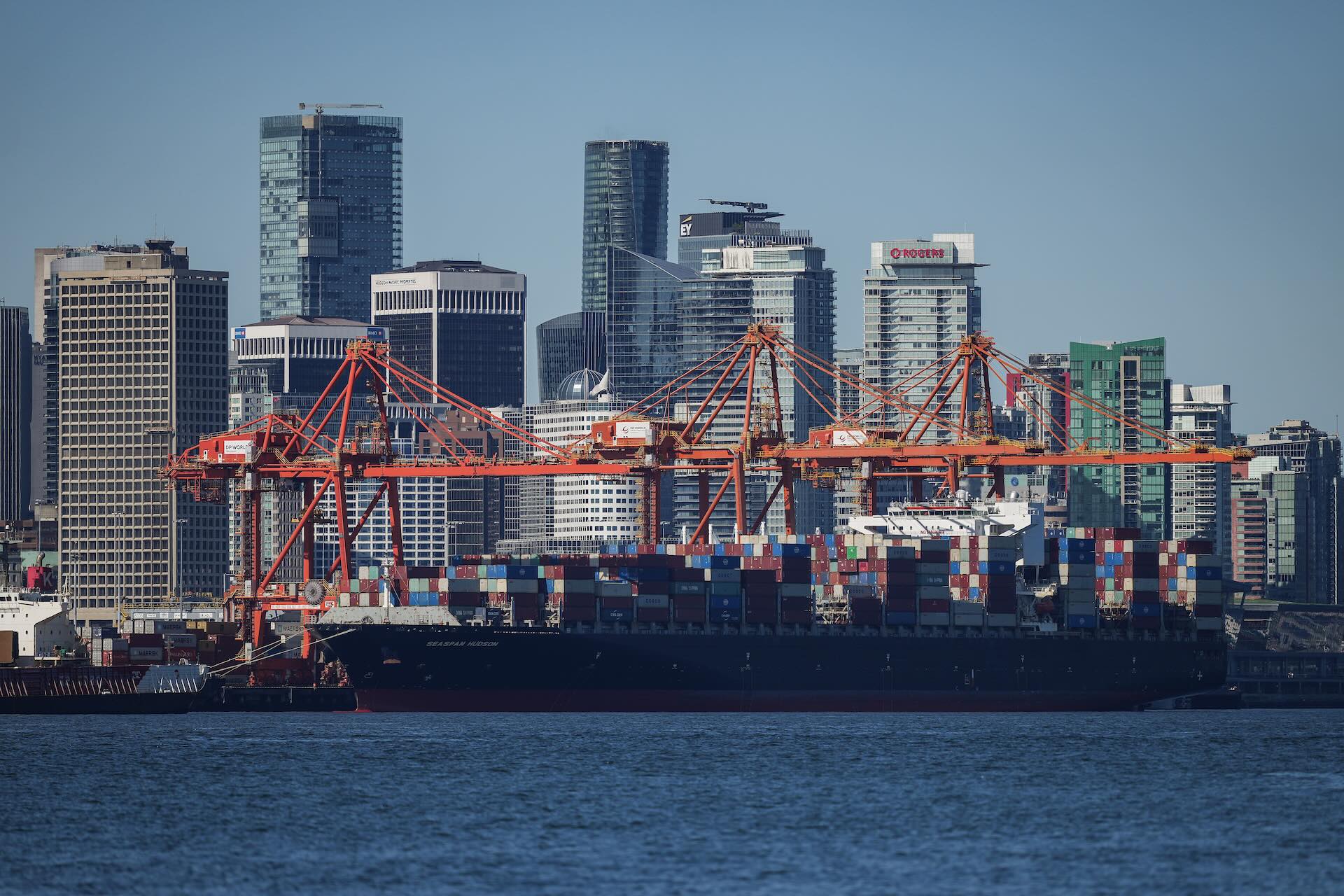
The U.S. is set on keeping at least some duties in place for Canada and Mexico, especially on autos, even if CUSMA is renewed. “We’re going to have tariffs as long as we have a giant trade deficit,” Greer said last week. Yet Greer has also said he expects CUSMA to remain in place too—as a trilateral pact, even if the U.S. negotiates separate bilateral protocols with Canada and Mexico. Canadian businesses believe the pact has a future too. “I think the USMCA is way too important to both the United States and Canada for anybody to decide to withdraw from it,” Linda Hasenfratz, executive chair of auto parts manufacturer Linamar, said in an earnings call early last month.
Carlo Dade, who leads the New North America Initiative at the University of Calgary’s School of Public Policy, said “ragging the puck” until after the midterms could give Canada some leverage over the U.S. But he thinks the Americans will call Canada’s bluff, especially since the other partner in CUSMA is moving ahead. Dade believes Mexico will reach a deal first with the U.S., which would put the Liberals in a tough spot politically. “The pressure forces us to start making concessions we probably wouldn’t under [other] circumstances, and probably shouldn’t.”
Brian Kingston, president and CEO of the Canadian Vehicle Manufacturers’ Association, said the sectors hit with Section 232 tariffs, including the auto industry, cannot afford to wait. “This can’t sustain for two, three more years,” he said at the trade conference in Ottawa. “The industry will not exist in its same size and form in Canada if we cannot get past these tariffs.”
Verheul, whose argument for the wait-and-see approach is what sparked the strong reaction from Lutnick, has little hope for a quick resolution. The U.S. wants Canada to move on “some fairly sensitive issues” to even start discussions, while refusing to talk about the Section 232 tariffs, he told the Senate committee last week. Bringing energy and critical minerals into the mix gained little traction. “I think we’re pretty firmly stuck.”