Forty slides into his presentation on generative AI in the pharmaceutical business, Alex Zhavoronkov’s staff are trying to give him the hook. He has been going about his task, celebrating the expansion of Insilico Medicine’s offices in Montreal in an unorthodox way.
Skip to content

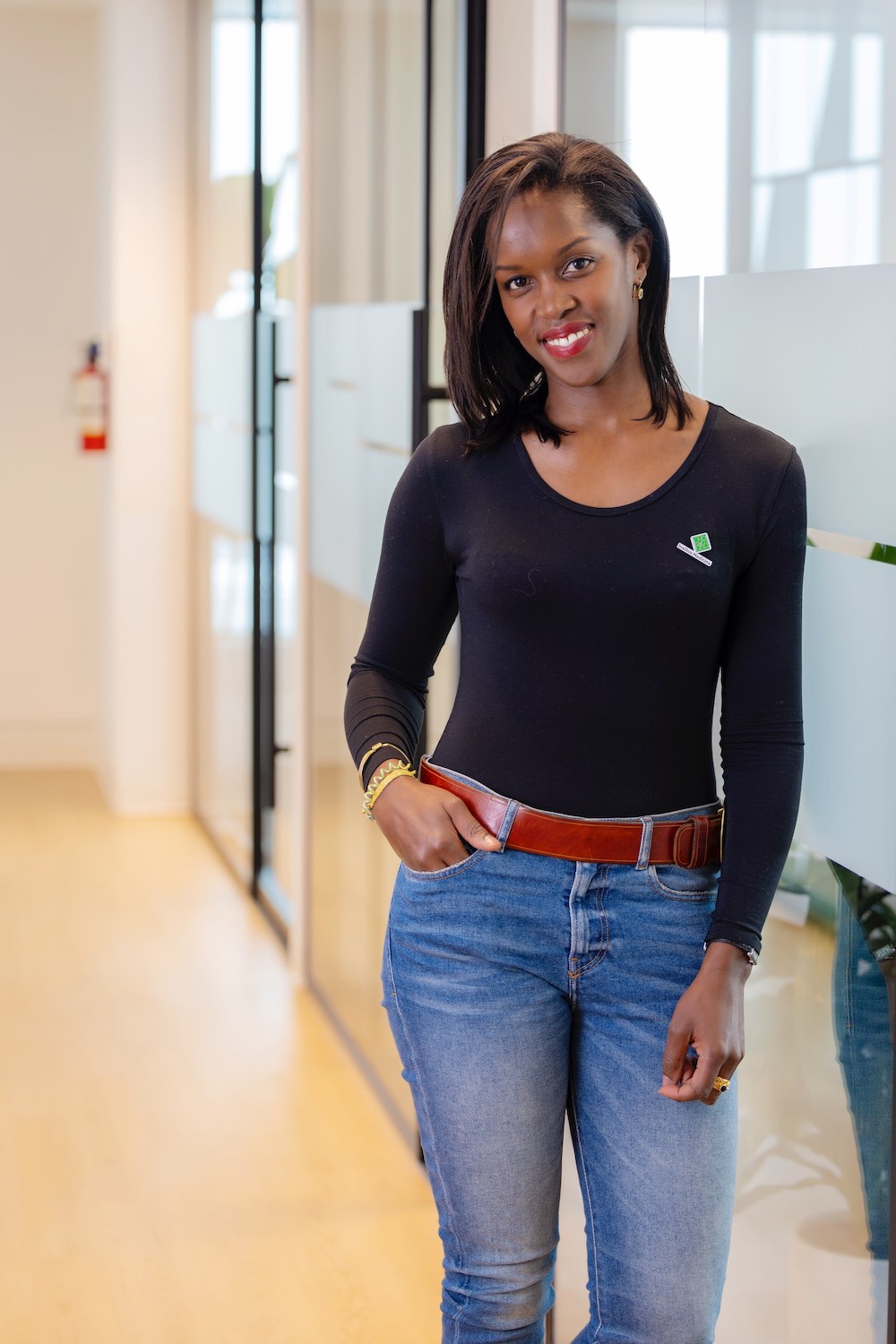 Petrina Kamya, president of Insilico Canada. Photo: Insilico/Handout

News
AI-based drug developer Insilico starts seriously staffing up in Montreal
Drug company’s globalized operations buffeted by tectonic political and economic forces
Insilico Medicine founder and chief executive Alex Zhavoronkov at the company’s AI-powered robotic lab in Suzhou, China. Photo: Insilico Medicine/Handout
Forty slides into his presentation on generative AI in the pharmaceutical business, Alex Zhavoronkov’s staff are trying to give him the hook. He has been going about his task, celebrating the expansion of Insilico Medicine’s offices in Montreal in an unorthodox way.
“I’m going to need another 16 minutes, max,” he says to someone off stage. “Can I do that? What do you mean, ‘No, no’?’”
Talking Points
- Insilico Medicine’s Alex Zhavoronkov says he refuses to engage in geopolitics, but the AI-based drug company is staffing up in Montreal because of tectonic political and economic forces
- Insilico’s Eastern European data scientists mostly moved to the Persian Gulf in 2022, where they’re overseen by a Concordia PhD and see some of the results of their work tested in wet labs in China for a company with headquarters in Hong Kong and New York
But Zhavoronkov is Insilico’s founder and co-CEO, which makes this gathering in the Queen Elizabeth Hotel his party, and him the black-clad, Slavic-accented, slick-haired master of ceremonies on a riser.
Fine, he says. I have 20 slides left, but I’ll skip a few and go fast. Buckle up.
It’s not as though Zhavoronkov’s audience can’t appreciate the ride, even if it is sometimes a fever of logos and dense timelines and imaging methylation transcriptomics. The group includes people like Health Canada’s chief data officer, and its director general for rare diseases; senior officials from Innovation Canada; whizzes like the University of Toronto’s Alán Aspuru-Guzik and Steve Liu, a McGill University professor and associate member of Mila, Montreal’s AI research institute.
Also Stéphane Paquet, the CEO of the investment promotion agency Montréal International, who is tickled to have landed the Insilico expansion.
“I must say that we’ve had quite a few AI labs in recent years,” Paquet says. But this one “merges two of the most strategic sectors in Montreal, which is life sciences and AI.”
It didn’t have to be in Montreal. Founded in the U.S. in 2014, Insilico now feels like a throwback to peak globalization, scattered around the world with a globetrotting chief executive (whose languages don’t include French).
Related Articles


The company’s twin headquarters are in New York and Hong Kong. Its key AI researchers are mainly in the United Arab Emirates, and most of its wet-lab work in mainland China. Zhavoronkov is a Latvian Canadian (born Aleksandrs Žavoronkovs) with degrees from Queen’s in Kingston, Ont., Johns Hopkins in Baltimore, Md., and Lomonosov Moscow State University.
Zhavoronkov’s mission, through Insilico, is to solve aging. If he can’t do that, he wants to extend people’s lives as much as he can and “ensure that the transition from today to the grave is as pleasant as possible, and disease-free.”
That’s the goal. Insilico’s method is to, in Zhavoronkov’s words, “deliver really effective therapeutics to patients at record speed.”
The process of taking a drug from concept to market is so arduous, he says, that he can address a room full of professional pharma researchers and be speaking to nobody who has actually done it. Pulling it off takes years and sometimes billions of dollars.
“It’s a very rare skill set. With AI, those people who have the skill set—they can become superheroes,” he says.
Insilico has no drugs on the market yet, but it has several in clinical trials and others in pre-clinical testing. Clinical trials to prove that a new medicine is safe, effective and worth the costs and side effects are necessarily arduous and time-consuming, and AI-aided drug discovery is new.
The company already has a presence in Montreal, built around Petrina Kamya. A Concordia chemistry PhD originally from Nairobi, Kamya is the president of Insilico Canada and the global head of Insilico’s AI platform work.
“A year and a half ago, it was just me, as the employee in Canada,” she said in an interview. “Having been educated in Montreal, I’ve seen a lot of my classmates come and leave. … It was always one of my passions to bring those people back.”
“I object to any form of racism or nationalism, and support globalization and cooperation, which was kind of the spirit of Canada when I first arrived.”
Kamya herself joined Insilico almost by chance, encountering Zhavoronkov while she was doing due-diligence work for investment banks interested in the drug business. He convinced her to join the company early in the COVID-19 pandemic.
“We did not see each other in person for the first two years,” Zhavoronkov told The Logic in an email exchange. Home for him is sort of Abu Dhabi, sort of Hong Kong, but really anywhere he can get Wi-Fi.
“I … refuse to engage in any kind of geopolitics, object to any form of racism or nationalism, and support globalization and cooperation, which was kind of the spirit of Canada when I first arrived in 1996,” Zhavoronkov wrote.
Geopolitics, however, engages with Insilico.
Zhavoronkov returned to Baltimore to start the company, but found deep-learning professionals in the U.S. scarce, and their salaries prohibitively expensive. “I outsourced many of the algorithmic tasks to Russia, Ukraine and Poland,” Zhavoronkov wrote.
When Russia invaded Ukraine in 2022, that arrangement became untenable, but bringing most of the team from Eastern Europe to Canada—through an overburdened immigration system that favours the most highly skilled applicants—was impractical.
“Anyone who’s junior, you’d have to go through a very, very long process,” Kamya said.
The U.A.E. welcomed those people more eagerly, so that’s where most of them went. The result was a group of 13 leaders with Kamya in Montreal, overseeing teams totalling about 80 people located halfway around the world on the Persian Gulf.
“The idea of what we have planned for Montreal is to take advantage of [local] talent. So we have the office now established, and the idea is to grow the team in Montreal,” she said. The company has approached its landlord in its downtown office tower—1250 René-Lévesque Blvd. W., one of the most prominent in the city—about renting more space.
Insilico has three AI-based tools to help find new drugs: PandaOmics for identifying chemical structures to target, Chemistry42 for identifying chemicals that could target them, and inClinico to help design clinical trials to test whether they work. It’s now bound them together with a ChatGPT-based interface, to make configuring their highly specialized features simpler by, for instance, translating a quality like “better at crossing the blood-brain barrier” into precise parameters.
It is not only a tools company: Insilico is working on drugs of its own, with four candidates in clinical trials. One, a treatment for idiopathic pulmonary fibrosis, a degenerative lung condition, has reached the stage of recruiting patients in China for Phase 2 trials, and Insilico has registered plans with the Food and Drug Administration to conduct U.S. trials.
Even a Phase 2 trial is a long way from the market, but it puts Insilico’s drug among the most successful AI-derived pharmaceuticals yet.
“Initially, we were a tech-first company. We were developing the tools. And we were constantly asked, ‘How do we know it works?’” Kamya said. “So we decided to build our own pipeline to show that if we can do it as a small tech company, and get to the clinic faster and cheaper, then any of our partners or people who can leverage our technology can also do that.”
To the obvious question this raises—why sell access to the tools if Insilico can make drugs itself?—Kamya answered that making and testing real-world drugs is expensive, and licensing the underlying technology makes money now.
“If you do your synthesis and test [in China], you can get drugs to patients one year sooner, with higher probability of success.”
What’s more, getting to human trials requires an enormous amount of pre-clinical laboratory work.
Geopolitics again. Canada has stomped on federally funded academic partnerships with potential adversaries—with both artificial intelligence and biotechnology on its preliminary list of sensitive research areas. But as a private company, Insilico isn’t directly bound by those restrictions, so it can assign lab work to specialty contractors in China.
“China built the most efficient contract research infrastructure on the planet,” Zhavoronkov told The Logic. “According to my estimates, if you do your synthesis and test there, you can get the drugs to patients at least one year sooner and with higher probability of success.”
The research work is contracted out but overseen by Insilico scientists, Zhavoronkov wrote.
“Our lab works with cells, organoids, and animal tissues, disease models, and xenografts, but we do not process any patient data. We rely on local vendors to process biological data and also to conduct clinical trials.”
The China connection extends beyond contract research. Warburg Pincus led investment in Insilico’s US$255-million Series C round in 2021, which included participation from China’s Qiming Venture Partners, Sinovation Ventures and Baidu Ventures, plus trans-Pacific entities like Pavilion Capital, Lilly Asia Ventures and Sequoia Capital China.
“PandaOmics,” the AI tool for finding potential drug targets, is a rebranding of a platform previously named “Pandomics,” Kamya said, which turned out to be a bad choice in the middle of a pandemic. “Omics” is a microbiology term covering a swath of subspecialties like genomics, metabolomics and proteomics; “pan” implies the platform covers them all.
The allusion to the furry klutzes China shares with favoured countries is a total coincidence, Kamya said (though Insilico has leaned into it with an android-looking panda mascot).
“We are a global company,” she said. “I’m not going to say we have not been challenged. People think we’re a Chinese company or we’re affiliated with Russia, but the truth is we’re a global company, and we’ve managed so far to avoid getting tangled with geopolitical issues.”



Loading...
Thanks for sharing!
You have shared 5 articles this month and reached the maximum amount of shares available.
CloseThis account has reached its share limit.
If you would like to purchase a sharing license please contact The Logic support at [email protected].
CloseGift the full article!
You have gifted 0 article(s) this month and have 5 remaining.
Recipients will be able to read the full text of the article after submitting their email address. They will not have access to other articles or subscriber benefits.
Photo: Insilico Medicine/Handout
Petrina Kamya, president of Insilico Canada.
Most Popular This Week



In-depth, agenda-setting reporting
Great journalism delivered straight to your inbox.
News
India wants to buy less Canadian uranium. Canada’s nuclear lab is helping
Briefing
First Nations object to Bell’s Saskatchewan data-centre plans
Oilpatch profits surged 68%, outpacing spending
SEC warns asset managers against co-ordinating activist campaigns
Best business newsletter in Canada
Get up to speed in minutes with insights and analysis on the most important stories of the day, every weekday.
Exclusive events
See the bigger picture with reporters and industry experts in subscriber-exclusive events.
Membership in The Logic Council
Membership provides access to our popular Slack channel, participation in subscriber surveys and invitations to exclusive events with our journalists and special guests.